Welcome to our blog!


It's better than a bat in the eye with a burnt stick!


This blog makes liberal use of AB's journals, letters, travel notes, and other sources.


And make sure to visit The Arnold Bennett Society for expert information and comment on all aspects of the life and work of AB.

Monday, 22 February 2021

Springlike

Monday, February 22nd., Comarques, Thorpe-le-Soken.

Friday, Saturday and Sunday I corrected "These Twain" and cut it from 128,000 to 100,000 words. It is painful I find to expunge words one has sweated to produce, but necessary.

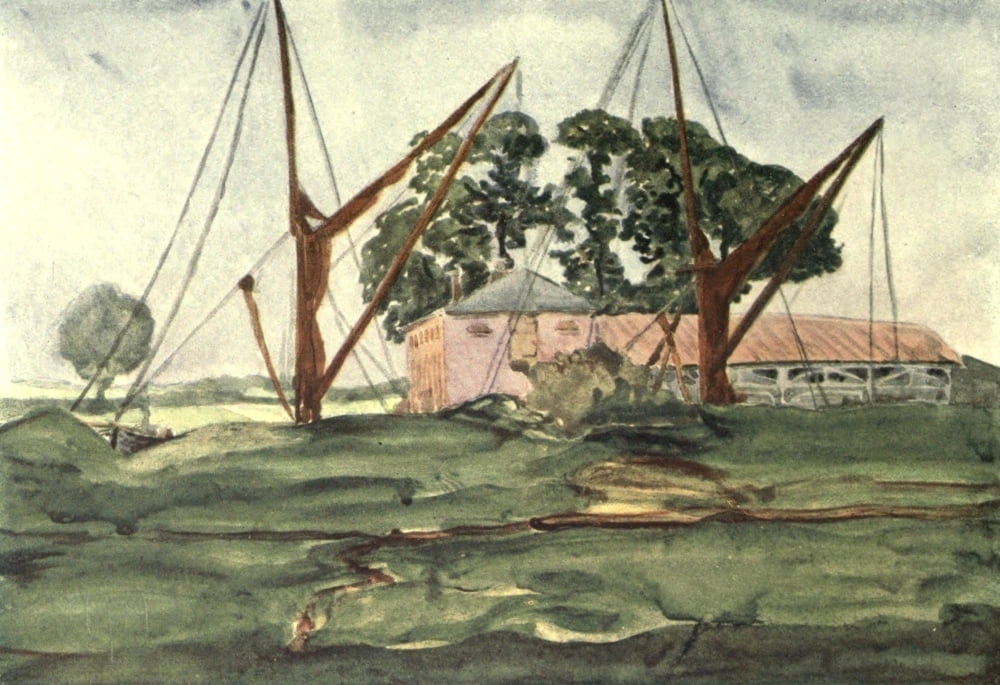
It has been remarkably mild today and I took a long walk down Golden Lane as far as the Beaumont Cut. There is still a little activity there but it is clear to see that the place is going to ruin. A chap I met there walking his dogs, who lives nearby, said there had been a canal of sorts there as early as Roman times, but the present cut was made in the nineteenth century in hope of exploiting the agricultural demand for lime. The lime kiln is still in good order. It would be worth preserving it for historic reasons, but that seems unlikely. In this country we generally only think about 'saving' things after they have fallen too far into disrepair. Two thames barges were employed to service the quay when it was in full operation but only the deteriorating remains of one is there now. Interesting to see even so. It is rather picturesque and would make a nice watercolour.

Hard to believe as I strolled back home in the spring-like sunshine that the country is at war and fighting is taking place only a hundred miles away as the crow flies. Thank god I am too old! I read on Saturday that Britain is now officially under 'blockade' by Germany. I expect that we shall all have to start tightening our belts.

Sunday, 21 February 2021

Megalomaniacs

Sunday, February 21st., Cadogan Square, London.

One of the advantages of living here is that I am favourably situated for visits to Hyde Park. I was there today. I have joined congregations on scores and scores of occasions and have always been disappointed. I was again today. By the preachers, not by the experience which is usually instructive of human psychology. 

I stood for a while watching a girl preaching. She had seven or eight official supporters including two nice-looking girls much younger than herself. She 'held forth' - no other phrase would serve as well - in a strident voice, and with gestures both monotonous and violent, to a numerous crowd. She had nothing whatever to say except: "Seek God", and she said it many times over. No reasons or explanations were offered. The formula seemed to satisfy her. One of her supporters, an old man, hatless in the chilly breeze, ejaculated at intervals: "Praise God" and "Amen". 

More interesting was another group at the core of which two men were arguing upon God. One of them had just been preaching and now he was being 'tested'. They argued in quiet reasonable tones. Indeed so quietly that only the half dozen people nearest to them could hear what was said. The rest of us craned our necks in vain to catch some words of wisdom. The debaters were magnanimous to one another. Evidently their aim was not victory but truth, and neither appeared susceptible to persuasion in any case. So why debate at all, I thought? The argument proceeded for a long time and I observed the unfed crowd which went on hoping for crumbs and didn't get any.

Close by a smaller congregation listened to the polite contentions of two aged men who were smoking cigarettes. Again the same quiet reasonable tones, as of intellects well able to handle the most majestic and exciting themes without any inward disturbance. I heard one question: "Well then what do you call the thing that thinks? Do you call it the brain?" But the wind and the dull roar of Oxford Street traffic witheld the answer from me. I didn't feel much sense of loss.

I am convinced that the leading characteristic of the majority of the preachers is simple megalomania. I have never heard a single remark denoting any originality or vigour of mind. In contrast I have heard good effective speaking in the side streets of Glasgow on a Saturday night. The speakers however were advocating not godliness but birth control. Their object was to sell pamphlets about contraception, and they sold them.

Saturday, 20 February 2021

Refreshed

Saturday, February 20th., Rue de Calais, Paris.

Last night at 11 I finished another section of "A Great Man", having written 8,300 words in four days. It is too much. Today I needed a rest so I decided to rearrange my bookshelves. Is there anything more relaxing, and satisfying, than messing about with books? I recently acquired a couple more shelves having been on the verge of running out of space, and this gave me the opportunity to have a good rearrangement. And of course I permitted myself to be tempted to browse in the books as I went along. I feel a new man now.

This evening I am to go to the Ambigu to see "Nana", a drama in five acts drawn by William Busnach from Zola's novel. It was first produced at the Ambigu in 1881. Amande Cassive in the title role. She is about forty now but still a pretty woman apparently. I am not much for seeing plays based on novels. They never do justice and the characters never correspond to the image I have in my head from reading. Still, I feel ready for anything after today and am especially hungry so out into the Paris night for a good dinner then off to the theatre. Who knows what adventures may await?

Friday, 19 February 2021

Regretful

 Saturday, February 19th., Hotel Ruhl, Nice.

I read a lot of the book Robert Nichols specially recommended to me: "Neighbours" by Claude Houghton. I think there may be an idea in it but up to page 100 it is very amateurish. I have also read three acts of "Troilus and Cressida". It is great stuff as regards character and language and 'closeness' of texture; and yet it takes the fellow nearly three acts to come to the real point of the plot.
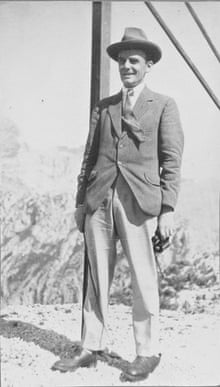
At the back of my mind has been something Scott Moncrieff said to me when we were in Pisa. He asked me if I would ever commit suicide? Said he thought about it quite often himself. Not because he feels depressed or presently inclined to do it; but he feels that at some point in the future he may want to, and wonders if he would have the means and the determination. I think he said "integrity" but he meant determination I felt. I passed the question off with a joking aside at the time, but regret it now as it was seriously meant. I hope my disinclination to discuss it didn't offend him. I htink he is a rather sensitive chap.

Leaving aside the practical issues, which could be overcome, why has suicide become a reprehensible act? It wasn't for the Greeks or the Romans; nor is it now in Japan and other parts of the world I believe. In fact the ancients saw it as something an honourable man should do in some circumstances. Marcus Aurelius acknowledges the possibility of suicide as a rational act though he clearly favours a will to endure. Seneca says that the important thing is to die nobly, having lived nobly. No problems there!

So the change can only be, it seems to me, because of the ascendancy of the Abrahamic religions. Well, fair enough, if you subscribe to one of those religions then you should not kill yourself. But if you do not, then why should you be bound by their moral constraints? It makes no sense. The situation now is a remnant, like the debris left on a beach when the tide has ebbed, as religion has ebbed. 

Suicidal thoughts have not often come into my mind, though the troubles I had with Marguerite caused me much depression and even now there are times when I feel I am like Sisyphus, constantly pushing a weight uphill, with no prospect of release. But, reflecting on what Scott Moncrieff asked, I feel it would be a comfort to know that if I did want to 'end it all' then I would need no permission beyond my own and the means would be available.
Thursday, 18 February 2021

Old times

Thursday, February 18th., Cadogan Square, London.

I have to make a visit to the Potteries next week. Only for the day! As usual an impending visit to my native area sets me reflecting on its distinctive character. 

Evolution in the Potteries has been quite remarkably dramatic during the Victorian and Edwardian eras. And of course it has marched with the improvement in the means of communication. Long after the death of Josiah Wedgwood, its supreme hero, the Potteries retained the primitive characteristics of a district cut off by Nature from the rest of the world. Josiah Wedgwood was a great man and did much, but his impress was left far more deeply on the manufacture of pottery than on the habits of the potters.

A great-uncle of mine used often to tell me stories of bear and dog fights at which he assisted as a boy. At that time Burslem had its municipal bear and Sunday was the day of battles. "But what about the law?" I asked him. "Bless ye!" he would reply, "There was no law in the Potteries in those days." The statement was exaggerated for effect of course, but it had some truth. Hundreds of men still alive in the Potteries can remember a period when during the annual 'Wakes', the public houses kept open day and night for a week, and the sole ambition of the population (male half) seemed to be to get drunk and to remain drunk.

In my youth the population of the Potteries was at least 130,000, and the towns were even then merged into one another, and yet there existed less than two miles of tram line in the entire district, and only two trams (drawn by horses and travelling between Burslem and Hanley) twice an hour. Now, electric cars in scores run about everywhere, from Longton in the south to Tunstall in the north, and from Newcastle in the east to Smallthorne in the west. And it was precisely these rapid cars which at last broke down the stubborn individualism of the separate towns and brought about their federation. And Hanley was in the middle and quickly outgrew its neighbours. Another case of geography influencing history.

I hope to find time for a walk up through Burslem Park as far as the cemetery where one day I hope to lie with my ancestors.

Wednesday, 17 February 2021

Starting to write

Wednesday, February 17th., Victoria Grove, London.

A very productive period. Last week I drafted 7,000 words. When I say drafted I mean that the stuff is rough because that is the method I have at the moment. I know myself and my absurd limitations and I have to get results as best I may, by dodging etc. If I were to begin to write carefully, straight away, weighing and arranging with proper nicety, I should get sick of my work in a week. I can't do much at once and I can't keep on for long even in spurts, without real or sham results for my encouragement. This is due to a lack of sustained determination in my composition. The needed dogged purposefulness is not there. I have found that out and I know that I can't put it there no more than by taking thought I can increase my height. Consequently I have to reckon with it.

So, I divide my task into little portions which look big. Any sort of a draft will do for me, provided it is of proper length. And in the first draft I am content to get down the facts. The facts being down, I have done something, there is a foundation to work upon. Strange that this foundation being laid, I seldom have any desire to alter or amend it. In fact I believe I have a considerable natural gift for arrangement, enhanced by my editing experience, which makes changes of foundation supererogatory. In the first draft I don't pretend to go deep or to arrange minor detail. I only make sure of my general outline as I go along.

The mere writing is appallingly unfinished. It can claim to be grammatical, but nothing more. But I have something to look at. Last week I produced over 35 pages of close writing. I have lifted the thing up to a certain height, whence it can't possibly fall down. The rest of the mountain can be taken in easy stages. I am the sort of writer who has a defined and definable purpose. I go in for unity of theme partly because I like it, and partly because it is easier to get effects with a simple single theme than it is with a complex one. A small man can make a largish sort of effect if he confines himself to one single character, with no relief, and turns it inside out. That is what I intend to do. At the moment I haven't got the creative impulse, or the writing experience, for a big theme, but I fancy that one of these days it will be there, and then we shall see something!

Tuesday, 16 February 2021

Sightseeing

Tuesday, February 16th., Hotel Nettuno, Pisa.

At 8.30 a.m. I received a note from C.K. Scott Moncrieff asking to see me and offering to show me things in the town. He came at 11.30. Lame, quick, fussy. Very talkative (smartishly) and rather nervous at first but not later when we became used to each other. He was lamed in the war, and converted to Catholicism whilst at the Front. Not married. I think he may be homosexual judging by the acquaintanceships he has had. But that is no problem for me. He tells me that he had a rather snide letter from Proust about his translation of Proust's "Swann's Way". I told him that I found Proust impossible to read, which he seemed to appreciate.

He said that Lucca was only twelve miles off. This was on our way to the cathedral here. I wanted to turn back at once and get a car for Lucca, which had always been romantical to me on account of a chapter in Heine's "Reisebilder". We couldn't get a car in the town. All had gone or were going to Viareggio for the carnival. However, after an early lunch, we did get a car and set off together.

At Lucca we got a carrozza, and went through the town at walking pace, and saw cathedrals and churches. Very fine and distinctive and Moncrieff a good guide. A rich town, prosperous, clean, self-contained, and self-sufficient. More so than Pisa. The oil business and farming must be money-making. But I asked for the Bagni di Lucca, made fascinating to me by Heine, and found they were twenty miles off. So I was baulked there. At San Frediano, Lucca, it was interesting to see the altar where Frankia's "Entombment" once was. Who pinched it and put it in the National Gallery I don't know.

The news of Septimus is no better. In fact worse. His weight apparently is under seven stone! he needs food but cannot assimilate it. Letters I have had from his doctor and from Maud convince me that there is very little hope of saving him. What a shame! In some ways I am glad not to be able to be over there to see him. Cowardly I know but it would be very upsetting for him as well as me, and what good would it do?