Sunday, June 15th., Cadogan Square, London.
 |
| Riceyman Steps 1924 |
Coming down from the Pentonville region into Clerkenwell recently I was reflecting in the back-parlour of my mind on 'convention' and 'revolt' in literature. Convention was on the slopes. He that knoweth not Percy Circus (distant view of the romantic towers of St Pancras) should know it. It is a hundred times more conventional than Piccadilly Circus. Also Great Percy Street should be known. Also the Norman arches of Baker Street (W.C.1 not W.1). Also Helena Street, with its antique woodwork all painted verdant green and its ruined chapel. Also Lloyd Square, the most withdrawn square in London. Also Riceymen Steps, formerly Plum Pudding Steps, where was performed a feat of transport surpassing anything ever done in that line in USA, namely the moving of an entire bookseller's shop with all its books and dust from a south coast port to the foot of the Steps. So I descended to King's Cross Road and the new factories and warehouses. It is the latter which represent Revolt. The latest industrial perpendicular style of architecture contrasts uncompromisingly with the conventional blocks of dark "dwellings" which it hems in. And so into Farringdon Road where the book-barrows are.

The object of my excursion was to visit and ransack the book-barrows. With a vengeance do they represent Convention. I have known them for over forty years, and instead of advancing they have receded. To begin with, the majority of them were shut-up and sheeted down in their black tarpaulins. This at four o'clock on Saturday afternoon! Influence no doubt of the sinister weekend habit invented by the book-reading classes! And those that were still "open" might be divided into two classes: barrows stocked with too-excited literature, arcane publications and works by obscure authors; barrows heaped pell-mell with books in a disorder so acute that you could not possibly examine more than ten percent of them without employing a housebreaking and demolition firm. I did, in fact, detect one or two pleasing items but to prove the sincerity of my remarks to the barrow-man I refused to buy any of them - he didn't care! The book-barrow trade ought to look to itself, and if I do my duty I shall write to the Secretary of the National Union of associations of Book-barrow Dealers. Half an hour in Farringdon Road has served to raise my opinion of shop-based booksellers!

I have had the opportunity to see the film "Piccadilly", for which I wrote the screenplay last year, and was pleased with it. Dupont has done an excellent job in bringing the story to life on the screen.
See also, 'Life and Death' - June 4th.,
http://earnoldbennett.blogspot.co.uk/2013/06/life-and-death.html
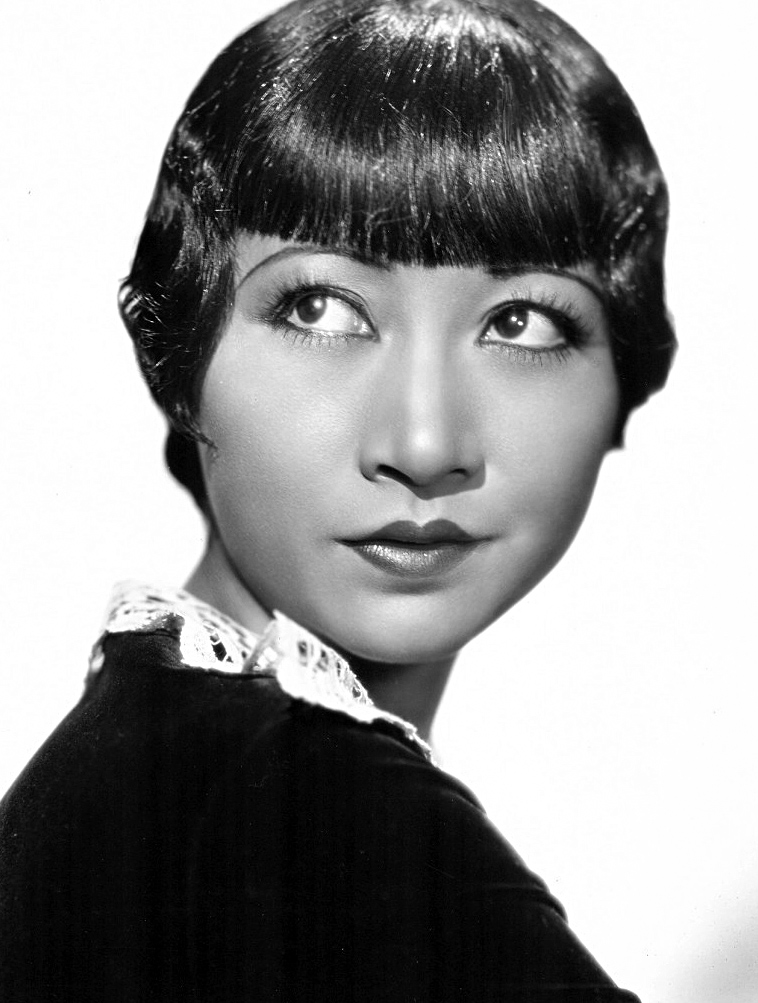
The quality of the acting was, I thought, good. There was considerable use of close-up shots of the actors' faces and they were generally successful in conveying their emotions with subtle changes of expression. This surprised me. A surprisingly large amount of the dialogue is discoverable by lip-reading the actors. Dupont seems to have managed to locate and use a large number of characterful extras which added to the authenticity of the film, as did the use of scenes shot in the streets of London. The contrast between the privileged world of the wealthy and that of the working-classes was brought out excellently: the audience in the Piccadilly Club seemed bland, homogeneous and uninteresting in comparison with the denizens of the Limehouse public house who were diverse, colourful and full of life, with a barely veiled edge of violence and sexuality. Anna May Wong was excellent in the role of Shosho, though her Chinese dance didn't seem likely to have excited male appetites to the extent implied by the story-line. Jameson Thomas as Valentine Wilmot was suitably sinister. I was pleased that all the characters I created retained their flaws in transition from paper to the silver screen. The film is no great work of art, but it is decidedly watchable.
http://www.youtube.com/watch?v=BzpcgLPIBFI
 |
| Jameson Thomas and Anna May Wong |
A film noir before the term was in use, Piccadilly is one of the true greats of British silent films, on a par with the best work of Anthony Asquith or Alfred Hitchcock in the period. In essence a simple tale of ambition, desire and jealousy, what marks Piccadilly out is the astonishing confidence of its direction. Dupont was a recent arrival from Germany, who had made just one previous film in Britain, the elegant Moulin Rouge (1928), and Piccadilly is notable for qualities not typically associated with British silent films: opulence, passion and a surprisingly direct approach to issues of race - one remarkable scene has a white woman expelled from a bar for dancing with a black man, mirroring the social taboo of the film's central relationship. Dupont was subsequently associated with the shortlived vogue for multi-language films, and Piccadilly has a similarly international bent - its lead actresses are Chinese-American and Polish-American; its leading men are British and Chinese; its cinematographer and designer are, like its director, German. For all its style and grace, the film's strongest suit is Chinese-American actress Anna May Wong. Wong appeared in four other British films, but she was arguably never better used than here. As Shosho, the scullery maid who becomes a dance sensation and an object of desire for impresario Valentine (Jameson Thomas), she displays the cold ambition and manipulative sexuality of the classic femme fatale, while revealing - just occasionally - the vulnerability of a young girl. Shosho's exoticism gives her an alarming sexual power over the men who watch her dance - "I danced once before in Limehouse but there was trouble, men, knives...", she tells the transfixed Valentine, in a title which prefigures the narrative's tragic end. To Wong's frustration, Shosho and Valentine's kiss was cut to appease the US censor.