Welcome to our blog!


It's better than a bat in the eye with a burnt stick!


This blog makes liberal use of AB's journals, letters, travel notes, and other sources.


And make sure to visit The Arnold Bennett Society for expert information and comment on all aspects of the life and work of AB.

Showing posts with label Edith Sitwell. Show all posts

Monday, 15 March 2021

Users of words

Monday, March 15th., Chiltern Court, London.

I am myself a chronic user of words and, I like to think, have acquired some reputation for using them well. But there are others more adept than I, and I give way willingly.
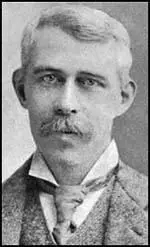
C.E. Montague
Among the major modern experts and virtuosi in writing must be counted the late C.E. Montague, a man with a passion for the proper use of words, a man who turned leading articles into literature. A few years before the war, being acutely intrigued by the literary performances of this Manchester man, I went up to Manchester to make his acquaintance. A temeraraious excursion, rather like going over the top! He was just about the most reserved man I ever met. He had the air of a secondary school teacher or a Wesleyan preacher, but when he talked, he did talk. I soon perceived that he knew a hundred times more than I knew, and had an infinitely more complex taste. He did not traffic in simplicities. His reputation was that he was 'cold'. Well, he was, but he had a heart which he carried in a padlocked secret pocket, never on his sleeve.
 

Another fine user of words is Edith Sitwell, one of the most original poets of our day, who now stands forth as a literary biographer and critic. Her "Alexander Pope" (illustrated and with designs by Rex Whistler) has the qualities one would expect from her. It is brilliantly written, it is challenging, and it is ruthless. She sets out to prove that Pope was a lovable and kindly man as well as a great writer and, by and large, she succeeds. The final chapter is criticism of a very illuminating, unusual sort. If you would see what a vitruoso can see in a given collocation of words, read this chapter. It is revealing and as fresh as the dawn. The plum of the book to my mind is the tirade in the opening chapter upon the "general blighting and withering of the poetic taste" during the first quarter of the twentieth century. She uses strong words, and good words. Her book would be much admired and appreciated by Montague.

Wednesday, 2 October 2013

Literary egos

Thursday, October 2nd., Cadogan Square, London.

Osbert Sitwell lunched with me yesterday at Reform Club. By arrangement Swinnerton joined us. Before lunch Siegfried Sassoon came up and said: "Can I lunch at your table today?" (In pursuance of my reproaches that he would keep by himself in the club) I said: "Certainly. You must. Osbert is coming. Sort of silly feud between him and Osbert which Edith Sitwell told me about some time ago. S.S. drew back but I made him come. A little occasional acerbity in S.S.'s tone at times, but it was quite all right. At the end I made S.S. see Osbert out of the club.

See also 'Lunch with Mad Jack', June 9th., -
http://earnoldbennett.blogspot.co.uk/2013/06/lunch-with-mad-jack.html

These petty feuds in the verse world are quite amusing. Osbert is always planning some literary practical joke against someone. Siegfried had stopped speaking to Osbert because (he says) Osbert would never leave him alone. And he stopped speaking to Edith because she wouldn't prevent Osbert doing his tricks. "But what can I do?" said Edith. In revenge Sacheverell Sitwell swore he would never speak to Siegfried again. It appears also that either Siegfried won't speak to Robert Graves or vice-versa. All very odd, and rather childish.

Osbert Sitwell is a satirist of an unusual kind. he is not a contributor to Punch and he is not likely to be. He accepts nothing without the strictest and most hostile examination. he is a fundamental objector, with the bellicose, haughty and ruthless spirit of a Renaissance prince. His artistic existence is a crusade. He can be at once bitter and courtly. He will hand you the poisoned chalice, watch you fall in agony, contemplate your corpse with a bland smile, and go out calmly for a constitutional! He is that sort of man.

Osbert, Edith and Sacheverell Sitwell
The Sitwells (Edith Sitwell, Osbert Sitwell, Sacheverell Sitwell), from Scarborough, North Yorkshire, were three siblings who formed an identifiable literary and artistic clique around themselves in London in the period roughly 1916 to 1930. This was marked by some well-publicised events, the most prominent of which was probably Edith's Façade with music by William Walton, with its public debut in 1923. All three Sitwells wrote; for a while their circle was considered by some to rival Bloomsbury, though others dismissed them as attention-seekers rather than serious artists.

Additionally for October 2nd., see 'Visions' -
http://earnoldbennett.blogspot.co.uk/2012/10/sunday-october-2nd.html

Yesterday I had a goodish large notion for the Hilda book - of portraying the droves of the whole sex, instead of whole masculine droves. I think I can do something with this, showing the multitudinous activities of the whole sex, the point of view of the whole sex, against a mere background of masculinity. I had a sudden vision of it. It has never been done.