Welcome to our blog!


It's better than a bat in the eye with a burnt stick!


This blog makes liberal use of AB's journals, letters, travel notes, and other sources.


And make sure to visit The Arnold Bennett Society for expert information and comment on all aspects of the life and work of AB.

Showing posts with label John Lloyd Stephens. Show all posts

Saturday, 23 January 2021

Imaginings

Saturday, January 23rd., Hotel Russie, Rome.
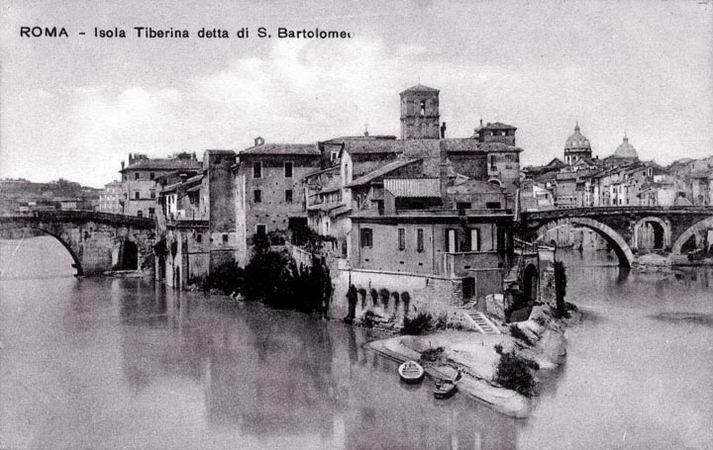
I didn't begin work until 6 p.m. Lunch at the hotel. Then we went for a drive, Dorothy's idea. Right down the right bank of the Tiber to the place where I moored the Velsa before the war. Much interested to see this again. It was a good spot.

In conversation Dorothy asked me an interesting question: "If you could go back in time for one day, in Wells's time machine say, where would you choose to go?" I found this difficult to answer because there are so many things to consider. To gain time I asked a few clarifying questions: observing or participating, visible or not, all day or just daylight hours? Then I settled on Athens during the Greek 'Golden Age' with the Parthenon just built and philosophers aplenty. She opted for Rome at the time of Augustus. Predictable choices.

But since then I have been thinking it over, and have changed my mind. Of course I would love to see Athens in its glory, and Rome. And I would like to visit Elizabethan England, and Florence during the Renaissance. But I know quite a lot about these places and times, and they would, in a sense, be familiar. So, if asked now I would settle instead on one of the Mayan cities in Central America, Palenque or Copan. I well remember reading, and being enthralled by, John Lloyd Stephens' account of his travels in that region, especially the arrival at Copan. It seems to me that to spend a day in one of those places would be quite alien, exciting and unlike anything I could imagine. I salivate, metaphorically, at the prospect!

Of course Haggard, and similar 'romantic' writers imagined such places and peopled them, but generally it seems to me the people were really modern day people transposed. I don't think any author has successfully imagined himself into a different way of seeing and living in the world; perhaps it is not possible to do so. Certainly I could not do it.


Thursday, 9 January 2020

Bookmen

Monday, January 9th., Cadogan Square, London.

The Crosby Gaiges came for tea. I took Gaige into my study and showed him some MSS. and other things. He asked me whether I ever thought of selling my MSS. He said that if I ever did he would like to have the offer of them. I said they would be very dear. He said he might be in funds. I found the MS. (bound) of "The Muscovy Ducks" among a lot of Staffordshire books, where it certainly ought not to have been. So, on impulse, I gave it to him. 

He has a considerable library himself I understand, and was much taken with two recent 'finds' of mine. Firstly two volumes of Lyell's "Principles of Geology" from 1860, and in good condition. Many pages uncut. I am intending to read in it when I have time. More especially a copy of John Lloyd Stephens' "Incidents of Travel in Central America etc.", also in two volumes from 1842. This was something of a coup of mine because I noticed when browsing on the bookstall (Clerkenwell) that the second volume had an owner's stamp which was absent from volume one - and it was for I K Brunel, the great engineer. So I bought it. I wanted a copy anyway. The seller was happy, and so was I. Gaige was a little envious.

He is an interesting and colourful character. Apparently he adopted the name Crosby, and with it a whole Revolutionary War ancestry. His money has been made producing Broadway hits and he has recently gone into publishing. He tells me that he has a press in a huge barn at home where he sets and prints fine editions. I would like to see it. Decidedly an American.

After discussing it with Dorothy I decided to make over to her all the rights in my performed plays - reserving those not performed. And when we got home at about 10.40 I at once wrote a letter to Geoffrey Russell on this great subject, giving instructions and asking advice. This may save some trouble in the future regarding Marguerite should I pre-decease her.

Thinking further about the "Incidents of Travel" I am inclined to think that they are not in fact an original pair. If they were and had been bought as such by Brunel then surely his owner's stamp would be in both? There is a hand-written inclusion on the inside cover of Volume 1 which is not decipherable except that the date is March 27th., 1842. My feeling is that the original Volume 1 was lost and was replaced by an identical volume from another set. In 1842 Brunel was much engaged in the building of the SS Great Britain and I am enjoying a speculation that he may have been reading the original Volume 1 whilst travelling, and it was subsequently lost, eventually to be replaced to complete the set.

Saturday, 12 December 2015

Incidents of travel

Image result for stephens incidents of travel in central americaFrom my first acquaintance, as an adolescent, with the travel writings of John Lloyd Stephens I have longed to see for myself the places he describes so vividly in "Incidents of Travel in Central America", particularly the Mayan ruins at Copan. Last month I had opportunity to do so and, in anticipation, re-read "Incidents of Travel". Stephens' prose is rich as ever and had lost none of its power to excite in the intervening four decades, and it is perfectly complemented by the marvellous drawings of Frederick Catherwood. 

Though Copan bears little resemblance now to the jungle shrouded place Stephens and Catherwood visited I was not disappointed; it was still possible with an effort of imagination to share the sense of wonder they experienced when they looked across the swollen river to see the wall of the acropolis rising before them. And as I reluctantly left the site as darkness was falling the atmosphere intensified and my sense of mystery was stirred again. I am sure that a lot of the feelings I experienced are attributable to my long digestion of Stephens' book. 

Stephens in his writing and Catherwood in his paintings of course exaggerated the romantic aspects of their discoveries, but they never lost sight of their role as accurate recorders of the wonderful things they revealed, and Stephens in particular showed himself to be extremely far-sighted in his prediction that the hieroglyphs on the monuments would one day be deciphered to reveal a lost history of the Mayans. In my view a great service was done by these two remarkable men who, by their work, stimulated the imaginations of many in America and elsewhere, and helped bring the remarkable civilisation of the Mayans to the attention of the world.