Welcome to our blog!


It's better than a bat in the eye with a burnt stick!


This blog makes liberal use of AB's journals, letters, travel notes, and other sources.


And make sure to visit The Arnold Bennett Society for expert information and comment on all aspects of the life and work of AB.

Showing posts with label Rex Whistler. Show all posts

Monday, 15 March 2021

Users of words

Monday, March 15th., Chiltern Court, London.

I am myself a chronic user of words and, I like to think, have acquired some reputation for using them well. But there are others more adept than I, and I give way willingly.
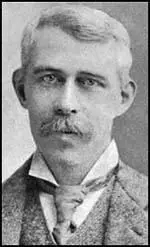
C.E. Montague
Among the major modern experts and virtuosi in writing must be counted the late C.E. Montague, a man with a passion for the proper use of words, a man who turned leading articles into literature. A few years before the war, being acutely intrigued by the literary performances of this Manchester man, I went up to Manchester to make his acquaintance. A temeraraious excursion, rather like going over the top! He was just about the most reserved man I ever met. He had the air of a secondary school teacher or a Wesleyan preacher, but when he talked, he did talk. I soon perceived that he knew a hundred times more than I knew, and had an infinitely more complex taste. He did not traffic in simplicities. His reputation was that he was 'cold'. Well, he was, but he had a heart which he carried in a padlocked secret pocket, never on his sleeve.
 

Another fine user of words is Edith Sitwell, one of the most original poets of our day, who now stands forth as a literary biographer and critic. Her "Alexander Pope" (illustrated and with designs by Rex Whistler) has the qualities one would expect from her. It is brilliantly written, it is challenging, and it is ruthless. She sets out to prove that Pope was a lovable and kindly man as well as a great writer and, by and large, she succeeds. The final chapter is criticism of a very illuminating, unusual sort. If you would see what a vitruoso can see in a given collocation of words, read this chapter. It is revealing and as fresh as the dawn. The plum of the book to my mind is the tirade in the opening chapter upon the "general blighting and withering of the poetic taste" during the first quarter of the twentieth century. She uses strong words, and good words. Her book would be much admired and appreciated by Montague.

Sunday, 6 July 2014

Out and about

Wednesday, July 6th., Cadogan Square, London.

I walked quickly, with perspiration, in hot sunshine, to get ideas for "Accident", and reached the Tate Gallery. I thought I would look at the Conders. No sooner was I in the Conder room than Aitken, the director, who is a very nice fellow, came along. He took me along to see the big wall decorations, by a young man named Whistler aged 21, in the refreshment room - decorations still far from finished. I enjoyed them.

The Expedition in Pursuit of Rare Meats
When Rex Whistler’s mural was unveiled, the restaurant at the Tate gallery was described as ‘The Most Amusing Room in Europe’. It was completed in 1927 by the 23-year-old student from the Slade School of Art. Whistler had been recommended by Professor Henry Tonks, and after submitting sketches of the design in 1926 began work in the restaurant. 
The idea for a mural painting had come from Joseph Duveen, whose intention was ‘to induce big caterers such as Lyons etc, to give similar commissions to young artists.’ He donated £500 towards the scheme, which supported Whistler at a rate of £5 a day over a period of eighteen months. Whistler devised the subject of the mural in collaboration with the novelist Edith Olivier. The story was ideally suited to a restaurant, recounting the expedition of a group of seven people who set out in search of exotic meats. They leave on bicycles, carts and horses from the ‘Duchy of Epicurania’, and travel through strange and wonderful lands encountering unicorns, truffle dogs and two giant gluttons guarding the entrance to a cave. The story ends with the travellers returning to a joyful homecoming, and the diet of the people, which had previously consisted of dry biscuits, is transformed.

I got outside and walked around. Finally into a tram to Victoria and thence by bus to Sloane Square. By good chance I found the ideas I wanted, and wrote them for three quarters of an hour. Then taxi to Reform Club for lunch.

Went on to Holland Park Hall with Spender, Roch and Earl Russell, to see Lenglen play tennis. Sparsely filled. The men's singles (Cozelin and Kinsey) were fine. Women's singles poor, because Lenglen (v. Dewhurst) had nothing to do. Cozelin is an exceedingly fine player. I should like to see him against Tilden. Another thing I should like to see would be Lenglen against a man - I mean a really good one, a first-rate man. She would be beaten but it would make a fine show, and would restore the public perspective. Lenglen is short and walks well, though with a rather peculiar step.

Suzanne Rachel Flore Lenglen (1899 – 1938) was a French tennis player who won 31 Championship titles between 1914 and 1926. A flamboyant, trendsetting athlete, she was the first female tennis celebrity and one of the first international female sport stars, named La Divine (the divine one) by the French press. Universally recognized as the greatest woman tennis player of the first half of the 20th Century, Suzanne Lenglen combined ballet and tennis strokes into an irresistible art form. A baseline perfectionist, Lenglen’s astonishing ball control and uncanny accuracy made her nearly invincible. She won six French Championships and half a dozen more at Wimbledon. The lissome, charismatic Frenchwoman died at 39 with an unparalleled record, which rendered her an authentically legendary figure in the history of women’s tennis. 
http://www.tennisfame.com/hall-of-famers/suzanne-lenglen


Additionally for July 6th., see 'Fellow travellers'

I came to Ludlow today. Fat female aristocrat in train. Dust cloak. Flower outside it. Jewel to fasten it. Many rings. Manicured. QueenTatler. Ethel M. Dell's latest novel. 3 cushions in a decided leather 'envelope'. Elaborate lunch basket. Greedy. When ticket collectors came, she referred them, with an apprehensive gesture, to her maid, lest she might be bothered. Two of them knew of her maid. The third said roughly: "I suppose your maid has your ticket?" Her fear about being worried about anything was obvious. At Shrewsbury she held 'envelope' whilst maid put cushions into it. Maid got her out of train and transferred her to Ludlow train. There was another and older and worse woman, with an aged maid in the same compartment. very hard. She was met by a companion sort of girl at Birmingham.