Wednesday, December 12th., Victoria Grove, Chelsea.
I have been browsing in the October edition of The Yellow Book. The literary content is, in my view, anodyne. Three of the short stories I abandoned after a few pages having found no interest in either the characters or their situation; I had hopes of Ella D'Arcy but she fell away after a promising start. The art work I find much more to my taste, especially that of Mr. Aubrey Beardsley. He has four drawings in this volume plus (unattributed seemingly) the cover and the frontispiece. Wherein lies the power of Beardsley's drawings? For a start they are more black than white which imparts a sinister quality, and there is always an element of the grotesque in them. I find them disquieting and fascinating at the same time.
I have been wondering about my story "A Letter Home". I think it is good, and others have told me it is. Perhaps I should submit it for consideration to be published in a forthcoming edition of The Yellow Book? Nothing ventured, nothing gained, as my mother would often say. Although I am fairly content with my work at Woman I itch to be independent and to make my way by means of literature.
Showing posts with label The Yellow Book. Show all posts
Showing posts with label The Yellow Book. Show all posts
Wednesday, 11 December 2019

Sunday, 17 November 2019
Bookman
Wednesday, November 17th., Comarques, Thorpe-le-Soken..
Yesterday morning, barber's.
Then to Reform for directors meeting at noon of New Statesman, Shaw, Webb, Simon, and Clifford Sharp. Shaw said we ought to attack Asquith. Said we ought to make Haldane P.M. Shaw has no conception of public opinion at all. Afterwards, in the street, he told me he had talked like that as a "hygienic operation", and that it was necessary to exaggerate in such hygiene; he wanted to stir Sharp up. No idea what he meant. The fundamental decency and kindliness of Shaw was evident throughout.
Today in my library I was browsing in my set of "The Yellow Book". Enjoyable. Surprisingly interesting. I have put my book plate in each one and was musing on what some person years from now would make of it if they came across the set in a second-hand bookshop somewhere. Would the fact that they used to be mine add to their value and desirability. I would like to think so, for vanity's sake. Also I dipped in to a history book I picked up somewhere. The original owner had made numerous annotations in the margins of the text; tiny pencilled lettering but still perfectly legible. I like to see good annotations. It is almost like a conversation across time with another reader. However, I can't do them myself. The idea appeals to me strongly but simply cannot bring myself to write in a book; it would be like spitting in church.
Yesterday morning, barber's.
Then to Reform for directors meeting at noon of New Statesman, Shaw, Webb, Simon, and Clifford Sharp. Shaw said we ought to attack Asquith. Said we ought to make Haldane P.M. Shaw has no conception of public opinion at all. Afterwards, in the street, he told me he had talked like that as a "hygienic operation", and that it was necessary to exaggerate in such hygiene; he wanted to stir Sharp up. No idea what he meant. The fundamental decency and kindliness of Shaw was evident throughout.
Today in my library I was browsing in my set of "The Yellow Book". Enjoyable. Surprisingly interesting. I have put my book plate in each one and was musing on what some person years from now would make of it if they came across the set in a second-hand bookshop somewhere. Would the fact that they used to be mine add to their value and desirability. I would like to think so, for vanity's sake. Also I dipped in to a history book I picked up somewhere. The original owner had made numerous annotations in the margins of the text; tiny pencilled lettering but still perfectly legible. I like to see good annotations. It is almost like a conversation across time with another reader. However, I can't do them myself. The idea appeals to me strongly but simply cannot bring myself to write in a book; it would be like spitting in church.
Wednesday, 12 December 2018
Writing for a living
Monday, December 12th., St. Simon's Avenue, Putney, London.
Sunday night we called on Ella D'Arcy, and I made her promise to bring me the novel she had written some years ago, and then left in a drawer because one publisher, John Murray, had refused it. An interesting woman now in her fifties. Travels a lot. She had much to do with the Yellow Book and seems to have been de facto its editor. She remembered my short story which appeared there and hinted that it was she who secured its inclusion. She has written mainly short stories herself, several of which appeared in the Yellow Book.
A young French novelist, de Vissac, was also present. It appeared that his first novel had won a prize from the Academie.
On Saturday appeared in the Nation the most striking article on me that has yet been written. Very gratifying to see oneself praised as an artist in a widely read periodical. However much one may disdain praise publicly an inner glow of self-satisfaction is inescapable.
Continuous progress with the construction of the first book of "Hilda Lessways". It is more of a challenge than I had initially thought. Having constructed and written "Clayhanger" I conjectured to myself that it would be a relatively simple matter to match them up, so to speak. I am enjoying doing it.
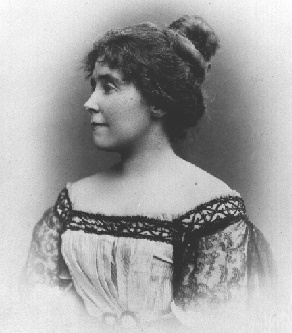 |
| Ella D'Arcy |
A young French novelist, de Vissac, was also present. It appeared that his first novel had won a prize from the Academie.
On Saturday appeared in the Nation the most striking article on me that has yet been written. Very gratifying to see oneself praised as an artist in a widely read periodical. However much one may disdain praise publicly an inner glow of self-satisfaction is inescapable.
Continuous progress with the construction of the first book of "Hilda Lessways". It is more of a challenge than I had initially thought. Having constructed and written "Clayhanger" I conjectured to myself that it would be a relatively simple matter to match them up, so to speak. I am enjoying doing it.
Tuesday, 28 November 2017
War news
Saturday, November 28th., Comarques, Thorpe-le-Soken.
I met Colonel Tabor (of Cyclists) in the road yesterday. He said that the War Office was apparently taking quite seriously the danger of a raid. He said that many officers were now having a few days leave, and that one had breakfasted in the trenches and dined at his club in London. I imagine that is apocryphal but it does bring home the bizarre situation that there is a war going on just over the horizon. I think it is only a matter of time before someone in the south east claims to have heard the guns firing. On Thursday 700 sailors were killed when HMS Bulwark blew up in the harbour at Sheerness, Kent. How many more will die before this is all over I wonder?
The Colchester road is being mined just east of the point where the Tendring road branches off. Four or six soldiers digging holes on either side of the road (4 in all) about 4 feet cube. The bridge next to the railway station is also being mined. Twelve engineers in the village and more to come.
I had run out of book space and have had some new shelves made for a particular wall in my study, to my own design. Spent some time last evening arranging the books. Inevitably I became involved in reading and lost all track of time. At one point I was browsing in my set of "The Yellow Book" and unexpectedly came upon my own story "A Letter Home" in Volume VI. I read it with genuine pleasure.
I met Colonel Tabor (of Cyclists) in the road yesterday. He said that the War Office was apparently taking quite seriously the danger of a raid. He said that many officers were now having a few days leave, and that one had breakfasted in the trenches and dined at his club in London. I imagine that is apocryphal but it does bring home the bizarre situation that there is a war going on just over the horizon. I think it is only a matter of time before someone in the south east claims to have heard the guns firing. On Thursday 700 sailors were killed when HMS Bulwark blew up in the harbour at Sheerness, Kent. How many more will die before this is all over I wonder?
The Colchester road is being mined just east of the point where the Tendring road branches off. Four or six soldiers digging holes on either side of the road (4 in all) about 4 feet cube. The bridge next to the railway station is also being mined. Twelve engineers in the village and more to come.
I had run out of book space and have had some new shelves made for a particular wall in my study, to my own design. Spent some time last evening arranging the books. Inevitably I became involved in reading and lost all track of time. At one point I was browsing in my set of "The Yellow Book" and unexpectedly came upon my own story "A Letter Home" in Volume VI. I read it with genuine pleasure.
Thursday, 28 September 2017
The Yellow Book
Thursday, September 28th., Cadogan Square, London.
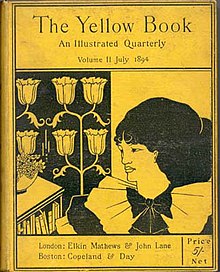 A few years ago I met, and entertained for an evening, a typical respectable Clerk and his wife. They were an engaging pair, in their mid thirties I should think. She the stronger character but nonetheless deferring to his male precedence. Thy had some literary pretensions, in a small way, and he said to me "What is this Yellow Book Mr. Bennett?" I was put in mind of this today when looking through my set of The Yellow Book in my library. Of course it achieved a notoriety it didn't deserve at the time but I liked it, and thought it a genuine attempt to distill important elements of the contemporary arts. I still enjoy a browse in its pages every now and then, not forgetting my own first published short story in Volume VI.

Looking around at my books I started to reflect on the fact that many, if not all, would survive me and would pass into new ownership. In a way a book has a life of its own. All my books have my personal bookplate at the front and I wonder if future owners will recognise my name, perhaps even have an affection for my work. Take The Yellow Book for example. Will the thirteen volumes be kept together? How many hands will they pass through and how many years sit dusty and forgotten on the shelves of a second hand bookshop awaiting an interested new owner. I like to imagine that someone will one day buy the set, take it home and place the volumes conspiculousy on their shelves. There are few finer experiences in life than arranging one's books!
A few years ago I met, and entertained for an evening, a typical respectable Clerk and his wife. They were an engaging pair, in their mid thirties I should think. She the stronger character but nonetheless deferring to his male precedence. Thy had some literary pretensions, in a small way, and he said to me "What is this Yellow Book Mr. Bennett?" I was put in mind of this today when looking through my set of The Yellow Book in my library. Of course it achieved a notoriety it didn't deserve at the time but I liked it, and thought it a genuine attempt to distill important elements of the contemporary arts. I still enjoy a browse in its pages every now and then, not forgetting my own first published short story in Volume VI.
Looking around at my books I started to reflect on the fact that many, if not all, would survive me and would pass into new ownership. In a way a book has a life of its own. All my books have my personal bookplate at the front and I wonder if future owners will recognise my name, perhaps even have an affection for my work. Take The Yellow Book for example. Will the thirteen volumes be kept together? How many hands will they pass through and how many years sit dusty and forgotten on the shelves of a second hand bookshop awaiting an interested new owner. I like to imagine that someone will one day buy the set, take it home and place the volumes conspiculousy on their shelves. There are few finer experiences in life than arranging one's books!
Thursday, 30 January 2014
A pleasant evening
Saturday, January 30th., Victoria Grove, Chelsea.
Tonight I met the typical respectable Clerk and his wife. The Clerk: a short man with a merry, half-boyish face, and a good moustache; keen in looks and yet every feature disclosing a narrow habit of mind; at first good-naturedly too courteous and deferential, afterwards assuming his natural manner of unaffected pleasantness. His wife: a woman of about 35, apparently older than the clerk, dressed plainly in red and grey; a broad face of peculiar shape, with long censorious lips that came together in a straight line, and remained so; a sensible, sober face, full of what is called character. One felt that while her husband supplied the motive power of their existence, the wife furnished the steadying ballast. She was very restrained till late in the evening when at the sight of some comic drawings she laughed immoderately and long, repeating: "I do think that's funny ... " After this the clerk began to give us his volunteering experiences, and over his quietly vivacious talk I heard a conversation begin between the wife and Gertie Kennerley; "Are you fond of reading?" "Yes," said Gertie. "Read Charlotte Bronte's books? 'Jane Eyre'? 'Villette'? 'Shirley'? - I like 'Shirley' the best. And George Eliot's? And Mrs. Henry wood's? I think ----- is the best of hers." here the clerk broke in to say he hadn't read that: hadn't read anything of Mrs. Henry Wood's. "I don't think you'd care for them," she turned to him. "There isn't much in them you know." So, though clearly the stronger character, she looked up to him, wondering from below to what heights his intellect reached.
Both were skilful, experienced, alive, in the things which lay within their own segment of life's circle, and lost and awed, like babes in the wood, if they happened to stray outside that segment. Example: Though the husband was above Mrs. Henry Wood and read Lamb, and had a distant interest in Stevenson, he asked, "What is this Yellow Book, Mr. Bennett?" as if he were inquiring into the nature of the differential calculus or bimetallism. But both of them know all about latchkeys, burglars, the programmes at the Empire and the Alhambra, and so on. The Clerk was fond of horses. he liked riding because there was "a lot of danger in it - you might get thrown off". Then he explained the difficulties.

They made several attempts to go, and finally left at 11.5, the clerk with genial smiles and punctilious salutations, the wife rather stiffer, but breaking out into a warm, genuine smile and a "We've had such a pleasant evening," for Mrs. K.
Additionally for January 30th., see 'Courting' -
http://earnoldbennett.blogspot.co.uk/2013/01/courting.html
Several times lately, about 10 p.m., I have noticed a couple that stand under the big tree at the corner next to the pillar box, shielded by the tree-trunk from the lamplight. They stand motionless, with hands nearly meeting around each other's backs, tightly clasped. They were there tonight. The man was holding an umbrella over them. Can't see what sort of people they are. In the first place I don't like to intrude and in the second place the shade is so dark. One day I will include this scene in a novel.
Tonight I met the typical respectable Clerk and his wife. The Clerk: a short man with a merry, half-boyish face, and a good moustache; keen in looks and yet every feature disclosing a narrow habit of mind; at first good-naturedly too courteous and deferential, afterwards assuming his natural manner of unaffected pleasantness. His wife: a woman of about 35, apparently older than the clerk, dressed plainly in red and grey; a broad face of peculiar shape, with long censorious lips that came together in a straight line, and remained so; a sensible, sober face, full of what is called character. One felt that while her husband supplied the motive power of their existence, the wife furnished the steadying ballast. She was very restrained till late in the evening when at the sight of some comic drawings she laughed immoderately and long, repeating: "I do think that's funny ... " After this the clerk began to give us his volunteering experiences, and over his quietly vivacious talk I heard a conversation begin between the wife and Gertie Kennerley; "Are you fond of reading?" "Yes," said Gertie. "Read Charlotte Bronte's books? 'Jane Eyre'? 'Villette'? 'Shirley'? - I like 'Shirley' the best. And George Eliot's? And Mrs. Henry wood's? I think ----- is the best of hers." here the clerk broke in to say he hadn't read that: hadn't read anything of Mrs. Henry Wood's. "I don't think you'd care for them," she turned to him. "There isn't much in them you know." So, though clearly the stronger character, she looked up to him, wondering from below to what heights his intellect reached.
Both were skilful, experienced, alive, in the things which lay within their own segment of life's circle, and lost and awed, like babes in the wood, if they happened to stray outside that segment. Example: Though the husband was above Mrs. Henry Wood and read Lamb, and had a distant interest in Stevenson, he asked, "What is this Yellow Book, Mr. Bennett?" as if he were inquiring into the nature of the differential calculus or bimetallism. But both of them know all about latchkeys, burglars, the programmes at the Empire and the Alhambra, and so on. The Clerk was fond of horses. he liked riding because there was "a lot of danger in it - you might get thrown off". Then he explained the difficulties.
The Yellow Book, published in London from 1894 to 1897 by Elkin Mathews and John Lane, later by John Lane alone, was a quarterly literary periodical (priced at 5s.) that lent its name to the "Yellow Nineties". It was a leading journal of the British 1890s; to some degree associated with Aestheticism and Decadence, the magazine contained a wide range of literary and artistic genres, poetry, short stories, essays, book illustrations, portraits, and reproductions of paintings. Aubrey Beardsley was its first art editor, and he has been credited with the idea of the yellow cover, with its association with illicit French fiction of the period. Authors who contributed were: Max Beerbohm, Arnold Bennett, "Baron Corvo", Ernest Dowson, George Gissing, Sir Edmund Gosse, Henry James, Richard Le Gallienne, Charlotte Mew, Arthur Symons, H. G. Wells, William Butler Yeats.
They made several attempts to go, and finally left at 11.5, the clerk with genial smiles and punctilious salutations, the wife rather stiffer, but breaking out into a warm, genuine smile and a "We've had such a pleasant evening," for Mrs. K.
Additionally for January 30th., see 'Courting' -
http://earnoldbennett.blogspot.co.uk/2013/01/courting.html
Several times lately, about 10 p.m., I have noticed a couple that stand under the big tree at the corner next to the pillar box, shielded by the tree-trunk from the lamplight. They stand motionless, with hands nearly meeting around each other's backs, tightly clasped. They were there tonight. The man was holding an umbrella over them. Can't see what sort of people they are. In the first place I don't like to intrude and in the second place the shade is so dark. One day I will include this scene in a novel.
Subscribe to:
Posts (Atom)