Monday, April 7th., Comarques, Thorpe-le-Soken.
Last week, being in need of inspirational bucking-up, I dropped "War and Peace" and read Balzac's "Cure de Tours" and "Pierrette". Latter better than Saintsbury says it is. Balzac was an ignorant and crude man, often childish in his philosophising. But if he had been properly educated and influenced he would have been a great social philosopher. His apercus are often astounding. And his vitality is terrific. he is full of inspiring and agreeable ornament. Nothing of the kind in Tolstoy. All a flat recital. Often dull, unless you give yourself to it. But if you do he is never dull. Some of Tolstoy's long descriptions (such as of the wolf-hunt on Count Ilza's estate) are extremely beautiful. Natasha is the most beautiful character - anyway up to page 700 or so, where I now am.
Will I be thought of as any sort of social philosopher in the future? I should certainly think that my Five Towns books will be useful as social history, but have my characters any universal significance? I would like to think so. And when I think for example about the marriage of Edwin and Hilda, as described in "These Twain", it seems to me, and others have told me, that I have captured something important, if not profound. Also death has featured in several of my books and I think I have shown something of the variety of human response to that most troubling of experiences.
Additionally for April 7th., see 'Identity and disguise'
Since the war I have naturally become a target for satire, and I know it. It is partly the price of fame and partly because I have deliberately courted publicity and made myself into a 'character'. I have become a popular cartoon subject, turning up in various guises - at first nights, in the barber's and in the cartoon above. All publicity is essentially good publicity and I have given the press and cartoonists things to seize on - very fine lace shirts, the quiff of my hair, and my fob. I consider these to be both an identity and a disguise.
Monday, 7 April 2014

Sunday, 6 April 2014
Popping pills
Monday, April 6th., Cadogan Square, London.
Some weeks ago Mrs. S. M. recommended to me some anti-fat pills made and sold by a chemist at Nice. The course was six boxes. I got the six boxes from Nice and began. Mrs. S. M. positively assured me that they were quite harmless and very effective. After I had taken a little more than two boxes, I began to notice that I perspired very freely and also was short-winded after any exertion. Also that my heart made a too loud noise and was rather irregular. So much so that I could not sleep on my left side on account of the thumping row. Fjellsted, my masseur, told me my heart had been affected by something - he thought it was due to veronal, of which I had taken one dose for insomnia. (By the way my sleep grew heavier but much more broken, and no better as regards total quantity.) I hadn't and haven't told him about the anti-fat pills as his feeling against all pills is so strong.
I then sent for Dr. Griffin. He examined me and said my heart was organically quite all right, but that it had been upset by the pills and that I must at once cease to take them. He came a second time on Sunday, and said that the improvement, though noticeable, was very slight. I still have to walk upstairs very slowly and to avoid any physical strain. Dr. Griffin had the pills analysed. The analysis on the box (in accordance with French law) says: "Iodothyrine", "Hypophyse", "Surrenales", and "Genesiques". He said that the quantity of thyroid (cheap) was larger than in the formula on the box. He said that I oughtn't to take medicines without consulting him. And of course he is quite right. It is perfectly staggering the idiotic things even a wise man will do.
Additionally for April 6th., see 'Trouble and strife'
My wife is deceiving me.
At the end of March Marguerite went off to Frascati, ostensibly for a holiday, ostensibly alone. Then I discover from her letters that she has 'by chance' met Legros there, 'with his mistress'. She must think me a simpleton! We were introduced to Legros in 1920 by Robert Nichols, the poet. Legros is French and has lectured in French at Bedford College, where Marguerite gave a recital. He is also the tenant of Marguerite's flat in Thackeray Mansions. He is 16 years younger than Marguerite but she has clearly become infatuated with him.
Some weeks ago Mrs. S. M. recommended to me some anti-fat pills made and sold by a chemist at Nice. The course was six boxes. I got the six boxes from Nice and began. Mrs. S. M. positively assured me that they were quite harmless and very effective. After I had taken a little more than two boxes, I began to notice that I perspired very freely and also was short-winded after any exertion. Also that my heart made a too loud noise and was rather irregular. So much so that I could not sleep on my left side on account of the thumping row. Fjellsted, my masseur, told me my heart had been affected by something - he thought it was due to veronal, of which I had taken one dose for insomnia. (By the way my sleep grew heavier but much more broken, and no better as regards total quantity.) I hadn't and haven't told him about the anti-fat pills as his feeling against all pills is so strong.
Barbital or barbitone, marketed under the brand names Veronal for the pure acid and Medinal for the sodium salt, was the first commercially available barbiturate. It was used as a sleeping aid from 1903 until the mid-1950s.
I then sent for Dr. Griffin. He examined me and said my heart was organically quite all right, but that it had been upset by the pills and that I must at once cease to take them. He came a second time on Sunday, and said that the improvement, though noticeable, was very slight. I still have to walk upstairs very slowly and to avoid any physical strain. Dr. Griffin had the pills analysed. The analysis on the box (in accordance with French law) says: "Iodothyrine", "Hypophyse", "Surrenales", and "Genesiques". He said that the quantity of thyroid (cheap) was larger than in the formula on the box. He said that I oughtn't to take medicines without consulting him. And of course he is quite right. It is perfectly staggering the idiotic things even a wise man will do.
Additionally for April 6th., see 'Trouble and strife'
My wife is deceiving me.
At the end of March Marguerite went off to Frascati, ostensibly for a holiday, ostensibly alone. Then I discover from her letters that she has 'by chance' met Legros there, 'with his mistress'. She must think me a simpleton! We were introduced to Legros in 1920 by Robert Nichols, the poet. Legros is French and has lectured in French at Bedford College, where Marguerite gave a recital. He is also the tenant of Marguerite's flat in Thackeray Mansions. He is 16 years younger than Marguerite but she has clearly become infatuated with him.
Saturday, 5 April 2014
Habit of work
Sunday, April 5th., Les Sablons.
I finished this morning at 8.30 a.m. the "Snake Charmer", melodrama in One Act. It is intended as a music-hall sketch. I have no real expectations of it ever being played. I make £25 out of it, down, and that is all I am sure of.
Habit of work is growing on me. I could get into the way of going to my desk as a man goes to whisky, or rather to chloral. Now that I have finished all my odd jobs and have nothing to do but 10,000 words of a novel a week and two articles a week, I feel quite lost, and at once begin to think, without effort, of ideas for a new novel. My instinct is to multiply books and articles and plays. I constantly gloat over the number of words I have written in a given period.
All I want now is about 5,000 francs extra to fix us in the Fontainebleau house.
Additionally for April 5th., see 'A parliamentary occasion'
Looking from left, I could just see Ll. G., Churchill, Bonar Law, Cecil, Balfour etc., on right. House full. 12 or so standing between cross benches. (Gallery opposite full. Side galleries half full.) Two M.P.s wearing hats. As the M.P.s left they bowed awkwardly to Speaker in getting up if in front rows or on reaching central space if not; and on coming in they bowed either on entering, or on reaching open space. Speaker under a canopy.
I finished this morning at 8.30 a.m. the "Snake Charmer", melodrama in One Act. It is intended as a music-hall sketch. I have no real expectations of it ever being played. I make £25 out of it, down, and that is all I am sure of.
Habit of work is growing on me. I could get into the way of going to my desk as a man goes to whisky, or rather to chloral. Now that I have finished all my odd jobs and have nothing to do but 10,000 words of a novel a week and two articles a week, I feel quite lost, and at once begin to think, without effort, of ideas for a new novel. My instinct is to multiply books and articles and plays. I constantly gloat over the number of words I have written in a given period.
All I want now is about 5,000 francs extra to fix us in the Fontainebleau house.
Additionally for April 5th., see 'A parliamentary occasion'
Looking from left, I could just see Ll. G., Churchill, Bonar Law, Cecil, Balfour etc., on right. House full. 12 or so standing between cross benches. (Gallery opposite full. Side galleries half full.) Two M.P.s wearing hats. As the M.P.s left they bowed awkwardly to Speaker in getting up if in front rows or on reaching central space if not; and on coming in they bowed either on entering, or on reaching open space. Speaker under a canopy.
Friday, 4 April 2014
Queen of her profession
Wednesday, April 4th., Cadogan Square, London.
We lunched with Marie Tempest and Graham Browne in Regent's Park. A charmingly arranged house. Marie is still surprisingly young in looks and gestures; but she talks old - about today, 'modern', 'there's nothing' - etc., etc. I offered her my play "Flora".

Heard some of Elgar's "Dream of Gerontius" afterwards and I didn't think very highly of it.
Additionally for April 4th., see 'Out of my groove'
Unable to write my journal at all these last few days. All ideas of writing were put out of my head, and so I suffered obscurely from that uncomfortable feeling which a person who lives in a groove has when he is shifted out of his groove.
We lunched with Marie Tempest and Graham Browne in Regent's Park. A charmingly arranged house. Marie is still surprisingly young in looks and gestures; but she talks old - about today, 'modern', 'there's nothing' - etc., etc. I offered her my play "Flora".
Dame Marie Tempest, original name Marie Susan Etherington (1864 —1942, London), English actress, known as “the queen of her profession,” who had a 55-year career as a star of light opera and legitimate comedy. Tempest was educated on the European continent but returned to London to study voice with Manuel Garcia, the tutor of Jenny Lind. She debuted in 1885 as Fiametta in the operetta Boccaccio,but it was the title role in Dorothy (1887), which ran for 931 performances, that established her reputation. In 1890 she appeared in New York City as Kitty Carol in The Red Hussar and continued to tour the United States and Canada in such operettas as The Bohemian Girl, Pirates of Penzance, andThe Fencing Master; during this period she was considered one of the few rivals of Lillian Russell. In 1895 George Edwardes bought out her American bookings so that she could return to London to star in An Artist’s Model, which ran for 400 performances. In 1899 Tempest forsook operettas for straight comedy; in 1900 she created the role of Nell Gwynne in English Nell, followed by Peg Woffington, Becky Sharp, and Polly Eccles in Caste. These and other roles provided the opportunity to combine charm and “roguishness”—a unique quality in which she excelled. In 1908 Somerset Maugham’s Mrs. Dot provided her with her finest role.
Heard some of Elgar's "Dream of Gerontius" afterwards and I didn't think very highly of it.
Additionally for April 4th., see 'Out of my groove'
Unable to write my journal at all these last few days. All ideas of writing were put out of my head, and so I suffered obscurely from that uncomfortable feeling which a person who lives in a groove has when he is shifted out of his groove.
Thursday, 3 April 2014
Mysterious person
Sunday, April 3rd., Pension White, Florence.
 Wet morning. Uffizzi. Great struggling crowd at the vestiaire. I only went in to get a first impression of the gallery: not of the pictures. Immense staircase to climb: it corrects your inadequate notion of the size of the building. A general impression of carelessness & poverty in the housing of the collection. Irregularity of rooms, etc. One feels that such a collection ought to be housed if not with grandeur and splendour, at any rate with a certain conventional distinction. Great crowds in the principal rooms. In this house of pictures, all turns & corners, some of the pictures are absolutely in the dark. I took the covered gallery to the Pitti. Too tired when I reached there, to look at anything. I went out into the rain. Called at S. Trinita during a mass, made a sketch, and walked home in the rain.
Lunch yesterday with Francis Grierson at Pension Paoli. He still looks astoundingly young. His wig was curiously long, his moustache of course dyed. But he had not the skin, wrinkles, nor above all the gestures of a very old man. He can't be far off seventy. he may be more than seventy. He said he seldom went out now, and would not dress for dinner under any circumstances. Therefore ate in his room in the hotel. Ate little. He had very good ideas about food and general management of the physical machine. Mysterious person. When I asked him if the New Age paid him for his articles he said no, "somebody else pays me". He said he could not work for nothing now, and vaguely that he had lost his money.

Additionally for April 3rd., see 'Living for today'
Every morning just now I say to myself: Today, not tomorrow, is the day you have to live, to be happy in. Just as complete materials for being happy today as you will ever have. The supply of time is truly a daily miracle, an affair genuinely astonishing when one examines it. You wake up in the morning, and lo! your purse is magically filled with twenty-four hours of the unmanufactured tissue of the universe of your life! It is yours. It is the most precious of possessions. A highly singular commodity, showered upon you in a manner as singular as the commodity itself. No one can take it from you. And no one receives either more or less than you receive. Live as though this day is your last of joy. "How obvious, if thought about" - yet it is just what we forget. Sheer M. Aurelius, of course.
Lunch yesterday with Francis Grierson at Pension Paoli. He still looks astoundingly young. His wig was curiously long, his moustache of course dyed. But he had not the skin, wrinkles, nor above all the gestures of a very old man. He can't be far off seventy. he may be more than seventy. He said he seldom went out now, and would not dress for dinner under any circumstances. Therefore ate in his room in the hotel. Ate little. He had very good ideas about food and general management of the physical machine. Mysterious person. When I asked him if the New Age paid him for his articles he said no, "somebody else pays me". He said he could not work for nothing now, and vaguely that he had lost his money.
Benjamin Henry Jesse Francis Shepard (1848 – 1927) was a composer and pianist, who also wrote under the pen name of Francis Grierson. He was born in Birkenhead, England, but his family migrated to Illinois, United States while Jesse was still a baby. Shepard traveled in Europe, finding audiences even among royalty, and impressed the French novelist Alexandre Dumas, fils. Shepard was involved withSpiritualism and stated that many of his musical performances were the result of the spirits of famous composers channeling through him. He was invited to live in San Diego by a pair of real-estate developers, the High brothers, who enticed him by promising to build a mansion to his specifications. The result was the Villa Montezuma (named after the ocean liner which brought Shepard to America). Shepard died while giving a piano performance.
Additionally for April 3rd., see 'Living for today'
Every morning just now I say to myself: Today, not tomorrow, is the day you have to live, to be happy in. Just as complete materials for being happy today as you will ever have. The supply of time is truly a daily miracle, an affair genuinely astonishing when one examines it. You wake up in the morning, and lo! your purse is magically filled with twenty-four hours of the unmanufactured tissue of the universe of your life! It is yours. It is the most precious of possessions. A highly singular commodity, showered upon you in a manner as singular as the commodity itself. No one can take it from you. And no one receives either more or less than you receive. Live as though this day is your last of joy. "How obvious, if thought about" - yet it is just what we forget. Sheer M. Aurelius, of course.
Wednesday, 2 April 2014
Theatre talk
Saturday, April 2nd., Cadogan Square, London.
I had the idea of going up to Poland Street, and buying a ring for Dorothy. I bought three rings, two for her and one for myself, for which I paid cash. I had a chat with old Calipe. This shop does not seem to change. The two are still there with the old man, cheerful and spry and good natured.
I went out to join Dorothy at Jeanne de Casalis's home. There was a man named Sir Something H. there and Malcolm Keen. He was wrong and precise about everything. Practically the whole evening was spent in discussing how to start a decent theatrical enterprise. When I looked at my watch it was 11.30. We reached home at 12.5. Jeanne has some sense. K. Has some sense. Perhaps Dorothy had more than either of them. I was sardonic and realistic.

Additionally for April 2nd., see 'Into Italy'
We found the Rhone Valley less tedious than we had expected, and the Simplon shorter, and the Customs quite harmless. It was very hot as soon as we got fairly into Italy, really hot. The views of the Italian lakes came up to our hopes. The Hotel Bellini is a good Hotel de Passage, dominated by Germans, not agreeable fellow-travellers and it's no use pretending they are. There was also a school of jeune filles in the hotel, chiefly Germans seeing cities during the Easter holidays. Their laughter heard occasionally from the interior of bedrooms was very agreeable. The hotel was full, and remained full.
I had the idea of going up to Poland Street, and buying a ring for Dorothy. I bought three rings, two for her and one for myself, for which I paid cash. I had a chat with old Calipe. This shop does not seem to change. The two are still there with the old man, cheerful and spry and good natured.
Calipe, Dettmer & Co. were a jewellers supply store at 21 Poland Street London.
I went out to join Dorothy at Jeanne de Casalis's home. There was a man named Sir Something H. there and Malcolm Keen. He was wrong and precise about everything. Practically the whole evening was spent in discussing how to start a decent theatrical enterprise. When I looked at my watch it was 11.30. We reached home at 12.5. Jeanne has some sense. K. Has some sense. Perhaps Dorothy had more than either of them. I was sardonic and realistic.
Jeanne De Casalis (1897-1966) was born in Basutoland, South Africa as De Casalis de Pury. She was an actress and writer, known for Jamaica Inn (1939), Cottage to Let(1941) and The Five Feathers (1941). She was married to Cowan Douglas Stephenson and Colin Clive. A thin, eccentric character actress with music hall experience, she was famous for creating the character of gossipy Mrs. Feather on radio, possibly originating the comic telephone sketch in which the audience is privy to only one side of the conversation.
Additionally for April 2nd., see 'Into Italy'
We found the Rhone Valley less tedious than we had expected, and the Simplon shorter, and the Customs quite harmless. It was very hot as soon as we got fairly into Italy, really hot. The views of the Italian lakes came up to our hopes. The Hotel Bellini is a good Hotel de Passage, dominated by Germans, not agreeable fellow-travellers and it's no use pretending they are. There was also a school of jeune filles in the hotel, chiefly Germans seeing cities during the Easter holidays. Their laughter heard occasionally from the interior of bedrooms was very agreeable. The hotel was full, and remained full.
Tuesday, 1 April 2014
Farce on Fools Day
Thursday, April 1st., Cadogan Square, London.
I went out to buy an opera hat and some flowers for Dorothy. Then I worked for an hour and a quarter.
We dined at 7.15 in order to go to "A Cuckoo in the Nest" (with Ralph Lynn therein) at Aldwych Theatre.
The plot is utterly conventional and so are most of the jokes. What makes the play worth seeing is the clowning of Ralph Lynn, trying to sleep under the wash-stand in the bedroom of a lady not his wife. This is very fine indeed; it is a sort of genius; but then I always liked Ralph Lynn. The acting of Yvonne Arnaud is very excellent. She makes a living person out of the dead lines of Ben Travers. Same for Tom Walls (one of the owners of the enterprise); he gave a most finished performance.

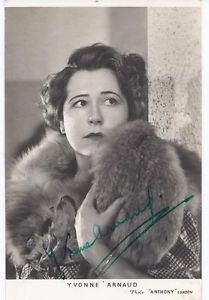 Many of the Aldwych farces were made into films starring Lynn and Walls, and the two were ranked among the most popular British film actors of the 1930s. He continued to play in both new works by Travers and others, and in revivals of his earlier successes, and made his last London appearance in 1958. Germaine Yvonne Arnaud (1890 – 1958) was a French-born British pianist, singer and actress. After beginning a career as a concert pianist as a child, Arnaud acted in musical comedies. She switched to non-musical comedy and drama around 1920 and was one of the players in the second of the Aldwych farces, A Cuckoo in the Nest, a hit in 1925.
All Fools Day, so appropriate that we should have attended the theatre to see a farce!
Additionally for April 1st., see 'Theatrical adventures'
On Monday, March 3rd., we went to London (Berkeley Hotel) for the dinner to celebrate Mrs. Atkins's recovery, and for the anniversary of "Milestones", and for the rehearsals of "The Great Adventure". After being very lively at the Atkinses' dinner at the Cafe Royal on Monday, Marguerite fell ill. No sleep. No sleep for two nights. I had Farrar and then two nurses. One of them, an Irish woman, lively, who broke most things she touched, came up with us to Comarques on Monday,March 10th., and stayed about a week. The "Milestones" anniversary supper was a great success except for the absence of Marguerite.
I went out to buy an opera hat and some flowers for Dorothy. Then I worked for an hour and a quarter.
We dined at 7.15 in order to go to "A Cuckoo in the Nest" (with Ralph Lynn therein) at Aldwych Theatre.
 |
| Yvonne Arnaud, Ralph Lynn and Mary Brough |
A Cuckoo in the Nest is a farce by the English playwright Ben Travers. It was first given at the Aldwych Theatre, London, the second in the series of twelve Aldwych farces presented by the actor-manager Tom Walls at the theatre between 1923 and 1933. Several of the cast formed the regular core cast for the later Aldwych farces. The plot concerns two friends, a man and a woman, who are each married to other people. While travelling together, they are obliged by circumstances to share a hotel bedroom. Everyone else assumes the worst, but the two travellers are able to prove their innocence. The piece opened on 22 July 1925 and ran for 376 performances. Travers made a film adaptation, which Walls directed in 1933, with most of the leading members of the stage cast reprising their roles.
Ralph Clifford Lynn (1882 – 1962) was an English actor who had a six-decade career and is best remembered for playing comedy parts in the Aldwych farces first on stage and then in film. Lynn became an actor at the age of 18 and very soon began to be cast in knut or "silly ass" roles. He played such parts as a supporting actor for more than two decades until 1922, when he was cast in the lead of a new West End farce, Tons of Money, in which he achieved immediate stardom. After the success of this play, its co-producer, the actor-manager Tom Walls, leased the Aldwych Theatre in London, where for the next ten years he and Lynn co-starred in a series of successful farces, most of which were written for them by Ben Travers.
Many of the Aldwych farces were made into films starring Lynn and Walls, and the two were ranked among the most popular British film actors of the 1930s. He continued to play in both new works by Travers and others, and in revivals of his earlier successes, and made his last London appearance in 1958. Germaine Yvonne Arnaud (1890 – 1958) was a French-born British pianist, singer and actress. After beginning a career as a concert pianist as a child, Arnaud acted in musical comedies. She switched to non-musical comedy and drama around 1920 and was one of the players in the second of the Aldwych farces, A Cuckoo in the Nest, a hit in 1925.All Fools Day, so appropriate that we should have attended the theatre to see a farce!
On Monday, March 3rd., we went to London (Berkeley Hotel) for the dinner to celebrate Mrs. Atkins's recovery, and for the anniversary of "Milestones", and for the rehearsals of "The Great Adventure". After being very lively at the Atkinses' dinner at the Cafe Royal on Monday, Marguerite fell ill. No sleep. No sleep for two nights. I had Farrar and then two nurses. One of them, an Irish woman, lively, who broke most things she touched, came up with us to Comarques on Monday,March 10th., and stayed about a week. The "Milestones" anniversary supper was a great success except for the absence of Marguerite.
Subscribe to:
Posts (Atom)