Welcome to our blog!


It's better than a bat in the eye with a burnt stick!


This blog makes liberal use of AB's journals, letters, travel notes, and other sources.


And make sure to visit The Arnold Bennett Society for expert information and comment on all aspects of the life and work of AB.

Showing posts with label W.A.R.C.. Show all posts

Tuesday, 9 February 2021

Too busy

Wednesday, February 9th., Yacht Club, London.
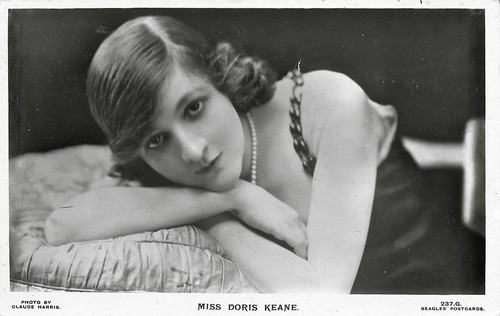
Came to London today. First good, clear frost of the winter. Very sharp. I am suffering from lumbago but otherwise in good form. I am so busy, mainly with war work, that it is difficult even to find time to reply to letters from friends. I have signed a contract to dramatise "Sacred and Profane Love" for Doris Keane, a really fine American actress. I won't start it until Easter time, and don't expect to take very long, but it should be lucrative if successful. And "These Twain" is a great success both here and in America. It has sold better than any of my previous novels, in spite of critical doubts. Those people I know who have read it tell me it is the best description of real marriage they have ever come across.

Lunch at the Reform. Pinker came. Methuen joined us about alleged coming 'revolution' in price of novels. It seems that of the Council of the Publishers' Association who had suggested it, only four published novels at all, and none published novels on any scale. So they obviously know what they are talking about! Characteristic. We told him that the scheme of different prices would never work, and coached him as to what he should say at the grand meeting on Monday.

Then to W.A.R.C. offices. Difficulty with Lord X. as to my having put name of Queen Alexandra on posters for concert. Typical. I flatly disagreed with him, which I don't think he is used to or expected. And I showed him that I was in fact logically right, and in a spirit of recociliatrion drafted a letter for him to write to the Queen. It is his sort who give the aristocracy a bad name.

Friday, 21 February 2014

Going grey

Monday, February 21st., Comarques, Thorpe-le-Soken.

Haymarket concert in aid of Wounded Allies Relief Committee at night. I have charge of the money-getting department of the Committee, and it is ageing me. I shall soon have quite grey hair. Greying hair, I am told, suits me. If I could get 75,000 dollars out of the U.S.A. for my fund, my hair would resume its original heavenly brown. The problem is that we are coming to the end of our tether for lack of funds, England being about squeezed dry. I may write to Mrs. Herzog.

For more on the W.A.R.C. see 'Coaching'

Though the concert went off without a hitch, I was very glad when it was over. I had no particular trouble but I will never organise another. The theatrical element, Henry Ainley and Nelson Keys, had a much greater success than the musical element. The latter was naturally jealous, but could not help peeping and hugely enjoying the former. One is more struck than ever by the forced cordiality of all greetings and all praise in this monde. Miss Ada Crossley, the oldest singer there, has very great charm and she got the first encore. After Ainley people began to go, and after Nelson Keys a lot went. These two had each more than one encore, and occupied a great deal of time, so that the concert was not over till 10.25. 


Henry Ainley was born on August 21, 1879 in Morley, Leeds, Yorkshire, England. he started as a bank accountant before becoming one of Britain's more esteemed Shakespearean actors.As an actor, he was known for As You Like It (1936), The Prisoner of Zenda (1915) and Rupert of Hentzau (1915). He was married to Bettina von Hutton, Elaine Titus Fearon and Susanne Sheldon. He died on October 31, 1945 in London, England. he was President of the Royal Academy of Dramatic Arts, 1931-33.
http://www.youtube.com/watch?v=tp5GdGqwz4Y

Nelson Keys was born on April 7, 1886 in London, England as Nelson Waite Keys. He was an actor, known for Knights for a Day (1937), Almost a Divorce (1931) and When Knights Were Bold (1929). He died on April 26, 1939 in London. he appeared in stage revues and musical comedies from 1906.
http://www.britishpathe.com/video/stage-stars-off-stage-nelson-keys-the-famous-chara
Ada Jemima Crossley (1874–1929) was an Australian singer. Born at Tarraville, Gippsland, Victoria, her singing in the country met with so much appreciation that she was sent to Melbourne to be trained, where Sir Frederic Cowen, heard her sing and gave her advice. Her first appearance was with the Philharmonic Society at Melbourne in 1889. She sang frequently in Melbourne at concerts and in oratorio, and in 1894, she went to Europe. Her first appearance in London was at the Queen's Hall on 18 May 1895, when she had an immediate success. For many years she held a leading place at music festivals and on the concert platform, and she gave five command performances before Queen Victoria in two years. She was also successful in America, and on returning to Australia in 1904 her tour was a series of triumphs.
http://www.youtube.com/watch?v=-XcnTb5GMXE

I had a rotten night.

Additionally for February 21st., see 'Culture in the provinces'

Audience determined to appreciate high-class music, and applauding the noisiest and most showy. Crass inertia and stupidity of sundry women around me, determined to understand and to enjoy nothing.

Monday, 10 February 2014

Coaching

Thursday, February 10th., Royal Yacht Club, London.

Came to London yesterday. First good, clear frost of the winter. very sharp. Lunch at the Reform. Pinker came. Methuen joined us about alleged coming 'revolution' in price of novels. It seems that of the Council of the Publishers' Association, who had suggested it, only four published novels at all, and none published novels on any scale. Characteristic. We told him that the scheme of different prices would never work, and coached him as to what he should say at the grand meeting on Monday.

Sir Algernon Methuen Marshall Methuen, 1st Baronet (1856 – 1924), born Algernon Stedman, was an English publisher and teacher of Classics and French. He is best known for founding the publisher Methuen & Co. (later Methuen Publishing Ltd.).

Then to the W.A.R.C. offices. Difficulty with Lord X. as to my having put name of Queen Alexandra on posters for concert. I flatly disagreed with him, whereupon he said that I was logically right, and I drafted a letter for him to write to the Queen.

I hope you will allow me to place before your readers the pressing claims of the Wounded Allies Relief Committee, of which I have the honour to be Chairman. The original object of this Committee, which was inaugurated immediately on the outbreak of the war, was the placing of wounded Belgian soldiers in homes on the English sea-coast. The inevitable developments of this work soon showed themselves in the establishment of a register of the men's names, a post-office for such of their letters as could not be forwarded through ordinary channels, and later by the equipment of homes for the disabled. Nor does the Committee overlook the require- ments of the Belgian Army in the field, in the way of stores, motor-ambulances, and caravans fitted with hot baths and soup-kitchens. Very soon, moreover, it became apparent that Belgium was not the only ally with urgent needs. The sorely taxed medical resources of France and the typhus-ravaged cities of Serbia and Montenegro have in turn demanded attention—and have got it. The Committee now supports three hospitals in France, each treating well over a hundred cases weekly, and the French military authorities pay these institutions the compli- ment of sending to them the most severe cases. A typhoid hospital of a hundred beds is now being established at Kragnjevac, the headquarters of the Serbian Army, and, acting on the report of its own Sanitary Commission, the Committee will shortly despatch a typhus unit to Montenegro. In this rough outline of its activities I have not mentioned numerous and substantial money grants to various institutions for the wounded in Belgium and France and to the Serbian Red Cross. I trust, however, that I have given some notion of the far-reaching work of the Committee and of its interest to all those who regard the welfare of our allies as the natural concern of this, an Allied country which has not suffered invasion.
Letter to The Spectator dated May 15th., 1915
http://archive.spectator.co.uk/page/15th-may-1915/17

Additionally for February 10th., see 'A little licentiousness'

It contains a good idea - that of professional fornication for the love of god - and some excellent scenes. But it is notquite good enough, and much of its attraction depends on its extreme licentiousness. Indeed, you can see the author passing on from scene to scene, each exceeding the previous one in licentiousness, exactly in the manner of a mere bawdy book. I did not read by any means all the middle part of it. Still it is a book to examine.