Welcome to our blog!


It's better than a bat in the eye with a burnt stick!


This blog makes liberal use of AB's journals, letters, travel notes, and other sources.


And make sure to visit The Arnold Bennett Society for expert information and comment on all aspects of the life and work of AB.

Showing posts with label Walter Sickert. Show all posts

Friday, 1 January 2021

A decision

Saturday, January 1st., Cadogan Square, London.
 
Very feeble this morning after the New Year's Eve carousing, and bed at 2.30. Too late for me nowadays! Towards noon I walked to South Kensington Museum to see the temporary exhibition of commercial printing and illustration. I met D.S. McColl there. He told me that some time since Tonks had been 'very much bitten with the idea' of illustrating "The Old Wives' Tale". I never knew before. Wonder if it might be worth a luxury illustrated edition? I remember that Sickert wanted to illustrate "Clayhanger". I am glad really that nothing came of either scheme because their conceptions of the characters would not be the same as mine, and would confuse my mental images.

Feeling physically better after this afternoon's sleep, but in a reflective mood. I got to thinking about New Years past. Remembered that once, as a youth, I walked up to Mow Cop on New Year's Day. Don't think I had been there before though of course I knew of it and its history. Nobody else there and I recall standing at the top looking out over the vast Cheshire plain. I felt as if I could see forever. Exhilarating. I stood there for ages, with my back to the smoke and gloom of the Potteries, just breathing deep lungfulls of clean air. I think it was then that I decided, though I didn't formulate the thought clearly, that I wouldn't stay in the Potteries, but would seek my fortune elsewhere. And that is what I have been doing since.

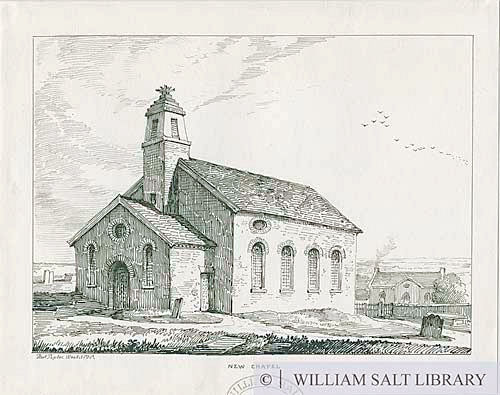
On my way back that day I stopped at St. James church in Newchapel to have a look at the grave of James Brindley. Not much to see, but I was told once by Uncle John that the Bennetts were descended illegitimately from 'Schemer' Brindley. When I got home my mother asked me what I had been doing out so long. "Oh, not much", I said.

Sunday, 9 February 2020

Pure self-indulgence

Friday, February 9th., London Yacht Club.

I wrote 1200 words of my London novel yesterday. I am pretty sure that it will be found offensive by some people who perhaps do not want to be reminded that physical relations sometimes occur between consenting adults outside of marriage. We don't seem to have advanced terribly far since Hardy was pilloried for oblique references to the way humans actually behave.

Related image
Walter Sickert
Today George Moore and Walter Sickert came to lunch. Sickert had swum in the morning and skated. In fact he had his skates with him and no overcoat though it seems cold to me out there. They talked. I said little. Moore clearly was the man of letters. He is rather detached from the normal world it seems; even the war seems to be of no interest to him. He said that he didn't read the papers now, as they only made him feel depressed and did him no good. Well, he has a point of course but surely an artist ought to have some contact with the real world? He said several very foolish things such as that he could not understand how anyone could read a war book. To read about new war devices he could understand, but not how anyone could read a war book.  

Sickert was much more reserved - he is much more normal. He told us that he cooked his own food, and cooked it very well. I admire him for that. Formerly he used to read between spells of painting during the day, but now he cooked. He goes over to the stove and say: "Ca mijotte". They both used a lot of French and spoke it very well. Moore recited a French ballad which he had written about a maquereau which I thought rather good. The he recited Villon. He is naively and harmlessly vain, and very agreeable. I enjoyed the company of both men very much.

Home to Essex for the weekend. I can admit to myself that I am not looking forward to it. How agreeable it would be to stay here, read, write, walk a little, simply please myself. Conjugal pleasures are well enough, but my balance is tipping in favour of the bachelor lifestyle. I find that I am thinking more and more frequently of separation from Marguerite. I often imagine being informed that she has been killed in an accident or an air raid. I know that my first emotion, were I so informed, would be one of relief. Then I think, would I really be happier on my own or is it just another case of the grass being greener? There would have to be something decisive and dramatic to precipitate the break because I can't imagine myself proposing it. I wonder if she is thinking something similar? How preposterous that people are so unable to communicate effectively. I don't hanker for new relationships, but would just like to do what I like, when I like, without recourse to the needs of someone else; pure self-indulgence.

Wednesday, 5 December 2018

Sea air

Sunday, December 5th., Royal York Hotel, Brighton.

Painting by Clem Lambert | Royal York Hotel | Hotels ...Down here for a few days to get a change and some sea air. I like Brighton, though most of my friends seem to think I am peculiar to do so. Good walking. Good bookshops. Comfortable hotel. Of course it was here that I started to write "Clayhanger" so many years ago now, and it doesn't seem to have changed much in the meantime.

NPG x74800; Thérèse Lessore; Walter Richard Sickert ...Walter Sickert and wife (Therese Lessore) and Cobb and Schuster and Wylde dined with us here. Sickert, now aged 66, was in great form, especially towards the end of the dinner and later when we came up to our sitting room. His wife was very quiet and dark and sweet, but far less quiet than when I sat next to her at dinner at Ethel Sands' a year or two ago. I mentioned “Clayhanger” to her, and she asked why I had stopped writing Five Towns novels. I told her that I had said all I wanted to say, that the well had run dry. She said it was a shame.

Sickert said some fine sopund things. He explained to us exactly why he liked Leader's pictures. But his pose is increasing of admiring the public as a judge of art. I said that what he said was only half true, and he said: "Yes, but there is a great deal in it."

Friday, 9 February 2018

Agreeable men

 Friday, February 9th., London Yacht Club.

I wrote 1200 words of my London novel yesterday. I am pretty sure that it will be found offensive by some people who perhaps do not want to be reminded that physical relations sometimes occur between consenting adults outside of marriage. We don't seem to have advanced terribly far since Hardy was pilloried for oblique references to the way humans actually behave.

Related image
Walter Sickert
Today George Moore and Walter Sickert came to lunch. Sickert had swum in the morning and skated. In fact he had his skates with him and no overcoat though it seems cold to me out there. They talked. I said little. Moore clearly was the man of letters. He is rather detached from the normal world it seems; even the war seems to be of no interest to him. He said that he didn't read the papers now, as they only made him feel depressed and did him no good. Well, he has a point of course but surely an artist ought to have some contact with the real world? He said several very foolish things such as that he could not understand how anyone could read a war book. To read about new war devices he could understand, but not how anyone could read a war book.  

Sickert was much more reserved - he is much more normal. He told us that he cooked his own food, and cooked it very well. I admire him for that. Formerly he used to read between spells of painting during the day, but now he cooked. He goes over to the stove and say: "Ca mijotte". They both used a lot of French and spoke it very well. Moore recited a French ballad which he had written about a maquereau which I thought rather good. The he recited Villon. He is naively and harmlessly vain, and very agreeable. I enjoyed the company of both men very much.

Home to Essex for the weekend. I can admit to myself that I am not looking forward to it. How agreeable it would be to stay here, read, write, walk a little, simply please myself. Conjugal pleasures are well enough, but my balance is tipping in favour of the bachelor lifestyle.

Saturday, 24 November 2012

Interesting artistic experiences

Friday, November 24th., London.

H.G. Wells told me his scheme for a whole series of new books, some being novels. He wants monarchy destroyed, of course, and to have a new religion (that there is one God - and apparently he can be what you like) without priests and churches. He thought very little of British high command at the front, and had difficulties with the Censor about his articles on Front, and meant to say what he thought in a book to be issued in January.
I was still suffering yesterday from my stomach chill, but I wrote a thousand words.
I went up to the Omega workshops by appointment to see Roger Fry.

Roger Eliot Fry (1866 – 1934) was an English artist and art critic, and a member of the Bloomsbury Group. Establishing his reputation as a scholar of the Old Masters, he became an advocate of more recent developments in French painting, to which he gave the name Post-Impressionism. He was the first figure to raise public awareness of modern art in Britain, and emphasized the formal properties of paintings over the "associated ideas" conjured in the viewer by their representational content. He was described by the art historian Kenneth Clark as "incomparably the greatest influence on taste since Ruskin... In so far as taste can be changed by one man, it was changed by Roger Fry".


Arrived as arranged at 2.30. I was told he was out. Then that he was at his studio down Fitzroy Street. I went there and rang. He opened door.
"Come and have lunch," he said. "I've had lunch, it's 2.30," I said. "How strange!" he said. "I thought it was only 1.15." Then as he went upstairs he cried out to a girl above: "Blank (her Xtian name), it's 2.30," as a great item of news. Fry expounded his theories. He said there was no original industrial art in England till he started i.e., untraditional. He said lots of goodish things and was very persuasive and reasonable. Then he took me to the showrooms in Fitzroy Square, and I bought a few little things. I did not buy a fine still life by Duncan Grant. But I may, later. I gradually got to like a number of the things, especially the stuffs. He said manufacturing (English) firms roared with laughter at his suggestion that they should do business together. One firm quoted an impossible price when he asked them to make rugs to his design at his risks. But when a eulogistic article appeared in The Times they quoted a lower price, a reasonable one. He said that both French and German firms would take his stuff. I began to get more and more pleased with the stuff, and then I left with two parcels.
This morning I went to Carfax Gallery and bought a Sickert from the Sickert stand there, "Coster Girl".

William Rothenstein
In 1898 William Rothenstein co-founded the Carfax Gallery in St. James' Piccadilly with John Fothergill . During its early years the gallery was closely associated with such artists as Charles Conder, Philip Wilson Steer, Charles Ricketts and Augustus John. It also exhibited the work of Auguste Rodin, whose growing reputation in England owed much to Rothenstein's friendship and missionary zeal. The gallery was later the home for all three exhibitions of The Camden Town Group, led by Rothenstein's friend and close contemporary Walter Sickert.

Had some talk with the proprietor who was highly intelligent, and stuck to it that Claude Phillips, though he couldn't write, had real taste. The boss thought Sickert the greatest artist of the age.