Welcome to our blog!


It's better than a bat in the eye with a burnt stick!


This blog makes liberal use of AB's journals, letters, travel notes, and other sources.


And make sure to visit The Arnold Bennett Society for expert information and comment on all aspects of the life and work of AB.

Showing posts with label McKenna. Show all posts

Thursday, 4 March 2021

Making up the numbers

Saturday, March 4th., Comarques, Thorpe-le-Soken.

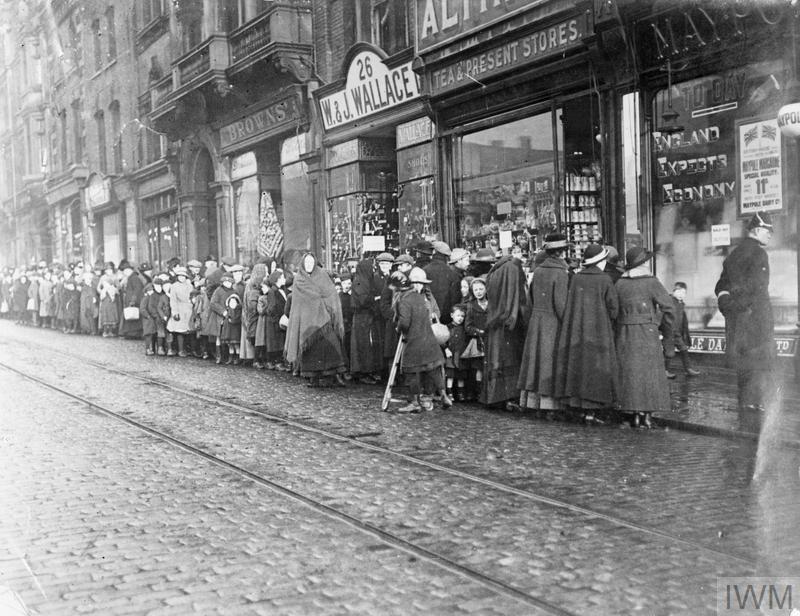
Went to London Wednesday. Lunch and sleep at Marriott's. Then national 'Economy' meeting at Guildhall where I sat next but one to Barrie. McKenna spoke well but too slowly. Kitchener read badly a speech which had evidently been prepared for him. Balfour was pleasing. I found myself thinking that it was all so much theatricality. Everybody going through the motions, playing their part, feeling important, and it all amounted to what? Simply a show to put a stamp of joint purpose on policies which are already decided and in train. But it looked good in the papers yesterday! I don't know why I was there. To make up the numbers I suppose.

Some of the Labour people were funny. The representative of one branch of workers drank too much. Another slanged trade unions. Turner of the Shop Assistants was good. 

Another quarrel with Marguerite. Once again she has instructed the maids that they must get up at 5.30 to start their work. Once again I have explained to her that my peace of mind, my work, my sleep, my general well-being are of primary importance. The management of the house must be organised to fit in with me, not the other way round. Marguerite knows this, she has admitted as much, and yet she persists in making changes which go against my wishes, and upset me. I don't want to get involved in the management of the house and the indoor servants; at the outset we agreed that she should do those things and I would look after the garden. But I will not be disturbed!

Thursday, 4 February 2021

Peace needed

Monday, February 5th., Comarques, Thorpe-le-Soken.

Lunch at the Reform with Wells and Gardiner yesterday. They were in favour of communal feeding in case of starvation, as most efficient, starting in schools. Hard to believe that such a possibility is even being considered here. What a pretty pass! Wells took the submarine menace, like me, very calmly. On the other hand, Donald and McKenna who joined the conversation were much upset by it and gave dramatic figures. They are closer to the centre than we are, so should know what they are talking about.

The announcement that U.S.A. had severed diplomatic relations with Germany caused really very little discussion here. It was discussed a little at lunch. Already the intensely misunderstanding and unjust attitude of Marguerite and the officers (some of them) to the U.S.A. is changing. It is some sort of cognitive adjustment which allows people to 'fit in' with a different way of looking at things when that way becomes the accepted one. Within a week they will have forgotten that they ever thought differently.

At tea , when Lieut. and Mrs. Tracy came, it was discussed a little, and Mrs.Tracy well formulated for me the advantages of an 'American Peace', that is an unbiased peace, which was received with silence not altogether hostile. The fact is that unless something happens soon, both 'sides' will suffer and nothing will be gained except the salving of some misplaced pride. Afterwards Clegg agreed with me as to the advantages of the 'American Peace'. During the remainder of the evening nothing was said as to America, but the cognitive wheels were imperceptibly turning.

Wednesday, 16 January 2019

Keeping to time

Saturday, January 16th., Comarques, Thorpe-le-Soken.

London today to see the work of the Queen's Fund. I took my niece Mary and my nephew Richard with me and Tertia met us at Liverpool Street. They all went off to do their own things and we met later for the return trip. Needless to say the 10.7 was late. I have never known it not to be late. I mentioned it to the ticket inspector and he said: "It's because of the war." Unbelievable! I was so surprised by the sheer effrontery of that reply that I failed to make a rejoinder.

36 Smith Square, Westminster, London, seen from the entrance of St John's Church
36 Smith Square
Lunch at Mrs. McKenna's, wife of Reginald. Largeish house in Smith Square, designed by Lutyens. Very bare and lacking in furniture. I don't think they have been there long. What furniture there was was good though. Oresent: Masterman, full of good humour; Brock, Secretary of National Relief Fund; and Mary Mc Arthur, stoutish matron with a marked Scotch accent. I met her on doorstep and introduced myself. I liked her.

Mrs. McArthur had prepared a timed programme of our pilgrimage, with times in it for leaving like 2.48. Definitely a woman after my own heart. And we kept to it fairly well.

Tuesday, 15 January 2019

Journalistically speaking

Saturday, January 15th., Comarques, Thorpe-le-Soken.

I went to London Wednesday and returned Friday and was ill nearly all the time with dyspepsia. Edward Garnett lunched with me on Wednesday.  He said he had an important matter to discuss. It was a project for a weekly 1d. political paper to tell the truth about politics. He wanted me to give up everything and edit it; also to start it and organise it. He had the title and a plan of contents, including chiefly a series of "Fables for Liberals". He had written the first fable himself. When I asked him what he would do, he said he only meant to contribute himself. He was quite sincere, and had not begun to suspect that the scheme originated in his idea for a fable about Liberals who had lost their trousers. 

From the Reform I went to the Statesman to discuss with Sharp the notion of some plainer writing about political facts. I had previously seen McKenna's brother, who told me that Reginald was still quite determined to leave the Cabinet if it tried to outrun the constable. He indicated that the financial situation was exceedingly grave.  

At night I dined with Atkins who told us he had met an old friend that day, an American journalist named Marshall whom he had known in the Cuban war, and who had been shot in the spine in a very interesting way, so much so that it ought ot have been impossible for him to live, and two medical books had been written about him. He walks with a stick or sticks. This man was coming to Europe journalistically, and Bernsdorff had him in at the Waldorf-Astoria, and said to him: "You can have £50,000, not dollars, before you leave this hotel if you will go to Europe in German interests." Marshall refused. Bernsdorff then went further and told him that he could have the biggest journalistic scoop that any journalist had ever had. Namely that he should be taken from Belgium to Berlin in a Zeppelin and there have an interview with the Kaiser, and be brought back. Marshall refused. Atkins said he knew Marshall very well and vouched for his honesty. The Zeppelin excursion was afterwards accepted by another American journalist, whose name I forget, but he died in the Zeppelin on the way. Atkins seemed to genuinely believe all this twaddle.

He then told us that Lord Cromer had told him that an English officer out in Russia on military contracts business found himself absolutely unable to do the business without backsheesh to officials, which he refused to give. He then managed to see the Tsar, who affected great surprise and went over the heads of the officials - but how long the Tsar's arrangement 'worked' Atkins couldn't say. Atkins is certainly an entertaining dinner companion; I wonder what he will do for stories after the war?

Tuesday, 27 March 2018

War gloom.

Wednesday, March 27th., Yacht Club, London.

Roman Christendom
Sydney and Beatrice Webb
Lunch at Webb's. Webb said his wife couldn't sleep on account of the war news, and he had to exaggerate his usual tranquil optimism in order to keep the household together. It was one of the rare human touches I have noticed in the said household. It is hard to imagine any tenderness between the two, let alone passion! Yet Beatrice is an attractive woman. Surely there must be times when the intellect gives way to normal animal instincts? Anyway, they were soon off into the misdeeds of the Reconstruction Committee. I was told that certain of the staff of the Department of Information (Webb termed it 'Propaganda') had resigned when Beaverbrook was appointed Minister over them, refusing to serve under 'that ignorant man'. They won and were transferred to the Foreign Office. One more instance of the hand-to-mouthism of Lloyd George according to Webb. I thought they would be pleased to hear of the abdictaion of the Czar, and the progress of the revolution in Russia. But no sign.

Went from there to the Reform to see the papers. Massingham was so gloomy he could hardly speak. The brothers McKenna came in intensely pessimistic. I was rather ashamed of them. Spender's two articles in the Westminster were A1 for fortitude and wisdom. I think more and more highly of this man. Then to flat to dine. Electricity not working there. Gloom of candles. Marguerite very gloomy about the war. This sort of thing always makes me cheerful. There is a perverse side to my nature which has often been pointed out to me which makes me take a tack opposite to the general mood.

Sybil Colefax gave a very good description of the All Clear Signal in a few words at dinner. She said she was walking with her husband in the streets towards the end of a raid. Everything was quite silent. Then the search Lights began winking the All Clear all about the sky. Then the sound of the All Clear bugles was heard. Then the footsteps of a man. Then the footsteps of ten people, of twenty, of a hundred. The town was alive again!

Sunday, 11 November 2012

Remembrance

Sunday, November 11th., London.

I walked out and 'saw' the Two Minute Silence from inside the lobby of the Court Theatre. When I saw old gents standing two minutes  in that perishing wind, hatless, I was glad I'd come inside.


The idea for a Remembrance Day silence was first suggested by Australian journalist Edward George Honey in a letter to The Times in May 1919. He was thinking of a five-minute silence but that was thought too long. One minute was deemed too short. On 7th November 1919, King George V issued a proclamation asking that: "at the hour when the Armistice comes into force, the 11th. hour of the 11th. day of the 11th. month, there may be for the brief space of two minutes a complete suspension of all our normal activities... so that in perfect stillness, the thoughts of everyone may be concentrated on reverent remembrance of the glorious dead."

I read the "Memoirs of Max of Baden", and learned something about Germany in the war.

Then to Stornoway House to dine with Beaverbrook. Dean Inge and wife, Churchill and McKenna were the other guests. The gloomy dean was not at all gloomy. 


William Ralph Inge was known to the public as ‘The Gloomy Dean’ for the sharp cultural criticism of his columns in the Evening Standard. He was a passionate Christian Platonist known in the academy for his work on mysticism, Plotinus and a synthesis of Christianity and Platonism. Inge wrote over thirty-five books in the areas of mysticism, Christianity, Platonism, ethics and contemporary issues. A number of his books were collections of his essays, including two series of Outspoken Essays, a title that betrays much about its author. For Inge was a controversialist, even a contrarian. In theology he was a liberal, in politics something of a reactionary. A supporter of animal rights and the arts (serving as trustee of the National Portrait Gallery from 1926 to 1951), he was a constant critic of the state of modern civilization, particularly in its democratic form. It was this criticism in the form of regular columns in the Evening Standard (1921–1946) that earned him his reputation as ‘The Gloomy Dean’.


 We all went to the Armistice Festival organised by the Express at the Albert Hall; we had the box next to the King, Queen, and Co. This affair was very impressive indeed.


Thousands of former soldiers and 1,000 widows and other women in deep mourning attended the Remembrance Festival at the Albert Hall. There was an ovation when a fanfare of State trumpets announced the arrival of the King and Queen, who were accompanied by the Duke and Duchess of York. A trench ran down the centre of the hall, and the stage was fashioned to represent a dugout, giving point to the community singing of such wartime favourites as "Tipperary," "Keep the Home Fires Burning," and the old-time catchwords which were shouted across the hall, such as "Are we downhearted?" and the thunderous answer "No!" These were lighter episodes, but deeper emotions were stirred when the lights were dimmed and such memorial music as Chopin's "Funeral March" was played by the massed Guards' bands, and the hymns "O God Our Help in Ages Past" and"Abide With Me" were sung. The festival ended with the sounding of the Last Post and the Reveille. Earl Jellicoe made an impressive appeal to the vast assembly to renew the pledges to keep the spirit of comradeship which won the war for the Allies, while working unceasingly for peace, so that such horrors would never be repeated.


In argument on finance, McKenna knocked Churchill to bits. The financial debate between the Chancellor and the ex-Chancellor was very diverting. I left at midnight.
I enjoyed this evening. It woke me up.