Welcome to our blog!


It's better than a bat in the eye with a burnt stick!


This blog makes liberal use of AB's journals, letters, travel notes, and other sources.


And make sure to visit The Arnold Bennett Society for expert information and comment on all aspects of the life and work of AB.

Showing posts with label Rider Haggard. Show all posts

Saturday, 23 January 2021

Imaginings

Saturday, January 23rd., Hotel Russie, Rome.
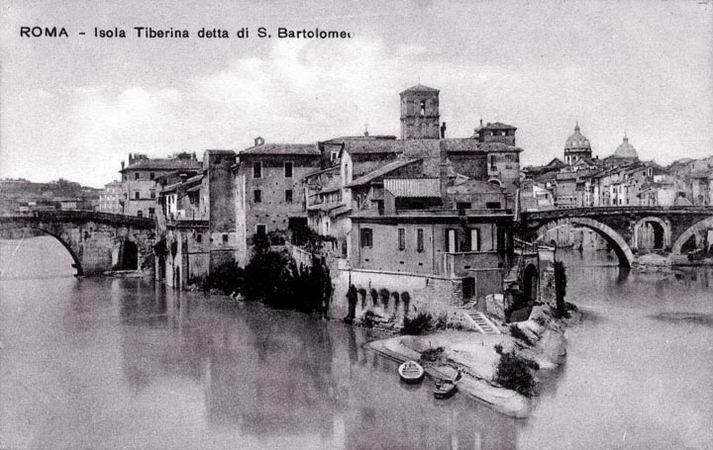
I didn't begin work until 6 p.m. Lunch at the hotel. Then we went for a drive, Dorothy's idea. Right down the right bank of the Tiber to the place where I moored the Velsa before the war. Much interested to see this again. It was a good spot.

In conversation Dorothy asked me an interesting question: "If you could go back in time for one day, in Wells's time machine say, where would you choose to go?" I found this difficult to answer because there are so many things to consider. To gain time I asked a few clarifying questions: observing or participating, visible or not, all day or just daylight hours? Then I settled on Athens during the Greek 'Golden Age' with the Parthenon just built and philosophers aplenty. She opted for Rome at the time of Augustus. Predictable choices.

But since then I have been thinking it over, and have changed my mind. Of course I would love to see Athens in its glory, and Rome. And I would like to visit Elizabethan England, and Florence during the Renaissance. But I know quite a lot about these places and times, and they would, in a sense, be familiar. So, if asked now I would settle instead on one of the Mayan cities in Central America, Palenque or Copan. I well remember reading, and being enthralled by, John Lloyd Stephens' account of his travels in that region, especially the arrival at Copan. It seems to me that to spend a day in one of those places would be quite alien, exciting and unlike anything I could imagine. I salivate, metaphorically, at the prospect!

Of course Haggard, and similar 'romantic' writers imagined such places and peopled them, but generally it seems to me the people were really modern day people transposed. I don't think any author has successfully imagined himself into a different way of seeing and living in the world; perhaps it is not possible to do so. Certainly I could not do it.

 

Wednesday, 6 January 2021

Bad!

Thursday, January 6th., Cadogan Square, London.

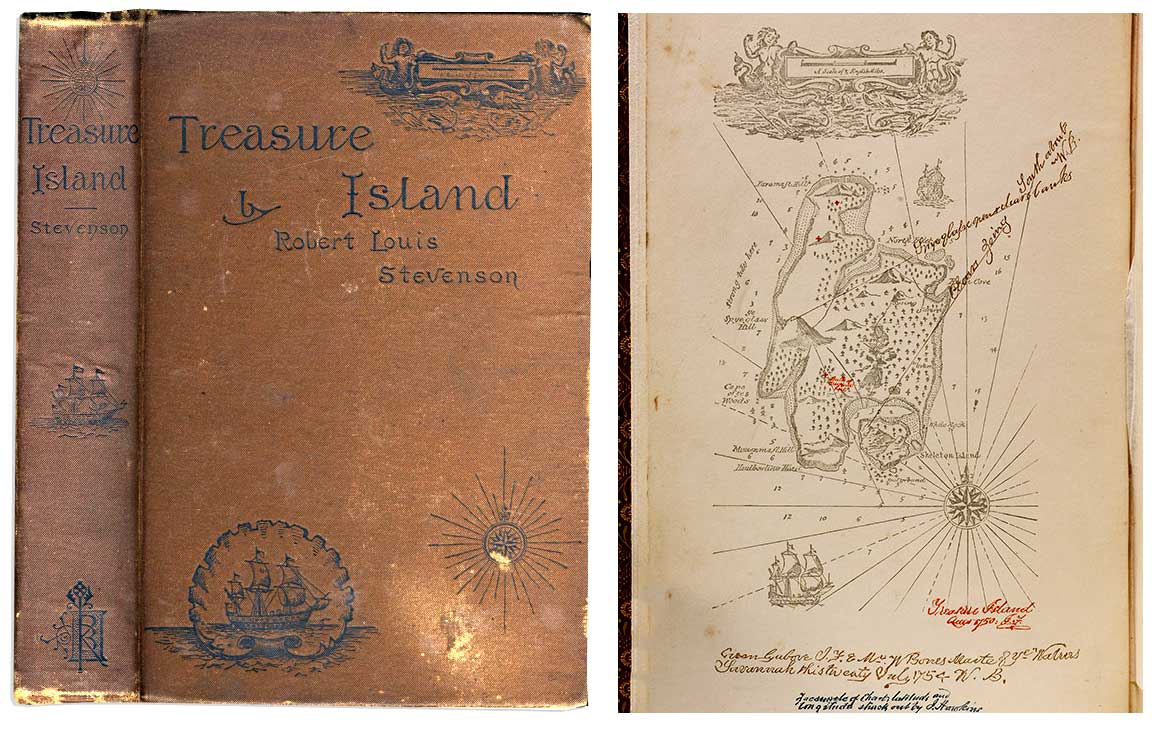
I bought "Treasure Island" yesterday, as I had lately heard such praise of it. All I remember of my first reading, many years ago, is that I liked it. I read a lot of it yesterday afternoon and a little more this morning. All I can say is that I thought it wasn't so bad. I have a soft spot for a rollicking good story, like Haggard's early stuff for example. Sometimes you just want to be carried away by the story, not caring about obvious gaps in the plot or inconsistent characterisation. Whatever you say about Stevenson, he did know how to tell a story. And think of the influence he has had with this book on how people think. Ask anybody what they think of when they think of pirates and they will say things like: "peg-leg", "parrot", "buried treasure", "pieces of eight".

Of course the moral and artistic value of any particular book published now is unknowable to us. Posterity alone will judge our books. I hope it will judge mine favourably. We can however immediately judge the value of our books considered as physical objects. And this consideration has importance. Most books, and especially most novels, are bad examples of the art and craft of making books. They are badly set-up from bad founts of type in a badly designed page, printed on bad paper, badly bound, and enveloped in bad dust covers. They offend the eye of taste; they offend an honest partiality for sound workmanship, and when you have read them they look as misshapen as if they had been thrown down in Piccadilly and run over by a motor bus. I think I may be turning into William Morris in my old age!


Tuesday, 3 December 2019

News from Egypt

Tuesday, December 3rd., George Street, London.

3_20 London Old Photos - Old Knightsbridge photographs in ...My health is in the main very good, with slight stumbles. After much searching and disappointment I have taken a house in Cadogan Square (No. 75). It is not so central as this but it is the best I could get. There were no flats that would suit me. It is a large house and I am subletting the top floor (4 small rooms) to my secretary Miss Nerney and her mother. It will be an immense advantage to have my secretary on the spot, and the arrangement seems to suit them as well. Miss N. is much attached to me and, frankly, I would be lost without her. She has been with me for eight years now and I often reflect that it a good job she is not an attractive woman (sexually speaking) as we are thrown a good deal together. As far as I can tell she has no sexual interest in men at all.

Tutankhamun – theunredacted – MediumMuch excitement in the press about the discovery of a Pharaoh's tomb in Egypt - name of Tutankhamun apparently. It seems that Lord Carnarvon and a Mr. Howard Carter, professional archaeologist, have been searching for this tomb for several years and are at last successful. The Times seems to have the best source of information, apparently Carter himself. As I understand it much work has been undertaken to clear a way through to the sealed tomb which was entered by Carter just a couple of days ago. Though it has been entered in antiquity by tomb robbers it seems that there is a great deal relatively undisturbed, and, particularly, an inner chamber where they hope to find the mummified body of the pharaoh himself.

All very exciting. Just the sort of thing Haggard would write about, though his protagonists would only have come to the tomb after surviving immense challenges in an alien landscape and would probably make their entrance at dead of night with only a flickering candle for illumination. I jest! The whole business has stirred my imagination and I feel that I would like to see some of the marvels of Egypt myself. In fact, given my changed domestic situation, this would be a good opportunity, but I am commited to the new house with its attendant costs and responsibilities. Oh to be at liberty!


Friday, 25 January 2019

Time for a change

Friday, January 25th., Chiltern Court, London.

I am in the throes of packing for a holiday to the Canary Islands, allegedly a place where it is always Spring. I do hope so because I have reached that stage in the British winter when the weather is getting me down. Not that it has been particularly cold, or particularly wet (come to think of it, it hasn't been very wet at all) but a pervasive greyness assaults the spirit and depresses the mind. I hope for some warmth, and some blue skies, and some colour; in fact I long for them.

The Lost Child | Rahel SANZARAIn the meantime I have finished an interesting and unusual book titled "The Lost Child" by Rahel Sanzara. Sanzara is said to be the pseudonym of a famous German actress, who apparently suffers from an unnatural objection to publicity. It is the story of the murder of a little girl by a boy. The author has considerable gift of narrative, and she has invented a plot which, while perhaps somewhat antipathetic to the normal mind (such as my own), is worked out very effectively indeed. The abnormal psychology is very well done.

German critics call "The Lost Child" a masterpiece. I don't. I call it rather the brilliant outpouring of a highly emotional woman who was mastered by 'a great notion for a story', and who freed herself from the obsession of it by writing it down at a temperature of 104 degrees. I remember reading once that Rider Haggard wrote his novels 'at white heat'. He has something in common then with Rahel Sanzara. Bit of an odd name (even an invented name) for a German woman that. But the book is certainly 'enthralling' as people say and induces you to read it 'from cover to cover', also as people say. Certainly it is more enthralling than the majority of detective novels. Of course I read it in translation and this may have detracted somewhat from my estimate of it as a potential masterpiece.

And now I must get on with selecting a variety of books to accompany me on my travels. I have several novels to hand but also like to read a little history and perhaps a biography or two. Maybe some popular science, but no philosophy! Not of any kind.

Saturday, 20 October 2018

Almost idyllic

Saturday, October 20th., Villa des Nefliers.

It has seemed to me these days that I am living, as distinguished from preparing to live. 

The Arnold Bennett Blog: Self awareness
Villa des Nefliers
In autumn weather; plenty of heavy continuous rain, which is pleasant to hear when you are safe in the house and busy in the house, and the ground floor and the bedroom floor are both warmed. Work in the morning on the play, which goes pretty easily. Sleep, reading, and journal after lunch. New books coming in every day. Grand piano. Discovery of playable Schubert. "Clayhanger" in its third English edition. Agreeable tension of anxiety of waiting for news of this book's reception in America. Journey to Paris now and then. Miscellaneous browsy reading in the evening. Good appetite. Regular, varied and pleasurable "love" as the husband of a Frenchwoman!

The drawbacks to this idyll are - no progress in drawing, fairly bad sleeping, and some neuralgia. But then it must never be forgotten that since the end of May last, thanks to evening bread and milk, I have never had more than one hour's continuous stomachic headache ..... It cannot be long before some infernal nuisance supervenes. Such a state of content will not be allowed by destiny to last much longer!

Allan Quatermain by Sir Rider Haggard SignedI have been re-reading Haggard's "Allan Quatermain". Whatever one may say about Haggard (and a good deal has been said), he can tell a story. No matter how preposterous the material he completely engages the reader. Ideal for the sort of quiet, escapist sort of read we all need from time to time but never admit to. "Allan Quartermain" is a bit didactic at times. I suppose that, having achieved success, Haggard felt able to 'let himself go' with opinions about modern life. Still those parts are easily skipped. For me, Umslopogaas is the central character in the novel, easily eclipsing the rather pallid English gentlemen Curtis and Goode. Haggard had a real affection for the Zulu people and almost escapes the racism endemic in the English upper classes. I may re-read "Nada the Lily" next to get a really good dose of bloodshed and death! 

Monday, 5 October 2015

Detective novels

October 5th., 1929. Cadogan Square, London.

I read the last 200 pages of Gaboriau's "L'Affaire Lerouge" this afternoon. I must have read it first as a boy, in English. My previous last perusal of the original French was in 1916. Now I have finished it again. I read it in order to compare some new detective novels with an admitted masterpiece in that kind. There never was such a rage for detective novels as today. Our chief truly literary monthly, written mainly by highbrows for highbrows,. gives many pages each month to the appraisal of the latest detective fiction. "L'Affaire Lerouge" is out of sight better than the British favourites of the hour. I should like to think otherwise but I can't. It is better because it has a firmer grasp of plot and much more creative imagination.

Image result for gaboriau "L'Affaire Lerouge"The first 200 pages - the opening, the discovery of the crime, and the preliminary detective work - are simply brilliant. No flaw in them. But the novel as a whole is by no means perfect. Gaboriau even in his best novels has two faults. His use of coincidence amounts to impudence. There are two terrific coincidences in "L'Affaire Lerouge". One is that Tabaret the amateur detective happens to live in the same house as a group of people intimately and vitally connected with the crime! The other coincidence is that Daburon, the examining magistrate, happens also to be connected with the same above-mentioned small group of people.

These enormities would ruin any fairly good detective novel. But Gaboriau by his immense force of creative imagination, carries them triumphantly off. He compels you to say to yourself - "Well, it was extremely odd that things fell out so, and extremely convenient for the author, but they did fall out so. And that's all there is to it!"

I have been in Hampshire for the weekend enjoying the last fling of this Indian Summer. Stayed at Fordingbridge which is a pleasant small town on the edge of the New Forest with an impressive bridge over the Avon. An enjoyable walk in the Forest last Thursday for about 3 hours - easy walking, varied scenery and lots to look at. Then on Friday down to the coast near Keyhaven for a stroll by the marshes which were alive with all manner of birds. I was particularly taken with the Lapwings, showing themselves to great effect in the sunshine. Whilst away I re-read Haggard's "Heart of the World", a typical tale of wonder and derring-do set in Central America. Haggard only really has one plot which he sets in various exotic locations, but good for a light read away from business. 

Sunday, 5 May 2013

The noble savage

Thursday, May 5th., Rue de Calais, Paris.

Yesterday afternoon I went to an exhibition of 'Primitifs Francais' at the Pavilion Marsan in the Louvre. I was not overstruck by the exhibition; what impressed me was the colossal interiors of the pavillion, which after all is only a mere incident in the Rivoli facade of the Louvre.

I also saw one of the best-dressed women that I ever did see. She was tall, and, I think, American. She was wearing a fortune, and in perfect taste too. She set for me a new standard in frocks.

I have been reading some Rider Haggard. Though a popular and sensational writer there are good thing in his work. He can certainly tell a tale. "King Solomon's Mines", for example, carries the reader inexorably forward and is hard to put down. He is at his best when writing of the Zulus. Though he retains some of the prejudice towards 'natives' which characterise the white man, he is clearly an admirer of the Zulus. There is real poetry in some of his descriptive passages and my sense is that this derives from his knowledge of Zulu language and culture. Women are incidental to the story. Even "Nada the Lily" for example is about the hero Umslopogaas, not about Nada, and he is prone to idealise white women. Overall not to be sniffed at;  a useful relief from 'literature'!