Welcome to our blog!


It's better than a bat in the eye with a burnt stick!


This blog makes liberal use of AB's journals, letters, travel notes, and other sources.


And make sure to visit The Arnold Bennett Society for expert information and comment on all aspects of the life and work of AB.

Showing posts with label Dorothy Cheston. Show all posts

Sunday, 21 March 2021

More Cointreau needed

Saturday, March 21st., Cadogan Square, London.

We were at Lady Colefax's supper to meet John Barrymore on Thursday night. There were no Asquith's there which was surprising as Asquiths seemed to occupy all the boxes on the first night of Barrymore's "Hamlet" at the Haymarket. Also they were photographed in their boxes. Barrymore, at the supper where he arrived after 1 a.m., seemed to be partly exhausted. He looked distinguished but didn't talk distinguished. During songs he closed his eyes and seemed to sleep. Then he exclaimed: "Oh, for some Cointreau!" very urgently, and it was brought quickly to him. He is very shrewd and perspicacious. Needless to say he was much admired by the ladies, not excepting Dorothy.

I am inclined to be 'unwell'; some people, I know, think me something of a hypochondriac because I generally look well enough whilst complaining of a variety of symptoms not visible to them. In fact I think that people admit themselves 'unwell' oftener than they used to. This is because they know a little more about the greatest of all physical marvels and mysteries, the human body. I former days an indisposition was looked upon as the act of God and regarded fatalistically. Now it is known to be the act of man and therefore perhaps cuarable if officially proclaimed and treated. The champions of the past in this matter say that we are a generation of mollycoddles.

Still, we live appreciably longer than our ancestors. Some will assert that since life is a nuisance, then longer life is a still greater nuisance. I do not subscribe to this view in spite of my notorious ill health. In some ways we have retained the foolishness of the past. Today, just as in former times, there are certain diseases, especially those affecting physical attractiveness, as to which women will unfailingly become hysterical. And men are as apt as ever to become hysterical if their digestive organs go wrong. I am guilty of this. On the other hand a man will still as of old deny to himself the existence of an obvious  chronic malady, and carry on his existence as if his proper place was not in bed. And then die suddenly, and have the effrontery to be surprised thereat.

And what remarkable faith we can generate, in the face of all good sense, in patent remedies. I am guilty of this as well. Not only will people try all sorts of quack medicines, they will convince themselves they are working, and broadcast their success, until their failure becomes manifest and there is no alternative to a quiet reversion often accompanied by a declaration that they didn't really expect it to work in any case.

Wednesday, 10 March 2021

Plenty of material

Saturday, March 10th., Cadogan Square, London.

George Doran came to lunch, and after lunch, in my study, he began talking about the idea he had given me last year for a novel based on the tragic life of Ernest Hodder-Williams. I said I liked it but couldn't handle it yet, as I was more attracted by a scheme for a realistic novel about a big luxury hotel. I have had this scheme in mind for years now and it is a ghost I must lay before I am much older. All the material is in my head. I shall probably begin it as soon as I have finished my play. Doran was disappointed but accepted the inevitability of my decision.

An interesting novel by a young Irish (Northern) writer has come into my hands. Nick Laird. I think we will be hearing more from him. The book's title is "Modern Gods". Essentially the story concerns two sisters, one of whom is an academic anthropologist but has rather 'lost her way' professionally and emotionally, and the other has married a man who turns out to have an unfortunate past. Very unfortunate - he has killed several people in a sectarian act and served a sentence. The first sister, Elizabeth, has, and takes, the opportunity to go off to New Guinea to investigate and report on a new cult that has arisen there. The second, Alison, has to cope with being bound to a man she feels she no longer recognises. Tribalism is at the centre of the narrative. Also the chronic hypocrisy of religion and professedly religious people. Also elements of a daughter's relationship with her mother, misunderstandings and betrayals. Laird is good at dialogue which is very authentic to my ear, and he handles the juxtaposition of the parallel stories well. Good also at creating a sense of menace which unsettles the reader. The ending is poor. In fact it seems to just stop as if the author had run out of time. I also felt that there was so much material that Laird had failed to write the much longer and more interesting book that was available to him. Definitely a writer to watch out for.

I was at a big dinner at the Savoy last evening, given to Capt. George Nicholls ('Quex' of the Evening News). He insisted that I sit next to him, for moral support, which I thought a great compliment. Birkenhead was in the chair and made a most brilliant and impudent speech. Champagne was bad and so I have a slight headache today. But I have spent time with Virginia and have taught her to negotiate the stairs with only minimal help. Dorothy will be surprised when she returns.

Tuesday, 9 March 2021

Wondering and wandering

Tuesday, March 9th., Chiltern Court, London.

A sunny morning and I walked out to get ideas. Regents Park. I haven't spent much time there since the move, but I like its informality. Strolled along the Broad Walk and almost felt as if I were on holiday. Mainly young women pushing perambulators, nannies in the main I suppose. So what are the mothers doing who would otherwise be out here with their children? Difficult job being a nanny I should think. Not the work as such, but the social relationships, getting the balance right with family and other servants. Increasingly difficult with the way society is changing. Servants are rapidly becoming a thing of the past.

I noticed today that I am talking to myself more. I don't mean the internal dialogue which I suppose everybody has, but actually talking out loud. Is this a sign of ageing? Probably. I think I do it most frequently in my study, when something is on my mind and I pace about from one side of the room to the other. It is not quite a 'real' conversation because it seems most often to be a case of seeking confirmation of a point of view or a decision taken. I find myself saying things like "What do you think AB?" and hearing myself reply "Absolutely right, just what I think". It seems perfectly natural at the time but is a bit odd set down in writing. I wouldn't mind asking other men of my age if they do it, but perhaps they would think me peculiar. Rivers would be the very man for this. I could ask him without any embarrassment.

When I think of it I don't really have any intimate friends now, and sometimes feel quite lonely, which is strange for a person who spends most of his spare time 'going out'. No point trying to talk to Dorothy about it. She would listen of course but wouldn't be able to imagine herself as me and would respond superficially. Would Marguerite have understood had we still been together? I don't know. 

Internal dialogue. That is an interesting phenomenon it seems to me. Personally, I can't imagine how I would think at all without language, and yet I must have done so I suppose before I learned to speak. And what about our distant ancestors? It increasingly appears that the evolution of man has taken place over many millions of years, but language is relatively recent as far as I have understood things. So how did men think before they had language? In the same way that animals do now I suppose. I cannot imagine what that would be like. It seems that once the bridge has been crossed into speech then there is no going back.

Monday, 1 March 2021

Strange feelings

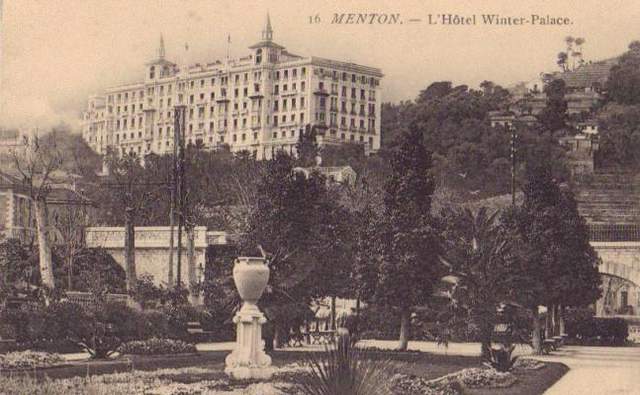
Monday, March 1st., Winter Palace Hotel, Menton.

I wrote 700 words this morning, and 700 this afternoon, of my new novel which I think I shall call "The Vanguard". Dorothy worked on her scenario of my short story "Death, Fire and Life", and so was not ready to go out until 12.22.  We sat in the garden of the hotel for a bit, and began to lunch fairly early. After a snooze we went out at 3 and walked down to the level ground, about six minutes, and then Dorothy did not want to walk any more, and we took a victoria and went about town shopping. I think that pregnancy is starting to make her lazy, and warned her that she will get fat if not careful. She laughed.

I have been reading more of Yeats's "Celtic Twilight". It is an engaging little book. Simple but elegantly written. I particularly like the way Yeats tells the reader, without frills or comment, what he has himself been told about supernatural experiences. Their matter-of-fact delivery makes them more credible. Yeats describes a couple of weird experiences of his own but shrinks from saying that he believes in 'faeries'; intimates that he may have fallen under some sort of enchanting influence. But I think he does believe. A part I was reading today about the feeling one can get in isolated places, especially woods, rang a bell with me. I have sometimes felt that sense of heightened awareness, a sort of anticipation that something strange is going to happen, even on one occasion in Bradwell Woods when I was a boy. I can remember that just in the act of taking one step I felt as if I had crossed some sort of line, things were quieter, I became wary, and wanted to look round as if I was being watched. Not scared exactly, but conscious that there was more around me than I had been aware of previously. This must have been forty odd years ago, and yet I can resurrect the feeling now, and the hair on my neck rises.

We have had an invitation to visit the Wells's for one of their 'weekends' but won't be back in England in time. Our intention is to leave here next Sunday and travel by easy stages to Paris, then on to Calais and home.

Saturday, 27 February 2021

Settling down


Saturday, February 27th., Cadogan Square, London.

I am a little concerned about my niece Margaret who, judging by her most recent letter, has formed anti-semitic views. She is young and has apparently decided that Jews in general are 'beastly' on the evidence of some unpleasant Jews she has met. I have written to counsel her not to get up in herself any general prejudice against a whole race of people for such flimsy reasons. I told her that I know a considerable number of excellent Jews and I have not noticed that gentiles are superior in any respect. Strange how anti-semitism has persisted for so long and so widely. I have invited her to visit after Easter and hope to have a good influence on her attitude then.

Things may be coming to a head in my burgeoning relationship with Dorothy Cheston. She was here for a dinner tete-a-tete the other evening, a very intimate occasion as I intended it to be. Various things were said by both of us which, taken at face value, would indicate an inclination to 'formalise' our relationship. I sense that her mind is not made up and I do not want to swing her one way or another by direct persuasion. She must decide for herself and accept the responsibility of that decision. Though I feel clear in my own mind there is a part of me, typically, which fears commitment. It cannot be denied. But if she says "Yes", then I will do the honourable thing.

I am feeling quite well settled here now. Wells and wife are coming to dinner tonight and will give their verdict on the place. My health has been much better of late, as everyone remarks. I am trying to get to bed regularly at 12.30 and starting work at 8 a.m. That said, I was at a musical party at Harriet Cohen's last evening and didn't get to bed until 1 a.m. But I have worked well today.

Tuesday, 23 February 2021

Blown away

Tuesday, February 23rd., Cadogan Square, London.

I stepped outside for a breath of air this morning and was nearly blown away. As I write now I can hear the wind swirling round the building as if seeking a way in. Not surprising that ancient, and not so ancient, peoples believed that lost souls might be incorporated in wind. One does not expect to be so greatly assailed in the town; certainly not in the middle of a great city. The wind should be more properly a rural phenomenon, or especially a maritime one. I wasn't out long. But I had a breath or two of air!

I have been reading a book about Japan. It is a novel but intends I think to give an accurate account of that country to which I have never been. I like to read about strange places and often feel inclined to visit as a consequence. But I don't want to visit Japan. It sounds to be a terrible country. Terrible by reason of the cast-iron conventions which hold its society together. It is more Western than the Europe which it has too sedulously copied, and yet remains fantastically Oriental. In polite Japanese circles, and all Japanese circles are polite, everything it seems is 'honourable', both persons and things. 'Honourable' seems to be a key word of all social relations. Socially every Japanese is walking on a tight-rope over the Niagara of solecism all the time. There can be no relief for him, night and day.

I am to go up to Manchester by special train at the weekend for Cochran's "1928 Review". The book and lyrics are by Noel Coward, and there are alleged to be 28 tableaux and 500 costumes. I am promised that there will be a surfeit of pretty young women on the train. Otherwise, I would have preferred to go by car but Dorothy has robbed me of it for three weeks. She is somewhere in France with Audrey Anderson driving to the Riviera and back. Life is much calmer here in spite of the wind!

Sunday, 7 February 2021

Intense cold

 Sunday, February 7th., Hotel Matignon, Paris.

According to newspaper reports it is colder here than it is in London, but here we are so we shall have to make the best of it. I can well believe the reports. About the cold the word 'intense' can safely be used. There is a strong wind from the east, what a friend of mine used to call a 'lazy wind' because it went through you rather than round you. It was like this occasionally in Thorpe, but you don't really expect it in the middle of a big city.

Arrived here yesterday and went to a play last night. I warned Dorothy how it would be - theatre dirty, theatre packed, theatre entirely unventilated - and it was. Happily the play was good. But a play which lasts from 8.45 to midnight is thirty minutes too long for me. Dorothy doesn't seem to be able to get enough theatre. For my part I often think that if I see one more play in this lifetime, it will be one too many. 

Haven't done much today apart from a light lunch for Madame Andre Maurois and Jean Aubry. Maurois himself couldn't come as he is lecturing in Lyons. I said that anybody who went to a place like Lyons deserved all the consequences thereof. He agreed. But I bet it is warmer there. We did walk out briefly after lunch. To go forth into the streets at present is quite an adventure. Most of the girls run, or at least scuttle, and there are public braziers lighted in various places so that passers-by can warm themselves. That is a nice touch I think. There are fewer people in Paris than usual which is excellent. I don't think it was ever this cold during the time I lived here. I had considered walking down to the Rue de Calais, just to look at my old haunt, but I thought better of it. It is not usually a good idea to revisit places in my experience.

This hotel is decidedly good. And cheap! We have two bedrooms, one private bathroom and a cabinet de toilette for 22s. a day. The food could be better but I intend to eat as much as I can. More theatre tomorrow I expect but I hope to renew acquaintance with a few old friends at least.


Saturday, 23 January 2021

Imaginings

Saturday, January 23rd., Hotel Russie, Rome.

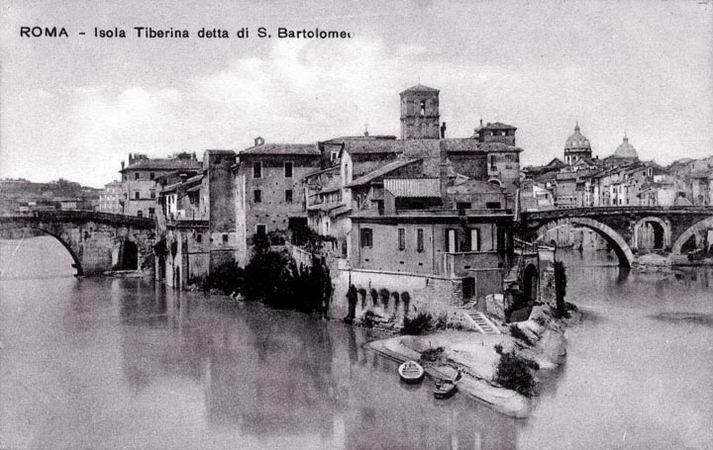
I didn't begin work until 6 p.m. Lunch at the hotel. Then we went for a drive, Dorothy's idea. Right down the right bank of the Tiber to the place where I moored the Velsa before the war. Much interested to see this again. It was a good spot.

In conversation Dorothy asked me an interesting question: "If you could go back in time for one day, in Wells's time machine say, where would you choose to go?" I found this difficult to answer because there are so many things to consider. To gain time I asked a few clarifying questions: observing or participating, visible or not, all day or just daylight hours? Then I settled on Athens during the Greek 'Golden Age' with the Parthenon just built and philosophers aplenty. She opted for Rome at the time of Augustus. Predictable choices.

But since then I have been thinking it over, and have changed my mind. Of course I would love to see Athens in its glory, and Rome. And I would like to visit Elizabethan England, and Florence during the Renaissance. But I know quite a lot about these places and times, and they would, in a sense, be familiar. So, if asked now I would settle instead on one of the Mayan cities in Central America, Palenque or Copan. I well remember reading, and being enthralled by, John Lloyd Stephens' account of his travels in that region, especially the arrival at Copan. It seems to me that to spend a day in one of those places would be quite alien, exciting and unlike anything I could imagine. I salivate, metaphorically, at the prospect!

Of course Haggard, and similar 'romantic' writers imagined such places and peopled them, but generally it seems to me the people were really modern day people transposed. I don't think any author has successfully imagined himself into a different way of seeing and living in the world; perhaps it is not possible to do so. Certainly I could not do it.


Saturday, 16 January 2021

Success and failure

Sunday, January 16th., Cadogan Square, London.

Bernard van Dieren came for tea. He stayed for two hours, talking for about seventy five percent of the time.. He is a very fine talker but he drones or chants, and his command of English, though marvellous, is that of a foreigner. He told us he had lived in London for twenty years. He is one of the most cultured men I ever met and seemed very good in all the arts, and in at least four languages. He really came to consult me about the book of an opera he is writing on the subject of Cesar Borgia. It seems to me that he has not achieved the notoriety that might be expected from someone of his gifts. Like myself, he has been plagued by ill health, and had to leave off working for the Phillips electrical company for that reason. I think his wife, a pianist, is the main earner in the household. I have heard that he gets financial support from a range of 'admirers'. I wonder if there is a sort of failure of application in his character, and if the illness is more of an excuse than a reason? Still, I liked him. He is a very attractive man - Dorothy was definitely smitten!

Last evening I picked up a copy of "Lilian" and started to read. In fact I must have read about half of it in a couple of hours which goes to show what a light-weight confection it is. Truth be told, I am rather ashamed of it. Not that it is badly written. It isn't. But there is no substance, no meat, no purpose. This morning, feeling a bit gloomy about it, I looked back at some of the reviews. One said it was the sort of book which would make people believe I was second-rate; another that the mediocrity of the conception was depressing. They were both right. I remember at the time taking exception to a reviewer calling it a 'pot-boiler'. It isn't a pot-boiler and I told him so in print, but it isn't good. I scorned the reviews at the time, at least publicly, but I think they had their effect in making me determined to do better, and I wrote "Riceyman Steps". Van Dieren would, I think, have been demoralised.


Monday, 11 January 2021

Sights of Rome

Monday, January 11th., Hotel Russie, Rome.

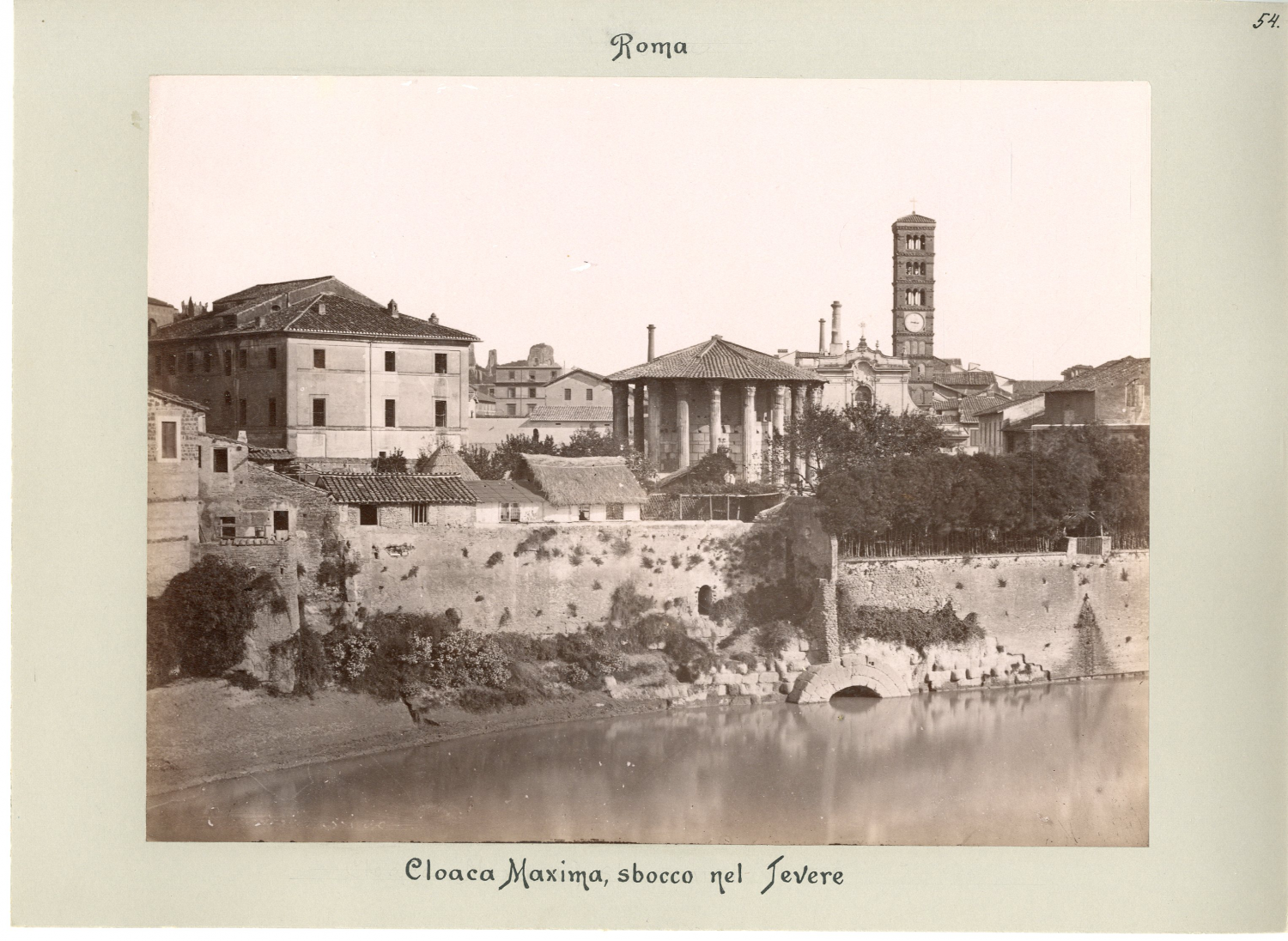
We did a bit of sightseeing yesterday, mainly for Dorothy's benefit. We had a driver and went first up the Janiculum Hill. Suddenly, despite protests, the driver got out and said in Italian: "House of Torquato Tasso, author of 'Jerusalem Delivered'. He enjoyed the sun, meditated, and then he wrote." I thought this wonderful; it was so naive and so direct, with a smile. Then we descended to the Tiber and saw the outlet of the Cloaca Maxima, and the Temple of Vesta and Fortune, and home along the left bank of the Tiber. It was good, though I thought later that it was a bit odd to 'see' a sewer outlet, however ancient. As for Tasso, he obviously wasn't writing to maintain an income; lucky him!

Difficult to have gone today because of the Queen Margherita funeral. The maitre d'hotel had seen it and he described it to us. The electric street lamps on the route were draped in crepe and lighted. A good scheme that London would never have thought of. The walls of the streets have been covered with large black appeals to members of various societies to honour the mourning for the queen. This afternoon crowds back in the streets. Shop shutters lowered but the majority of shops open, with a gloomy, holiday air. But no sign of gloom in the demeanour of the thousands of saunterers.

I hear that a new king has been proclaimed in Arabia, and is to rename the country after himself, or his family at least. I don't know much about it but it seems that there has been fighting going on to gain supremacy, and this is the final stage. The muslim holy sites seem to be important in all this but probably they are used as an excuse for action by both sides as and when necessary. I hope this does not presage a resurgence of militant Islam.

Friday, 8 January 2021

Gloomy

Sunday, January 8th., Cadogan Square, London.

Enfeebled, gloomy. I wrote a lot more of my story, and then supplanted the cook in Dorothy's audience chamber, and arranged to go for a walk with her at noon. Part of Grosvenor Road, the interesting part near the Tate Gallery, was barricaded. Crowds of gazers. We went on to Vauxhall Bridge. Nothing to be seen anywhere except mud on the footpath of Grosvenor Road, and the damp interior of the Riviera Club, which had been flooded out. Only a couple of days ago my barber was telling me how he had been to watch skate-waltzing on the rink at Grosvenor Road.

It is reported that at least a dozen people have been killed in the floods and many thousands made homeless. Part of Chelsea embankment has collapsed. Apparently it is all to do with a great volume of water coming downriver, coinciding with a particularly high tide. The reason for all the downstream water is the melting of the recent heavy snow plus torrential rain inland near the source of the Thames. Just goes to show how quickly things can change and how fragile really is our tenure of the planet. We think we are all-powerful but in the face of the might of nature we are simply children. I hope something will be done at least about Thames flood defences but how would we protect a whole coastline if the waters rose?

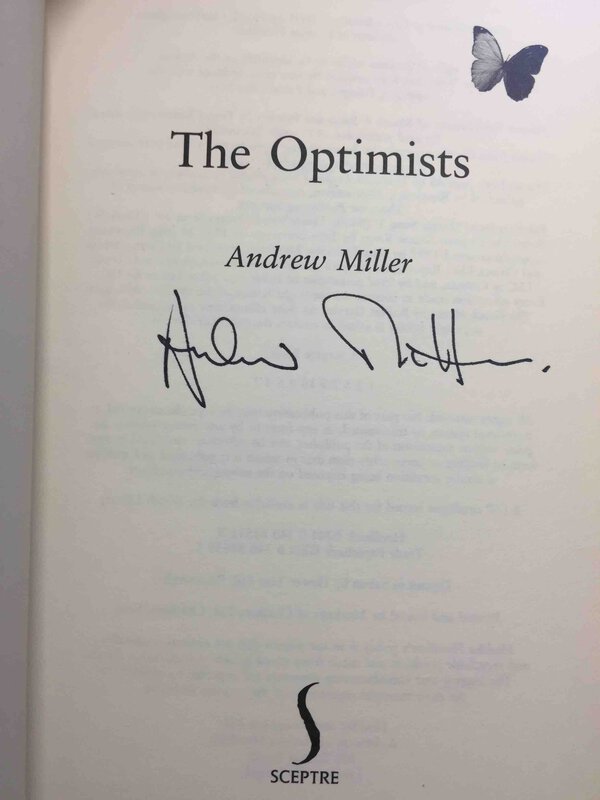
I have finished reading "The Optimists" by Andrew Miller. Very powerful book which will stay with me for some time. Essentially the story, such as it is, is about a photographer who witnesses the aftermath of an atrocity in Africa. He suffers a breakdown in consequence, trying to come to terms with what he has witnessed. How should he respond? Revenge? Reporting? Suicide? Forgetting? And in his groping after some sort of response he is brought to realise that guilt is universal, that nobody is innocent, that we are all complicit if not actually evil ourselves. Not a cheery tale, but something that needs saying. The writing is uneven but  relentless, and no satisfactory conclusion is offered, which is as it should be for such a subject. There is just the glimmer of light at the end but knowing what we know about the central character it seems unlikely that he will be guided by it. Why the title? I haven't been able to make sense of that so far; surely not simply ironic? I expect to have this on my mind for some time to come.

Tuesday, 5 January 2021

Interesting times

Tuesday, January 5th., Cadogan Square, London.

A time of change it seems. I am full of life and anticipation, though also working too hard, by which I mean trying to do too many things. My 'shopkeeper' novel is going well, and I have hopes that it will do something to restore my reputation amongst the literati.

Only three weeks since I moved to this rather noble thing in houses, but already I feel settled and content. I liked Comarques but it was inconvenient, as well as being expensive. This too will be expensive, but a little less so. Really I am glad to be back in London where I am most at home and where the potential for bachelor excitement is considerable.

I went to the first night of "Polly" at the Kingsway, and I ought not to have gone as it gave me a set-back, being out at night. It is the most prodigious success, but as a show it is not equal to "The Beggars's Opera". My niece is threatening to visit and is desirous to see it. She is rather an attractive young woman so I shall not mind. Speaking of attractive young women, I have met a certain Dorothy Cheston who seems much interested in me. She is an actress, blonde, good figure, lively intelligence if a little lightweight, young enough to be my daughter. I feel my blood rising as I write! I shall invite her to accompany me to a private dance to be given by Richmond Temple at the Savoy. That will certainly impress her and who knows where things will then proceed.


Thursday, 24 December 2020

Xmas cheer

Thursday, December 24th., Chiltern Court, London.
 
Another Christmas is upon us, our first here where I am settling nicely. The flat is a great success and I am sleeping better, much better, here than at 75. Regrettably Dorothy is not. She is far from well and needs a change much more than I do. On the second morning here she was awakened by a steam drill (which vanished after a few days of road repairs) and she hasn't got over this for some reason. She has been, and still is, working too hard and acting (in "The Man from Blankley's") has gotten on her nerves through troubles in the theatre. We go to France for a change on Monday next which should do us all good.

Toys, and other presents, for Virginia are thick on the ground. She seems to accept them as a matter of course. I doubt if the little heathen has the least idea that tomorrow is the day on which the alleged Virgin was brought to bed of the Redeemer of us all. And if she had the idea I doubt she would care; so I have had some influence on her!

I try to give as few presents as I can get away with; family only, but that offers a sufficiently large field. Miss Nerney says that this year she is giving between forty and fifty presents. Well, what I say is: "Let her!". The whole business of present-giving is getting out of hand in my opinion. It is a triumph of capitalism. Speaking of which, Sir George Paish who writes on economic matters opines that the depression will be at an end by 1932. He is usually very gloomy but of late has become much less pessimistic. Fortunately we are pretty well isolated from the worst effects, so long as I can keep on working that is.

My Xmas cheer has been improved by the discovery that electricity here costs 3/4 d. per unit as against 6 d. in Cadogan Square. I doubt whether lighting and heating here will cost more than £25 a year, against about £180 at 75, despite the fact that Dorothy adores electricity and has a fearful down on steam heating. Further, the hot water is always very hot. I think she is congenitally incapable of thrift.

I saw the sun (red) here yesterday morning, walked out and in ten minutes was in a thickish fog. But it has been nothing like as bad here as at Hyde Park Corner and other places further off.


Tuesday, 8 December 2020

Mixed feelings

 Monday, December 8th., Cadogan Square, London.

Dorothy is in Italy. I will be joining her there next week - arriving in Genoa a week today. In the meantime I have a great deal to do and so have had to neglect my journal. Also I had fantastic neuralgia last night from 2 - 5 am. So it would be fair to say that I have felt better than I do at the moment.. I intend to finish my Sunday Pictorial article this afternoon and proceed with my play tomorrow. In between I have four Harpers Magazine people dining here tonight. An arrangement with them should be lucrative.

There is a theme running through literature to the effect that people who are always right and always punctual are unbearable. It is in the letters of Cicero, and also in the moral works of a certain A.B. in various places. The converse is equally true, that people who are never right and never punctual are unbearable. As for myself, I can honestly say that my faculty for being right is often most annoying to me, and I would sooner be oftener in the wrong. But what can one do? On balance, I would rather be unbearably right than unbearably wrong.

What shall we find in Italy? Italians generally are charming but they only understand a small part of life. Their happy-go-lucky methods have resulted in the most appalling trouble several times in every century since Rome fell. Happy-go-luckiness is bound to end in a mess. I prophecy that there will be another big upset in Italy in a year or two. Hutton tells me that nearly all the English in Italy are in favour of Fascism. They would be. English colonies abroad are ever the same, a festering mass of reactionary political opinions. Would they welcome a 'Duce' in England? Some would.

Harriet Cohen honoured me with her company at lunch yesterday. She was, comparatively, humble. Dear Tania, as usual she wanted advice and I gave it to her. I think she considers me her best source of advice about matters of the heart, which pleases me in most respects but is also rather dissatisfactory. Clearly she perceives me as being of no sexual threat to her. Nor am I. But it diminishes the ego somewhat to be taken so much for granted in that way. She is very beautiful and it is hard sometimes to hear details of her various 'liaisons', to appear dispassionate, but at the same time to wish it were me. She would like me to introduce her to H.G. I know where that would end! How is it that some men have a sort of sexual magnetism and others don't. Mostly it doesn't bother me; in fact I think it would be more trouble than it is worth, but now and then ....

Friday, 4 December 2020

Hindsight

 Monday, December 5th., Cadogan Square, London.

Gloomy. I haven't yet got over the funeral of Gladys Beaverbrook on Saturday. These funeral rites in an English winter are absolutely barbaric. And what good do they serve? None that I can see.

Yesterday and again today I went for a long walk in darkness and mist. Suited my mood.

Also, thinking about Marguerite. Perhaps she doesn't know about Gladys' death yet? Would I go to M's funeral if she died before me? Probably not. In any case I wouldn't be invited, and I wouldn't be welcome. Over the course of this last week I have been signing 500 copies of the luxury facsimile deition of "The Old Wives Tale". Of course I was writing it when we were first married and I have been debating with myself the propriety of sending Marguerite a copy of this new edition. Today I decided I would and I have inscribed it with "Best Wishes". What a thing to write to someone you have been married to for 20 years! But I thought about it for a long time, and it was the best I could do. What will her reaction be when she opens the parcel? Tears I should think, then anger, then (hopefully) a sort of resigned acceptance of the spirit intended. We will see.

I find that I increasingly blame myself for the failure of our marriage. The fact is that I am a difficult person to live with. Just ask Dorothy! Of course M. was wrong to get involved with Legros but I should have seen how things were going and done something about it. We were happy with each other for the first few years and perhaps could have been again. To be honest it was a mistake buying the country house in Essex. Marguerite wasn't cut out for that sort of life and was never content there. If I had any sense we should have stayed in France where she had her family and I had the whole Parisian cultural landscape to explore; not like stuffy London! And I could have found an amiable young "friend" quite naturally and without recrimination. Hindsight is wonderful.

Friday, 14 February 2020

The last time

Sunday, February 14th., Hotel Nettuno, Pisa.

We left Rome this morning.

Via Appia Antica, Rome, Italy | Via Appia Antica, one of ...Yesterday was a lovely day and Dorothy would go out for a drive along the Via Appia Antica. I told her it would tire and upset her, but she wanted to go, and we went. She was correct. The advantages of seeing the Campagna on such a day were obvious. The views were marvellous, especially the skies and other distances. Dorothy said she wanted to see it 'for the last time'. She repeated the phrase several times during the afternoon. Lots of people take a keen pleasure in the supposed sadness of seeing a thing for the last time. In fact I do myself. How many times have I revisited a favourite place, by the sea or out in the country, by myself, and wallowed in the thought that this might be my last time; it enhances the experience I think. And there seem to be no limits on how many 'last times' can be enjoyed!

Nettuno.jpgI find that this year I have written more words than I have spent lire, and as a lire is worth 2d. and my words ought to be worth nearly 2s. each, I should be all right on balance.

We left Rome easily and comfortably for the 11.55 lusso to Paris, and got off the train at Pisa punctually at 5.25. A marvellous, cloudless, sunshiny day, with ditto scenery the whole way and smooth travelling. Descended at the Nettuno at Pisa. The plumbing in these Italian hotels is barbaric. Hot and cold water in each room and private bathroom (140 lire per day the lot), but the water running away out of the basins makes a perfect hades of a row - so much so that they cannot be used at night without waking the person in the next room. And single doors between rooms!

Wednesday, 5 February 2020

When in Rome

Friday, February 5th., Hotel Russie, Rome.

I spent a lot of the morning at the top of the hotel garden, which I had never discovered before, after having been here over seven weeks. Marvellous view over Rome, of which I made a sketch. I thought about my new novel, had quite a lot of excellent ideas concerning it. I expect to make a start this week.


After siesta we took a taxi and drove along dusty and dull and very bad roads to Tre Fontane - the place where Paul's head jumped three times after being cut off, at each place producing a fountain. There are three churches, and if they locate the fountains, Paul's head must have very considerably bounded. Two churches were open, both very poor and odd and neglected. In fact - no interest at all - yet it is a place one is supposed to go to!


Septimus is much on my mind, and I doubt that he will live much longer. Under 7 stones now apparently. Should I return to England for a last word with him? It would mean leaving Dorothy here and, though she is very well, I don't think it would do in her present condition. In any case I doubt if Sep would know me, or even be conscious. 

I found myself in a headline of the Continental Daily Mail and have since had trouble with journalists. Especially female American journalists. They are very determined and not above using their 'charms' to get me to do an interview. Of course I don't mind being 'charmed' by an attractive woman, but I am not in the mood to talk and if I gave way to one then that would open the floodgates.

Anyway, there is, as they say, no place like Rome. It is 13 years since I was here last and I feel that I am only just beginning to see what Rome is. I must admit that this is partly due to Dorothy who has a genuine passion for archaeology and has communicated some of her enthusiasm to me. Perhaps I should forget about the writing for a bit and just absorb the place. To think that I could not have imagined having this opportunity all those years ago in Burslem.


Tuesday, 4 February 2020

Strange people

Sunday, February 4th., 97 Chiltern Court, London.

21st Century Canon - Literature & Philosophy: George ...Bernard Shaw came for lunch. He and Dorothy talked theatre all the time. He said that the first preliminary to her going in for theatrical management and acting was a divorce between us. I think he was joking. He was rather more sensible and agreeable than usual. He went with us to Harriet Cohen's Henry Wood orchestral concert at Wigmore Hall. The hall was full. I dozed off twice, being very fatigued and sleepy, but I still enjoyed it. We drove home in rain. Shaw left us to get exercise on foot, in the rain. He is a strange person.


But then, authors are strange people. I am one myself, and I probably know as many authors as any living man - except literary agents and income tax inspectors. Authors are ticklish, sensitive people, and, more than most categories of persons, they are victims (generally willing enough) of the astounding, and to me incomprehensible, mania for 'meeting' celebrities, notorieties and infamies. Why do I say so? Because it has been my observation over a long period of years. Why is it so? I don't know!

I regard myself as the exception that proves this particular rule. So far as I am aware I have never had the desire to meet a celebrity because he was a celebrity. On the contrary I have had, and still have, a desire to avoid him. "But you are a great admirer of his books!" said an acquaintance to me once, when I had demurred to an encounter with a genius. "Yes I am," I said. "That's why I don't want to meet him. If I run across him by chance, all right! But deliberately to go out of my way to meet him - No!" And I never did meet him.

Rightly or wrongly one has one's sense of dignity. I have been acused of having an over-developed sense of dignity, and that may be the case. But it is my sense of dignity and I cling to it. In my defence I will assert that my antipathy towards celebrity is by no means uncommon in the Midlands where I grew up. There were men in the Five Towns (and probably still are) who would not cross the street to acknowledge the existence of some local celebrity or other; they would be ashamed to do so. They would regard it as a matter of personal pride and self-respect not to acknowledge a celebrity. I have introduced them into some of my novels and stories. "The Death of Simon Fugue", which some suggest is my best short story, is a case in point. 

Were I to go to the Potteries myself, which is unlikely, I would have no expectation of acknowledgement and I expect that when I die there may be a brief obituary in The Sentinel, but not such as to draw attention away from 'real' news - the football results for example.

Wednesday, 29 January 2020

Reputations

Saturday, January 29th., Hotel Savoy, Cortina.

ROTW Hotels - Stamp Community Forum - Page 2We have been here for four days now, and are settled after a poor start. I had arranged that we should have a suite of three rooms plus bathroom but due to telegraphic miscommunications we only have one room and no bathroom; we are promised an improvement when suitable rooms arise. Part of the problem is that the Duke of Genoa is presently staying here and wanted twelve rooms. He could not be refused it appears. Well, I suppose that is how things are, but not necessarily how they should be. We are comfortable enough, and saving some money.

European Film Star Postcards: Ellen Terry
On two occasions in my maturer life have I blushed. The first occasion was when, sitting in the stalls of a theatre, someone lightly touched my shoulder from the row behind, and, turning, I heard a remembered voice say: "You don't know me Mr. Bennett, but I know you." This was Ellen Terry. The second was when, in the coffee room of a club to which we both belonged, a stoutish man accosted me and said: "You won't recall me, I'm Henry James. May I join you upstairs later?" Yes, I did fairly blush - I suppose because I was flattered. Such is the mysterious influence of immense artistic prestige on my blood vessels. Artistic prestige has an influence not only on my blood vessels but on my critical faculty. It took me years to ascertain that Henry James's work was giving me little pleasure. I first had a glimpse of this distressing fact when "What Maisie Knew" began to appear serially - I could not get on with it. My fault of course. But when I was immovably bogged in the middle of "The Golden Bowl" and again in the middle of "The Ambassadors" I grew bolder with myself. I gave them up. Today I have no recollection whatever of any characters or any events in either novel.

I have come to think that James hadn't actually much to say, in a creative sense, that needed saying. I think that he knew a lot about the life of one sort of people, the sort who are what is called cultured, and who do themselves very well both physically and intellectually, and very little about life in general. I think that in the fastidiousness of his taste he rather repudiated life. Of course my eyes may have a blind-spot for the alleged supreme excellencies of Henry James. But, if so, the eyes of a vast number of other people no plainer than myself are similarly afflicted. I can only say that never shall I set out afresh into the arid desert of "The Golden Bowl".

I have had an idea for writing a series of souvenirs d'enfance. There is nothing about souvenirs d'enfance in Louis Aragon's "Paysans de Paris", but this book is certainly stimulating me into a fresh creativeness. I must say that, though it is uneven, I should like to write a book like that - I mean about London. Only of course England would never tolerate the belle franchise of this French book. And perhaps I don't know enough about London to do it justice. In that respect it might be that my book on 'London Life' would be as circumscribed as are James'


Alice Hallagarten Franchetti
While Dorothy was dressing I went out for a walk. I wanted to be alone to think about a short story and two articles and my dimly projected souvenirs, but I came across Baroness Franchetti, acquaintance of the Huxleys. She would walk with me. And when I said I must turn she said she also must turn back. Then she took my photograph twice in the middle of the road, blazing sunshine, screwing up eyes, etc. I don't think I have ever been photographed in the street before. I don't like being photographed at all, not being of a photogenic appearance. However she did tell me one interesting thing. She knew Ibsen. She said she spent a whole season in the same hotel with him and his family somewhere. She sat at the next table to the Ibsens. They - father, mother, and boy - never spoke a word during the whole time. Ibsen (said Mdme. Franchetti) would talk freely to Madame Franchetti afterwards. He told her that he wrote all his work four times. Also, that he wrote "The Doll's House" in the open air, in tremendous sunshine, at Sorrento. He loved the greatest possible heat to work in. Ibsen is another whose reputation, in my view, exceeds his actual worth.

Thursday, 23 January 2020

Seeing Rome

Saturday, January 23rd., Hotel de Russie, Rome.

I didn't begin work until 6 pm. Very near the end of "Raingo" now; shall finish it in a couple of days. And I already have a good idea for my next novel which I hope to start before we return to London. 

Septimus is declining further I hear. Now under 7 stones. He craves food, and needs it, but can't assimilate it. I am afraid the end cannot be far off, but it is infeasible for me to go back to England at the moment given Dorothy's condition. I have arranged for a specialist to see Sep. but more to mollify Maud than for any idea that it will do good. 

Via del Teatro di Marcello (1930 ca) | Roma Ieri OggiAfter lunch at the hotel we went for a drive. Right down right bank of the Tiber to the place where I moored the Velsa before the war. Much interested to see this again, It was a good spot. It was a good boat. I sometimes wish I had concentrated on boats to the exclusion of women. Then we drove round seeing Jewry, including the Marcello Theatre, with little shops in its ground floor arches, odd dwellings above, and apparently large flats in the superimposed modern part - by modern I mean 30 or 40 years old. Then to varied odd remains, and we came to an enclosed space where 'excavation' was actually in process of being done. This was thrilling. There is much to see above ground here in Rome but it strikes me that there is probably as much, or more, still buried.

Since the 1st of January the street, traffic-controlling police, newly initiated by Mussolini, have been very proud of their new uniforms and mackintoshes. In the Corso the horn-hooting seems to me to be less. But I must inspect this more closely after my novel is done.

Buy Days Without End by Sebastian Barry With Free Delivery ...I have just finished reading an excellent book, "Days Without End" by Sebastian Barry. In fact it has delayed me slightly in finishing "Raingo". A sort of Western. The central character is an Irishman exiled from his native land as a boy because of the famine, and growing up in America before and during the Civil War. He is homosexual and forms an enduring relationship with another young man. Together they join the Union army, experience great hardship, and eke out a living post-war as 'entertainers'. It turns out that our hero prefers to dress and act as a woman. They are involved in Indian wars, see and take part in acts of extreme brutality, and eventually have the opportunity to settle as farmers on land in Tennessee. There is much to admire in this book. The characters are convincing, the descriptions of weather and scenery poetic at times. There is a sense that the author has captured and conveyed something of the essence of what humans are, and can be, whatever the context. Little more can be asked of any author.