Welcome to our blog!


It's better than a bat in the eye with a burnt stick!


This blog makes liberal use of AB's journals, letters, travel notes, and other sources.


And make sure to visit The Arnold Bennett Society for expert information and comment on all aspects of the life and work of AB.

Showing posts with label The Glimpse. Show all posts

Sunday, 6 December 2020

Ordinary people

 Sunday, December 6th., Comarques, Thorpe-le-Soken.

I have learnt more about what are called 'ordinary people' during the war than ever I knew before. By 'ordinary' I simply mean people with the sense of art practically undeveloped, people without any subtlety, who don't understand what you are talking about unless you translate for them. As an experience it is interesting, but really very trying sometimes. For me, part of the war!
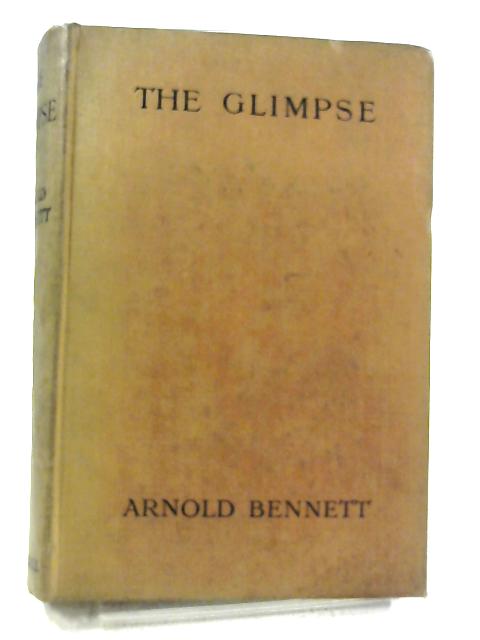
Still there were some strange surprises. One officer (medical) stationed near here mentioned the fourth dimension; so I began to talk with him about the fourth dimension. In my opinion the fourth dimension is the most awful rot, save as an intellectual pastime. However he was enchanted. He then got onto spiritualism etc., and enquired if I had thought of it. I gave him a copy of "The Glimpse". He has not yet recovered from "The Glimpse" which I believe he regards as the most brilliant work of genius yet produced by the human mind. Well, he was a very advanced specimen of the military intelligence.


The fact is that many people are simply not used to thinking critically, and accept what they are told, or read, at face value especially if it appears to be from an 'authority'. Like me for instance. My wife says that I am too critical. Indeed my nature is to question everything. There are people who believe that this war for example is the product of some global conspiracy, to what end they are not quite sure. Well, they have more faith in the capacity of 'global conspirators' than I do. I just think that it is an almighty cock-up brought about by a failure to act rationally rather than the reverse. And then there is all this stuff about German atrocities. Well no doubt some German soldiers have taken the opportunity to indulge their baser instincts; soldiers in war apparently do that sort of thing; I don't suppose that all British servicemen maintain high moral standards. But it is lunatic to think that there is some concerted policy of terror reflecting the much-despised 'German character'.
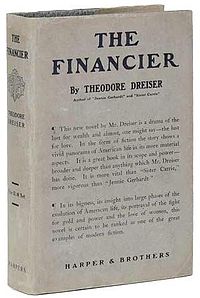
I expect that Theodore Dreiser is of German extraction but he has written a remarkable novel, "The Financier". I have had trouble getting hold of a copy. This book, despite its slovenliness in details of phrase, is excellent. It gave me intense pleasure which is praise indeed. Dreiser is a man who evidently despises style, elegance, clarity, even grammar. He simply does not know how to write. Probably doesn't want to know. He makes no compromises with the reader but once you have fairly yielded to him he rewards you. I wish I knew Dreiser intimately though he would in all likelihood disdain association with a conventional novelist such as myself. I hear that this may be only the first volume of a trilogy. If so, I look forward with eager anticipation to the other two.

Friday, 3 January 2020

Fresh air

Tuesday, January 3rd., Royal York Hotel, Brighton.

I have read about a third of Edith Wharton's "The House of Mirth". Not fine, but capable. No connection with literature; a ceratin fairly agreeable bitterness of satire now and then. It can just be read. Probably a somewhat superior Mrs. Humphry Ward. I stopped reading it in favour of Marcus Clarke's "For the Term of his Natural Life", which I picked up here at Brighton in a sixpenny edition. I am enjoying this though in form and plot it is very naif. I could drop it without tears  Mood and context matter a great deal as far as pleasure in books goes. Here for example I don't expect to read with enjoyment anything 'heavy'. It's a place for crime stories, science fiction and humorous novels.

west pier brighton inside - Google Search | Form - FDP1 ...
Today I wrote a New Age article, arranged the outline of an article for The Nation, and schemed out the first nine chapters of "Clayhanger" which I hope to begin to write on Wednesday. This afternoon we moved into our new room on the fourth floor, and I arranged everything for my work. We walked on the pier, and I saw subjects for water-colours and pastels. The weather was bright and bustery this afternoon. Excellently fresh air off the sea. I feel that I can get more air into my lungs here. Tremendous sensation of the chest expanding as one breaths in, and in, and in ... 

The one advance which I made last year in worldliness was having a play put on at a West End theatre for a run. That it failed is a detail. I bet it won't fail ultimately.

I wrote last year: "The Card", novel; "The Glimpse", novel; "The Honeymoon", three act comedy; scenario for "Don Juan", play; seven short stories; seventy odd articles; my journal. Total 312,000 words. Much less than the year before.

Tuesday, 6 November 2018

Old-world charm

Saturday, November 6th., Villa des Nefliers.

I received copies today of the U.S.A. edition of "The Glimpse". Horrible binding. In glancing through it I noticed several misprints. The American spelling of course one accepts, though I have noticed that American novels published in England retain their spelling. Why is this?

I had a superb walk in the forest. This has been a marvellous autumn but must now be coming to an end. I fear we will have a sharp frost and/or a high wind and the trees will be left bare. Before long it will be difficult to recall that they ever were clothed.

At 9.30 I began, very unwillingly, the last day on my second act. I was rather pleased with it at lunchtime. After repose I threw my painting over  and finished the act. What a relief! I then fiddled about with tea and Max Beerbohm and the proces Steinheil until 4, when I was obliged by my conscience to go to the barbers. I am always loathe to get my hair cut and yet invariably glad when it is done. I don't seem to learn from the experience.

Happily it is a stately barbers where hair cutting and friction are treated with adequate solemnity. In the half-light, with its mirrors and rococo woodwork and complicated apparatus, it had 'due style' tradition behind it. A little framed notice was hung up as always on hunt days."Rendezvous de chasse. Croix de Toulouse" All this kind of thing will belong to a past generation probably before I am dead. I shall recount it as something antique, quaint and scarcely conceivable. The entire atmosphere was old-world. I have often noticed how elderly people delight in detailing how different (usually better) the world was when they were young. I haven't reached that stage yet, but I sense it in the offing!

I came home when there was star in a field of blue-green above pink, above purple-grey that mingled with the smoke and roofs of the houses. A simplified tableau seen from the lower corner of the Rue Bernard Palissy. Then I came in and read my dose of Taine.


Sunday, 8 October 2017

Harris and Shakespere

Friday, October 8th., Villa des Nefliers.

Mistake yesterday. "The Glimpse" was published today and not on Wednesday. I received today a highly enthusiastic letter from Waugh about it. He does not think it will sell. I have a wild idea that it will.

A wild wet morning, and it was very fine on the hill in the rain at 8.15. I came home and wrote the first of new series of articles for T.P's Weekly on English family life. rather pleased with it.

After lunch I painted. Then had tea here and went down to Godebskis for tea afterwards. Wonderful colours on the Godebskis' house and trees. Showers and wind.
Image result for Frank Harris Shakespeare Bennett
Frank Harris

After dinner I finished Harris's Shakespere, amid enthusiasm. I telegraphed him that it surpassed my most sanguine expectations and was glorious. It is. But I wish I hadn't got to write an article on it. The ever-increasing emotion, which I experienced as I read steadily through Harris's book I can only compare with unforgettable sensations that have perturbed me at moments when I stood between earth and sky on some high tor of Dartmoor. . . . I realised that a masterpiece on Shakspere had at length been written. The opening pages of "The Man Shakspere" at once produce certainty that the mind of its author is worldly, non-academic, and powerfully creative. I use "worldly" in a good sense. I mean that the author knows the actual world, moves about in it freely, and is versed in life itself: qualities denied to professors, or to most of them. And he writes as an artist. He does not fit words ingeniously together; he plastically moulds the whole phrase. All English literature is divided into Shakspere and the rest, and in the subconsciousness of the race is a notion that Shakspere's defects are finer than other writers' virtues. Mr. Frank Harris has a very short way with all this. His fist goes through the pane instantly, and the breezes of commonsense blow through the stuffy chambers where the commentators have been mumbling at their priest-like task. By its courage, its originality, its force, its patient ingenuity, its comprehension of art and the artist, its acquaintance with life, and its perfectly astounding acquaintance with Shakspere's plays, the ultimate destiny of the book is assured. It marks an epoch. It has destroyed nearly all previous Shaksperean criticism, and it will be the parent of nearly all the Shaksperean criticism of the future.

Tuesday, 22 October 2013

Glimpses

Friday, October 22nd., Villa des Nefliers, Fontainebleau.

Extraordinarily beautiful morning in the forest and ideas for the second act  arrived one after the other in a manner very creditable to them. 

Letters from Frank Harris and Wells and his friend about "The Glimpse". But really I have had very few letters about it. Wells describes it as 'a glimpse into an empty cavern' of my mind. Not sure what that is meant to mean!

Nothing in Mr. Arnold Bennett's former work has prepared his readers for the point of view from which his new novel is written. Leaving the affairs of this world with which he has hitherto been exclusively occupied, Mr. Bennett kills his hero in the tenth chapter, although he causes him to return again to his body in the last book of the story. The author's account of the flight of the soul at death cannot be called very convincing, though it is at all times interesting to know the theories which people form on this subject ; but whether such matters are fit themes for fiction is another question. The book, apart from these psychical chapters, is decidedly disagreeable in tone, but makes strongly for a moral standpoint, for the soul of the hero returns to earth with the conviction that nothing in this life matters save the quickening of - spiritual understanding. Ordinary criticism of a work of fiction seems out of place when dealing with such a subject as this, and the only thing which remains for the reviewer is to describe the scope and aim of the book and to leave it to the reader to determine its quality.
Review of "The Glimpse" in The Spectator, November 1909.

I am not convinced about the second part of the book myself, but I am sure that the 1st and 3rd parts are as good as the best I can do. Some people who like the 2nd don't care for the 3rd: which unfortunately shows that they have not understood the 2nd. Also I am now supposed to be a Theosophist, a Hegelian and all sorts of things. The second part is simple Theosophy, nothing else, and taken bodily therefrom (with improvements); but I have now made Theosophy serve my turn, & I have done with it. I read Mrs. Besant three times, and made fresh notes every time, in order to do the 2nd part; a fearful grind; & the Theosophical Society ought now to reprint my 2nd part as one of their official publications; it is infinitely more graphic and coherent than any of their own tracts. I liked 'Bond Street'. Enough. What interests me now is the sales.

Theosophy refers to systems of esoteric philosophy concerning, or investigation seeking direct knowledge of, presumed mysteries of being and nature, particularly concerning the nature of divinity. Theosophy is considered a part of the broader field of esotericism, referring to hidden knowledge or wisdom that offers the individual enlightenment and salvation. The word esoteric dates back to the 2nd century CE. The theosophist seeks to understand the mysteries of the universe and the bonds that unite the universe, humanity, and the divine. The goal of theosophy is to explore the origin of divinity and humanity, and the world. From investigation of those topics, theosophists try to discover a coherent description of the purpose and origin of the universe. Annie Besant (1847 – 1933) was a prominent British socialist, theosophist, women's rights activist, writer and orator and supporter of Irish and Indian self-rule.In 1890 Besant met Helena Blavatsky and over the next few years her interest in theosophy grew while her interest in secular matters waned. She became a member of the Theosophical Society and a prominent lecturer on the subject. In 1907 she became president of the Theosophical Society, whose international headquarters were in Adyar, Madras, (Chennai).

I shall positively appear in the Five Towns early in December, and remain there at least two weeks. I must have at least two weeks with Mr. Dawson, the bookseller and printer. My next hero's father is the pater + Mr. Beardmore = a steamprinter. Dawson has printed three Christmas books for me and is a prime source of information about the Potteries. He is also a magistrate and a student profoundly versed in the psychology of the Five Towns.

Pauline Smith is here, is beginning a novel, and has half an hour's remarks from me every night. My remarks are really rather good. Strange girl. She can write. But she won't talk. However we make her, at least Marguerite does. She says: "Now Pauline, you have let the conversation fall." She is already better.
See also 'A bad night' - November 14th., -
http://earnoldbennett.blogspot.co.uk/2012/11/a-bad-night.html

Additionally for October 22nd., see 'Famous men' -
http://earnoldbennett.blogspot.co.uk/2012/10/marital-breakdown.html

This is my idea of fame:

At an entertainment on board H.M.S. Majestic, Rudyard Kipling, one of the guests, read "Soldier and Sailor Too", and was encored. He then read "The Flag of England". At the conclusion a body of subalterns swept him off the stage, and chaired him round the quarter-deck, while "For he's a jolly good fellow" was played by the massed bands of the Fleet and sung by 200 officers assembled.