Welcome to our blog!


It's better than a bat in the eye with a burnt stick!


This blog makes liberal use of AB's journals, letters, travel notes, and other sources.


And make sure to visit The Arnold Bennett Society for expert information and comment on all aspects of the life and work of AB.

Showing posts with label Punch and Judy. Show all posts

Tuesday, 18 December 2018

Finishing things

Tuesday, December 18th., Cadogan Square, London.

The Sea by John Banville — Reviews, Discussion, Bookclubs ...Last evening, at home for once, I finished reading "The Sea" by John Banville. Whole thing in two good sessions. Frankly I think that it would have benefitted from judicious editing to become a 'long' short story. Very good, elegant writing; some of the lengthy, complex, sentences reminded me of Henry James. Themes are loss and memory, fairly common but well treated by Banville. Setting is Ireland, probably north of the border. I had a little trouble with the central character/narrator who is really too anguished by the death of his wife; it is made clear that she had been dying for a year, so he would have had time to get used to the idea. Present and past events are nicely juxtaposed, and the subsidiary characters are well done. Overall a good read.

Today I finished correcting typescript of "Punch and Judy" film.

Geoffrey Russell, F. Swinnerton came to lunch on business; also Elena Sullivan, our first view of her since Bertie's death about three weeks ago. She behaved with Latin calm and dignity. Exactly the right touch.

After lunch I formally gave to Dorothy 47 volumes of my MSS. (34 of Journal; 2 "Old Wives' Tale"; 1 "Riceyman Steps"; 1 "Elsie"; and 9 "Clayhanger Family") in the presence of MissNerney, Fred Harvey, Swinnerton and Geoffrey Russell.

Roger Fry, Mrs. Anrep, Francis Birrell and the Edes came to dinner. Very good evening. Fry and Birrell were fine.

Friday, 23 March 2018

Purple Cloud

Friday, March 23rd., Cadogan Square, London.

Much kerfuffle about "Punch and Judy". Having written the story, which took some time and for which I was inadequately  recompensed, I am now being asked to provide dialogue for a 'talkie'. Had I known it was to be a 'talkie' I would have approached it differently from the outset. I have asserted, and mean it, that I will not take the task on for less than £2,000. It is in Wicken's hands. I had lunch with Thorpe and Dupont the other day and sensed that they may give way. I hope so. I could do with the money, especially as we are off to Antibes next week for a holiday which is certain to cost a great deal.

THE PURPLE CLOUD | Shiel | First edition, first printingFor light relief yesterday I read a new edition of "The Purple Cloud" by M.P.Shiel. In fact I read the original nearly 30 years ago when it was first published. This new edition has been severely edited which doesn't surprise me. What did surprise me was that the original was allowed to pass - setting aside its general 'blasphemous' character it also included a clear allusion to necrophilia which startled me at the time. How it got past the publisher I don't know! Just to make sure my memory wasn't deceiving me I looked out the original in my library and found the relevant passage: "I have taken a dead girl with wild huggings to my bosom, and I have touched the corrupted lip, and spat upon her face." Seems clear enough to me!

Shiel, M.P. Biography
M P Shiel
What interested me in the original publication was that I had happened to meet Shiel in Paris in 1898. Forget who introduced us. A strongly built, though not tall, man of dark complexion and deep-set eyes. Probably a 'touch of the tarbrush' in his background I should think. An engaging manner. Very talkative and remarkably willing to reveal all sorts of things about himself. To me for example, in the course of conversation, he said that he had been seduced by an older girl at the age of 5 (five!) and had been in the way of regular sexual intercourse with almost any willing young woman or girl ever since. He regarded the sexual act as as natural as breathing and saw no reason to limit his indulgence. I thought he was simply boasting at the time but have since heard that he is a renowned seducer (particularly of girls and young women) and has fathered numerous illegitimate children. A remarkable character! His literary career however has not been a success.

As regards the book, it is the story of the only survivor of a world-catastrophe who travels all over the face of the globe burning cities and generally going insane. Eventually he finds another survivor, of the female sex (a young girl!) and domesticity sets in, not too soon. I read the novel with much admiration 28 years ago and find that it has worn exceedingly well in spite of the editing. The affair is stupendous in conception, and rather more than adequately executed. I call it grandiose, fearsome, and truly distinguished. No doubt Shiel was much influenced by the work of Poe, and I think he may himself have had an influence on the contemporary American 'horror' novelist, H.P.Lovecraft. I don't know that for a fact but the excesses of imagination and wild writing style invite comparison.
 

Tuesday, 6 March 2018

Punch-and-Judy Man

Tuesday, March 6th., Cadogan Square, London.

Serendipity. Just now and then a book falls into your hands which surprises and pleases you. Such is "Vagabonds and Puppets" by Walter Wilkinson. A slight and endearing volume to turn one's mind away from the mundanities of everyday existence. I liked it, and felt I would like the author. I found it very succulent. 

Image result for vagabonds puppets wilkinson
Walter Wilkinson and friends
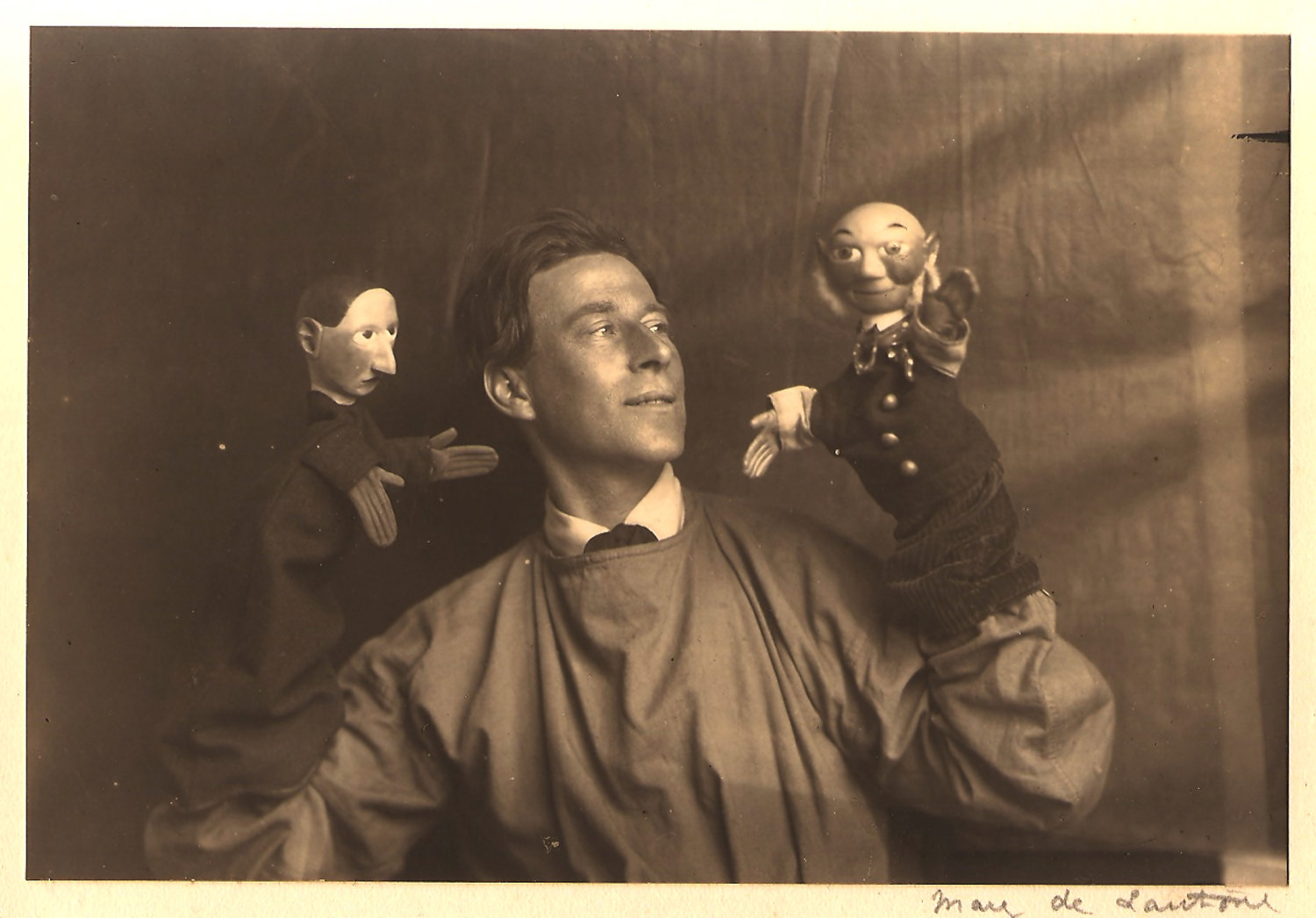
Wilkinson is a puppeteer, and these are some of his reminiscences. I wouldn't be surprised to find he has more. I know a little about theatre, and when I think about it, Punch-and-Judy is theatre, and perhaps the best. For myself I would sooner watch Punch-and-Judy for a quarter of an hour for twopence than a West End drawing room comedy for two hours and a half for twelve shillings. It has one immense advantage. I can hear every word of the dialogue of Punch-and-Judy; of a drawing room comedy I catch merely a phrase or two here and there. Punch-and-Judy has other advantages - clear plots, swift action, satisfactory murders, farce as broad as the Mall, and a total absence of love scenes.

Wilkinson is a vagabond with the puppets which he made himself. He started off, short of fifteen shillings, in the garden city of Letchworth, and ended in a residential hotel, where his takings amounted to three pounds for a single performance. And what a romantic style of life. I envy him. He is a good sound writer, with a communicative 'sense' of the country, of roads, and of small towns. And he is vagabondishly cheerful, as becomes a Punch-and-Judy man. Though, for rest on a chilly night I prefer the roof of even a residential hotel to any star-studded firmament. Mr Wilkinson is different. he can perceive the humour of discomfort and hardship. I can't.

Thursday, 3 September 2015

Plays!

Monday, September 3rd., 1928
At 75 Cadogan Square, London.

After chores I reached the St. James's Theatre at 11 a.m. My play, "The Return Journey" opened there two days ago. Everyone was pretty gloomy except me. They pretend to despise critics but they attach extraordinary importance to everything the critics say. Gilbert Miller was cheerful and he and I upraised these spirits. By 5 p.m. they were quite cheerful, and dreaming of "an enormous success"; and so on. I was on the stage for six hours during the day, making minor alterations, and changing the business at the end of the last act, and rehearsing the same. I doubt that it will make much difference but sometimes the semblance of positive activity has a revitalising effect.

I do not believe that notices affect the fate of plays. No play of mine has ever had a good press except "Mr. Prohack". There are not, literally, three dramatic critics in London whose opinions have the least interest for me. I hate the stage but I cannot help writing a play now and then. These plays are always a damned nuisance to me after they are written. God knows whether this play is any good. I don't. I merely know that nine critics out of ten have shown no understanding of the whatsoever. This is usual.

In any case it looks as if the future will be in motion pictures not the theatre and I am still working on my "Punch and Judy" film. Whether I will have any success in the new medium remains to be seen. I suspect not, as I am now in my sixties and it is difficult to embrace new ideas even though one feels oneself to be open to them. 

Sometimes I wonder if I have spread myself too thinly as it were? Of course I have been driven by the need for money to finance my lifestyle which some may consider extravagant, for example in the matter of clothes. Suppose I had concentrated on writing novels, by which I mean "proper" novels. I would certainly have been poorer but would I have been more contented, and would I have established a reputation to stand the test of time? I don't know. I think I have one more "proper" novel in me to be set in a great hotel. This is an idea I have been mulling over for years now and I think I am nearly ready to begin. I will commit myself to have started writing it by this time next year!

Saturday, 2 November 2013

Making movies

Friday, November 2nd., Cadogan Square, London.

Worried by my film "Punch and Judy", I walked out for an hour and got ideas and came back and wrote another scene. 


There is a convincing case to be made for regarding Arnold Bennett as the most important professionally engaged early twentieth-century writer dealing with the world of cinema and film. From the publication of The Regent in 1913, with one of the earliest references to film in the English novel, in a short passage on the cinematograph’s invasion of the music-hall, to the release of the 1929 E A Dupont’s film "Piccadilly" based on Bennett's original script, Bennett remained critically aware of the importance of film as an artistic and commercial medium. His involvement with the medium spans the most important period of the development, and rapid demise, of silent film as a narrative art form. 

"Punch and Judy" is – literally- an excursion by Bennett into the genre of Grand Guignol (Guignol being roughly the counterpart of Mr Punch in French puppet shows). Bennett’s film treatment begins with a street Punch and Judy show. The puppets are first limp and lifeless, but then burst into wild action, to enact the usual story of mayhem and murder. As the show reaches its conclusion, cinema trickery turns the Punch puppet into a human – Flitfoot, Bennett’s utterly ruthless hero-villain.The subsequent story shows Flitfoot’s unstoppable rise to wealth and power. He lies, swindles and cheats, ruining anyone who gets in his way. Like Punch he has an energy that makes him fascinating even at his most appalling. 


Gilda Gray in Piccadilly
Then at 2.15 I drove in  studio car to Elstree to see some shooting of the "Piccadilly" film. Full crowd. 300 guests in the famous club. The colouring of the dresses was not at all distinguished; but this doesn't matter on the screen. Each item was filmed five or six times. Endless trouble taken. Considerable heat from terrific blaze of electric lamps. I talked with Gilda Gray.
http://cultview.wordpress.com/2008/09/13/piccadilly/


See also, June 15th., 'Back to Riceyman Steps' -
http://earnoldbennett.blogspot.co.uk/2013/06/back-to-riceyman-steps.html

The Denison Rosses, the Colefaxes, Muriel Foster, Humbert Wolfe, and H. G. Wells came to dinner and the uproariousness of the whole evening was terrific.

Additionally for November 2nd., see 'Musical evening' - 
http://earnoldbennett.blogspot.co.uk/2012/11/musical-evening.html

It was rather like a City of the Dead. certainly as much a relic of barbarism as anything one is likely to see in Paris, with its tons of flowers and ugly wreaths ornamenting the most deplorable monuments and houses of corpses. vast crowds of people, many in black, but not all; many, if not most, out for an airing: moonstruck crowds before certain monstrous momentos of surpassing vulgarity.