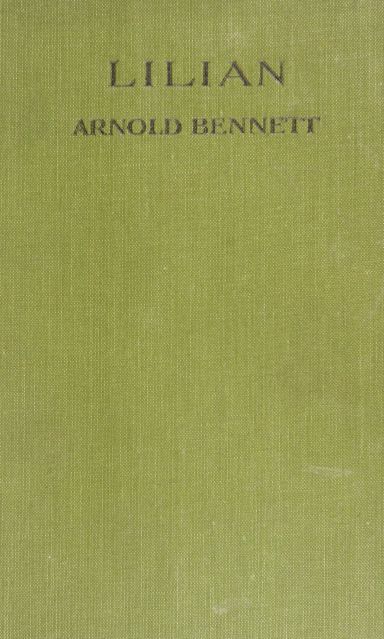
Sunday, January 16th., Cadogan Square, London.
Bernard van Dieren came for tea. He stayed for two hours, talking for about seventy five percent of the time.. He is a very fine talker but he drones or chants, and his command of English, though marvellous, is that of a foreigner. He told us he had lived in London for twenty years. He is one of the most cultured men I ever met and seemed very good in all the arts, and in at least four languages. He really came to consult me about the book of an opera he is writing on the subject of Cesar Borgia. It seems to me that he has not achieved the notoriety that might be expected from someone of his gifts. Like myself, he has been plagued by ill health, and had to leave off working for the Phillips electrical company for that reason. I think his wife, a pianist, is the main earner in the household. I have heard that he gets financial support from a range of 'admirers'. I wonder if there is a sort of failure of application in his character, and if the illness is more of an excuse than a reason? Still, I liked him. He is a very attractive man - Dorothy was definitely smitten!Last evening I picked up a copy of "Lilian" and started to read. In fact I must have read about half of it in a couple of hours which goes to show what a light-weight confection it is. Truth be told, I am rather ashamed of it. Not that it is badly written. It isn't. But there is no substance, no meat, no purpose. This morning, feeling a bit gloomy about it, I looked back at some of the reviews. One said it was the sort of book which would make people believe I was second-rate; another that the mediocrity of the conception was depressing. They were both right. I remember at the time taking exception to a reviewer calling it a 'pot-boiler'. It isn't a pot-boiler and I told him so in print, but it isn't good. I scorned the reviews at the time, at least publicly, but I think they had their effect in making me determined to do better, and I wrote "Riceyman Steps". Van Dieren would, I think, have been demoralised.Welcome to our blog!
It's better than a bat in the eye with a burnt stick!
This blog makes liberal use of AB's journals, letters, travel notes, and other sources.
And make sure to visit The Arnold Bennett Society for expert information and comment on all aspects of the life and work of AB.
Showing posts with label Riceyman Steps. Show all posts
Saturday, 16 January 2021
Tuesday, 18 December 2018
Finishing things
Tuesday, December 18th., Cadogan Square, London.
Last evening, at home for once, I finished reading "The Sea" by John Banville. Whole thing in two good sessions. Frankly I think that it would have benefitted from judicious editing to become a 'long' short story. Very good, elegant writing; some of the lengthy, complex, sentences reminded me of Henry James. Themes are loss and memory, fairly common but well treated by Banville. Setting is Ireland, probably north of the border. I had a little trouble with the central character/narrator who is really too anguished by the death of his wife; it is made clear that she had been dying for a year, so he would have had time to get used to the idea. Present and past events are nicely juxtaposed, and the subsidiary characters are well done. Overall a good read.
Today I finished correcting typescript of "Punch and Judy" film.
Geoffrey Russell, F. Swinnerton came to lunch on business; also Elena Sullivan, our first view of her since Bertie's death about three weeks ago. She behaved with Latin calm and dignity. Exactly the right touch.
After lunch I formally gave to Dorothy 47 volumes of my MSS. (34 of Journal; 2 "Old Wives' Tale"; 1 "Riceyman Steps"; 1 "Elsie"; and 9 "Clayhanger Family") in the presence of MissNerney, Fred Harvey, Swinnerton and Geoffrey Russell.
Roger Fry, Mrs. Anrep, Francis Birrell and the Edes came to dinner. Very good evening. Fry and Birrell were fine.
Last evening, at home for once, I finished reading "The Sea" by John Banville. Whole thing in two good sessions. Frankly I think that it would have benefitted from judicious editing to become a 'long' short story. Very good, elegant writing; some of the lengthy, complex, sentences reminded me of Henry James. Themes are loss and memory, fairly common but well treated by Banville. Setting is Ireland, probably north of the border. I had a little trouble with the central character/narrator who is really too anguished by the death of his wife; it is made clear that she had been dying for a year, so he would have had time to get used to the idea. Present and past events are nicely juxtaposed, and the subsidiary characters are well done. Overall a good read.Today I finished correcting typescript of "Punch and Judy" film.
Geoffrey Russell, F. Swinnerton came to lunch on business; also Elena Sullivan, our first view of her since Bertie's death about three weeks ago. She behaved with Latin calm and dignity. Exactly the right touch.
After lunch I formally gave to Dorothy 47 volumes of my MSS. (34 of Journal; 2 "Old Wives' Tale"; 1 "Riceyman Steps"; 1 "Elsie"; and 9 "Clayhanger Family") in the presence of MissNerney, Fred Harvey, Swinnerton and Geoffrey Russell.
Roger Fry, Mrs. Anrep, Francis Birrell and the Edes came to dinner. Very good evening. Fry and Birrell were fine.
Labels:
Arnold Bennett,
Banville,
Clayhanger,
Dorothy Cheston,
Edes,
Elsie,
Francis Birrell,
Frank Swinnerton,
Geoffrey Russell,
Old Wives Tale,
Punch and Judy,
Riceyman Steps,
Roger Fry,
The Sea
Tuesday, 9 January 2018
Fish Ordinary
Wednesday, January 9th., Cadogan Square, London.
A snowstorm with howling wind last night and through the night. I walked home from Dorothy's. Feeling of exhilaration despite conditions. There is life in the old dog yet! I looked out once or twice during the night. Snow falling. This morning same. Scraping of spades of cleaners of pavements rather exhilarating. I suppose this exhilaration may be due partly to the increased light due to the snow. But one has the same exhilaration from a very thick fog, especially if one has to go out in it. I remember as a youth in the Potteries walking about near my home in thick fogs and feeling that my world had been transformed. Sensation of difficulties to be conquered no doubt. Snow is now (10.30 am) beginning again, and I have to get to Cheapside. Will exhilaration continue?
The Bone families (James and Muirhead) asked me to lunch with then at the "Fish Ordinary" at Simpson's in Cheapside. While we were chatting before the meal a waiter came along and protested: "You've missed Grace." We had. An old gentleman was in the chair, and he had risen and said Grace. He said Grace again at the end, and we listened respectfully then. The point of this Fish Ordinary (which is said to take place four times a week) is that at the end a big Cheshire Cheese is brought on and served round (by the Chairman) and after he has done this, the company, each member of it, guesses the height, girth, and weight of the cheese. If any one succeeds in all three, champagne and cigars are served all round, the winner gets a printed certificate of winning, and 'his name is put in the papers'. No one guessed either 1, 2, or 3 today. I was miles out.
At the end the Chairman has to tell a story, humorous. This old man comes gratis to each "ordinary" at present as the proprietor is ill. He carves each course if it has to be carved. There was hare soup, cod with oyster sauce, whitebait, jam roll and cheese. All was fine except the whitebait which was a bit soft. Then you sign your names in the book with 'remarks' if any. At the end the old Chairman, hearing that we were the Manchester Guardian lot, came and spoke to us and expressed his pleasure, he being an old printer. All this was mightily quaint. All highly old-world. Low ceiling; second floor. It seems to have established itself in 1723. The different rooms have names: "King's Room', 'Queen's Room' etc. A bar, or small lounge on ground floor. Many habitual 'frequenters' about. As far as I could learn the cheese had only been fully guessed, in 100 years, about 15 times. But three times in the last ten years. Waiters very nice but firm withal. They told us that cheesemongers came specially to guess, but were never anywhere near right in all three.
James Bone said that he took Don Marquis, the American writer, there and introduced him to the real Chairman (now ill) as an American from New York, whereupon the Chairman said that he was particularly glad to meet him as in his opinion America was our finest colony. Bone related this for a fact, implying that the Chairman had not yet heard of the independence of the USA. Marquis' response was not vouchsafed me.
Bone and his wife had been staying with Joseph Conrad. They said that he said, about "Riceyman Steps" - "It has always been Bennett militant; but this is Bennett victorious."
A snowstorm with howling wind last night and through the night. I walked home from Dorothy's. Feeling of exhilaration despite conditions. There is life in the old dog yet! I looked out once or twice during the night. Snow falling. This morning same. Scraping of spades of cleaners of pavements rather exhilarating. I suppose this exhilaration may be due partly to the increased light due to the snow. But one has the same exhilaration from a very thick fog, especially if one has to go out in it. I remember as a youth in the Potteries walking about near my home in thick fogs and feeling that my world had been transformed. Sensation of difficulties to be conquered no doubt. Snow is now (10.30 am) beginning again, and I have to get to Cheapside. Will exhilaration continue?
James Bone said that he took Don Marquis, the American writer, there and introduced him to the real Chairman (now ill) as an American from New York, whereupon the Chairman said that he was particularly glad to meet him as in his opinion America was our finest colony. Bone related this for a fact, implying that the Chairman had not yet heard of the independence of the USA. Marquis' response was not vouchsafed me.
Bone and his wife had been staying with Joseph Conrad. They said that he said, about "Riceyman Steps" - "It has always been Bennett militant; but this is Bennett victorious."
Tuesday, 18 October 2016
Prize
Saturday, October 18th., Cadogan Square, London
Last night I had a letter from a solicitor and notary at Ayr telling me that Professor Grierson of Edinburgh University had awarded me the Tait Black Novel Prize for 1923 for "Riceyman Steps". Money: £141, and asking me if I would accept it! I replied that I would. This is the first prize for a book I ever had. I have a rather strange feeling somewhere in the vicinity of my heart - odd, after 40 years of writing, plenty of critical acclaim, and being in possession of a substantial ego. They said my creative peak was past, and they were right, but there is some life left in the old dog.
The James Tait Black Memorial Prizes are literary prizes awarded for literature written in the English language. They, along with the Hawthornden Prize, are Britain's oldest literary awards. Based at the University of Edinburgh in Scotland, the prizes were founded in 1919 by Mrs Janet Coats Black in memory of her late husband, James Tait Black, a partner in the publishing house of A & C Black Ltd. Prizes are awarded in three categories: Fiction, Biography and Drama.
Monday, 31 March 2014
No form
Monday, March 31st., Cadogan Square, London.
I met George Moore last night at a Phoenix performance.
He said he wanted me to go and dine with him and he would tell me about "Riceyman Steps" - a lot of things that I didn't know (he said). Then he told me. he said it was the only really objective novel ever written, and very original. (I knew from others that he thought very highly of it.) He said, "It has no form whatever, no form. It is not very carefully written - it is adequately written. It has no romantic quality. yet it holds you. A bookseller crosses the road to get married - that's all. It is disturbing to think that hundreds (he should have said millions) lead their lives just like that. the book is the FACT (he emphasised the word several times) and that's all." Then he repeated about great originality, lack of form etc. ... Considering that in my opinion it is very well constructed ...!
For more on George Moore see 'A man of opinion'
Additionally for March 31st., see ' A Garden City'
I went round with Vallee last night to see some of his patients. One was at Champagne - what is called a Cite Jardin, built for the employees of the Creusot Steel Company. The population must certainly be over a thousand, and is probably much more. We arrived when it was nearly dark. Vast blocks of houses four or five stories high, of dark stone, and fearfully ugly and forbidding. Aplace here and there, and plenty of vacant plots. It was extraordinary how a four-or-five-storied block struck one as being out of place in the country, where land is plentiful. The houses were a cheap imitation of Paris houses. No lights on the stairs, no nights in the streets, but windows lighted here and there, giving hints of mean interiors.
I met George Moore last night at a Phoenix performance.
Starting out as the Insurance Orchestra, the London Phoenix Orchestra was founded in 1924 by Harold Rawlinson to provide members of the insurance industry with an opportunity to meet regularly and enjoy playing music together. This fundamental enthusiasm for music and friendly ethos remains at the heart of the orchestra's purpose to this day. While the orchestra may have grown and changed over the years, we are proud to retain strong links to the insurance industry and provide its many workers with the chance to further their love of music.
http://www.phoenixorchestra.org/
For more on George Moore see 'A man of opinion'
Additionally for March 31st., see ' A Garden City'
I went round with Vallee last night to see some of his patients. One was at Champagne - what is called a Cite Jardin, built for the employees of the Creusot Steel Company. The population must certainly be over a thousand, and is probably much more. We arrived when it was nearly dark. Vast blocks of houses four or five stories high, of dark stone, and fearfully ugly and forbidding. Aplace here and there, and plenty of vacant plots. It was extraordinary how a four-or-five-storied block struck one as being out of place in the country, where land is plentiful. The houses were a cheap imitation of Paris houses. No lights on the stairs, no nights in the streets, but windows lighted here and there, giving hints of mean interiors.
Saturday, 15 June 2013
Back to Riceyman Steps
Sunday, June 15th., Cadogan Square, London.
Coming down from the Pentonville region into Clerkenwell recently I was reflecting in the back-parlour of my mind on 'convention' and 'revolt' in literature. Convention was on the slopes. He that knoweth not Percy Circus (distant view of the romantic towers of St Pancras) should know it. It is a hundred times more conventional than Piccadilly Circus. Also Great Percy Street should be known. Also the Norman arches of Baker Street (W.C.1 not W.1). Also Helena Street, with its antique woodwork all painted verdant green and its ruined chapel. Also Lloyd Square, the most withdrawn square in London. Also Riceymen Steps, formerly Plum Pudding Steps, where was performed a feat of transport surpassing anything ever done in that line in USA, namely the moving of an entire bookseller's shop with all its books and dust from a south coast port to the foot of the Steps. So I descended to King's Cross Road and the new factories and warehouses. It is the latter which represent Revolt. The latest industrial perpendicular style of architecture contrasts uncompromisingly with the conventional blocks of dark "dwellings" which it hems in. And so into Farringdon Road where the book-barrows are.
The object of my excursion was to visit and ransack the book-barrows. With a vengeance do they represent Convention. I have known them for over forty years, and instead of advancing they have receded. To begin with, the majority of them were shut-up and sheeted down in their black tarpaulins. This at four o'clock on Saturday afternoon! Influence no doubt of the sinister weekend habit invented by the book-reading classes! And those that were still "open" might be divided into two classes: barrows stocked with too-excited literature, arcane publications and works by obscure authors; barrows heaped pell-mell with books in a disorder so acute that you could not possibly examine more than ten percent of them without employing a housebreaking and demolition firm. I did, in fact, detect one or two pleasing items but to prove the sincerity of my remarks to the barrow-man I refused to buy any of them - he didn't care! The book-barrow trade ought to look to itself, and if I do my duty I shall write to the Secretary of the National Union of associations of Book-barrow Dealers. Half an hour in Farringdon Road has served to raise my opinion of shop-based booksellers!
I have had the opportunity to see the film "Piccadilly", for which I wrote the screenplay last year, and was pleased with it. Dupont has done an excellent job in bringing the story to life on the screen.
See also, 'Life and Death' - June 4th., http://earnoldbennett.blogspot.co.uk/2013/06/life-and-death.html
The quality of the acting was, I thought, good. There was considerable use of close-up shots of the actors' faces and they were generally successful in conveying their emotions with subtle changes of expression. This surprised me. A surprisingly large amount of the dialogue is discoverable by lip-reading the actors. Dupont seems to have managed to locate and use a large number of characterful extras which added to the authenticity of the film, as did the use of scenes shot in the streets of London. The contrast between the privileged world of the wealthy and that of the working-classes was brought out excellently: the audience in the Piccadilly Club seemed bland, homogeneous and uninteresting in comparison with the denizens of the Limehouse public house who were diverse, colourful and full of life, with a barely veiled edge of violence and sexuality. Anna May Wong was excellent in the role of Shosho, though her Chinese dance didn't seem likely to have excited male appetites to the extent implied by the story-line. Jameson Thomas as Valentine Wilmot was suitably sinister. I was pleased that all the characters I created retained their flaws in transition from paper to the silver screen. The film is no great work of art, but it is decidedly watchable.
http://www.youtube.com/watch?v=BzpcgLPIBFI
![]() |
| Riceyman Steps 1924 |
The object of my excursion was to visit and ransack the book-barrows. With a vengeance do they represent Convention. I have known them for over forty years, and instead of advancing they have receded. To begin with, the majority of them were shut-up and sheeted down in their black tarpaulins. This at four o'clock on Saturday afternoon! Influence no doubt of the sinister weekend habit invented by the book-reading classes! And those that were still "open" might be divided into two classes: barrows stocked with too-excited literature, arcane publications and works by obscure authors; barrows heaped pell-mell with books in a disorder so acute that you could not possibly examine more than ten percent of them without employing a housebreaking and demolition firm. I did, in fact, detect one or two pleasing items but to prove the sincerity of my remarks to the barrow-man I refused to buy any of them - he didn't care! The book-barrow trade ought to look to itself, and if I do my duty I shall write to the Secretary of the National Union of associations of Book-barrow Dealers. Half an hour in Farringdon Road has served to raise my opinion of shop-based booksellers!
I have had the opportunity to see the film "Piccadilly", for which I wrote the screenplay last year, and was pleased with it. Dupont has done an excellent job in bringing the story to life on the screen.
See also, 'Life and Death' - June 4th., http://earnoldbennett.blogspot.co.uk/2013/06/life-and-death.html
The quality of the acting was, I thought, good. There was considerable use of close-up shots of the actors' faces and they were generally successful in conveying their emotions with subtle changes of expression. This surprised me. A surprisingly large amount of the dialogue is discoverable by lip-reading the actors. Dupont seems to have managed to locate and use a large number of characterful extras which added to the authenticity of the film, as did the use of scenes shot in the streets of London. The contrast between the privileged world of the wealthy and that of the working-classes was brought out excellently: the audience in the Piccadilly Club seemed bland, homogeneous and uninteresting in comparison with the denizens of the Limehouse public house who were diverse, colourful and full of life, with a barely veiled edge of violence and sexuality. Anna May Wong was excellent in the role of Shosho, though her Chinese dance didn't seem likely to have excited male appetites to the extent implied by the story-line. Jameson Thomas as Valentine Wilmot was suitably sinister. I was pleased that all the characters I created retained their flaws in transition from paper to the silver screen. The film is no great work of art, but it is decidedly watchable.
http://www.youtube.com/watch?v=BzpcgLPIBFI
![]() |
| Jameson Thomas and Anna May Wong |
A film noir before the term was in use, Piccadilly is one of the true greats of British silent films, on a par with the best work of Anthony Asquith or Alfred Hitchcock in the period. In essence a simple tale of ambition, desire and jealousy, what marks Piccadilly out is the astonishing confidence of its direction. Dupont was a recent arrival from Germany, who had made just one previous film in Britain, the elegant Moulin Rouge (1928), and Piccadilly is notable for qualities not typically associated with British silent films: opulence, passion and a surprisingly direct approach to issues of race - one remarkable scene has a white woman expelled from a bar for dancing with a black man, mirroring the social taboo of the film's central relationship. Dupont was subsequently associated with the shortlived vogue for multi-language films, and Piccadilly has a similarly international bent - its lead actresses are Chinese-American and Polish-American; its leading men are British and Chinese; its cinematographer and designer are, like its director, German. For all its style and grace, the film's strongest suit is Chinese-American actress Anna May Wong. Wong appeared in four other British films, but she was arguably never better used than here. As Shosho, the scullery maid who becomes a dance sensation and an object of desire for impresario Valentine (Jameson Thomas), she displays the cold ambition and manipulative sexuality of the classic femme fatale, while revealing - just occasionally - the vulnerability of a young girl. Shosho's exoticism gives her an alarming sexual power over the men who watch her dance - "I danced once before in Limehouse but there was trouble, men, knives...", she tells the transfixed Valentine, in a title which prefigures the narrative's tragic end. To Wong's frustration, Shosho and Valentine's kiss was cut to appease the US censor.
Monday, 15 October 2012
A writer's day
Sunday, October 17th., Cadogan Square, London.
I printed the title page of the MS. of "Riceyman Steps". I have no longer the interest keen enough to do an elaborate title page; but for a simple one the title page I did was not too bad. Then, as Dorothy was in her boudoir writing for her life, it occurred to me that I needed exercise and would go out for a walk. So I walked smartly to Westminster Cathedral, and sat therein for a quarter of an hour while the evening service began.
I got back at 7.40 and began to write notes.
<http://www.arnoldbennettsociety.org.uk/A%20Return%20To%20Riceyman%20Steps.htm>
I printed the title page of the MS. of "Riceyman Steps". I have no longer the interest keen enough to do an elaborate title page; but for a simple one the title page I did was not too bad. Then, as Dorothy was in her boudoir writing for her life, it occurred to me that I needed exercise and would go out for a walk. So I walked smartly to Westminster Cathedral, and sat therein for a quarter of an hour while the evening service began.
![]() |
| Westminster Cathedral |
I got back at 7.40 and began to write notes.
<http://www.arnoldbennettsociety.org.uk/A%20Return%20To%20Riceyman%20Steps.htm>
Subscribe to:
Posts (Atom)